
Best Scooters 125: UK Electric & Petrol Guide 2026

Flex Electric
The UK's #1 Electric Moped and Electric Motorbike dealer.

Rising fuel costs, stop start traffic, and expanding clean air rules have changed what UK riders look for in a scooter. People aren’t only asking which model feels nicest on a short test ride. They’re asking what it costs to run every week, whether it works for a commute or delivery shift, and whether it will still make sense if they ride into ULEZ or another city zone regularly.
That’s why the search for the best scooters 125 has shifted. A good 125cc scooter still needs to be easy to ride, practical in traffic, and affordable to buy. But the smarter question is broader. You need to compare petrol benchmarks such as the Honda PCX125 and Yamaha NMAX 125 with electric 125cc-equivalent scooters that can cut day to day costs and simplify ownership.
Your Guide to Choosing the Best 125cc Scooter
If you’re commuting across town, riding to college, or doing delivery work in a city centre, a 125cc scooter sits in the sweet spot. It’s fast enough for real roads, manageable for newer riders, and usually far cheaper to run than a car. In the UK, that combination matters more than ever when parking is tight and every extra fuel stop eats into your time.
The hard part isn’t finding a scooter. It’s filtering the noise. Some buyers focus too heavily on badge value. Others look only at headline speed or list price and miss the costs that show up later in fuel, servicing, congestion-related charges, and downtime.
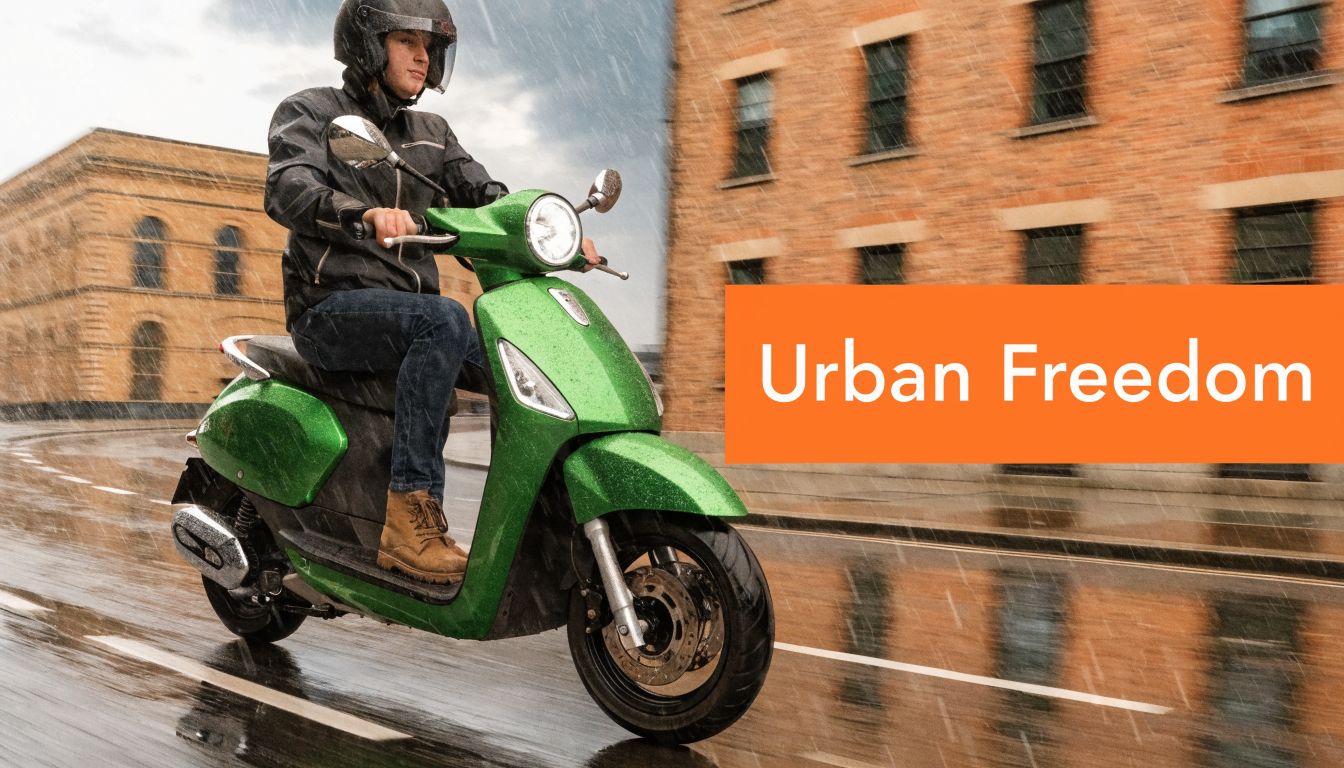
What actually matters on a UK scooter
For most riders, the shortlist comes down to five things:
- Running cost: What you’ll spend week to week, not just the purchase price.
- Real traffic performance: How the scooter pulls away from lights, handles junctions, and copes with urban roads.
- Licensing fit: Whether it suits CBT riders or someone planning to move up to A1.
- Maintenance demand: How often it needs routine workshop attention.
- City compliance: Whether it’s an easy fit for ULEZ and other clean air restrictions.
A petrol scooter still makes sense for many riders. It’s familiar, quick to refuel, and the top models are very polished. Electric has changed the conversation, though. The strongest electric 125cc-equivalent machines aren’t just alternative tech anymore. In the right use case, they’re the cheaper and more practical tool.
Practical rule: Buy for the roads and routine you actually have, not the riding fantasy you have once a month.
A better way to compare scooters
Start with ownership, not marketing. Ask how far you ride on a normal day. Ask whether you can charge at home or at work. Ask whether your income depends on low cost per mile. Ask how much workshop downtime you can tolerate.
Those answers matter more than colour, trim level, or a feature you’ll rarely use. For urban riders, commuters, and delivery couriers, that’s where the substantial difference emerges between a good scooter on paper and one that performs effectively.
Choosing Your Power Source Petrol vs Electric
A typical UK rider can spend the same money up front on two very different scooters, then get very different bills over the next 12 months. That is the fundamental difference between petrol and electric.
For this decision, spec sheets are only part of the story. The better test is ownership. Look at what you will spend on energy, routine servicing, wear items, and city access over the miles you ride every week. At Flex Electric, that is usually the point where electric starts to make more sense for urban riders, while petrol still holds its ground for longer, less predictable days.
Petrol remains the benchmark for one clear reason. It is easy to understand and easy to live with if you cannot charge at home or at work. Fill up in minutes, ride a full day, repeat. On a polished model such as the PCX125, that convenience is backed up by very good fuel economy, which is why it stays near the top of so many UK shortlists.
Electric earns its place on a different basis. In city use, it can cut running costs sharply and remove a lot of the routine hassle that comes with an engine scooter. No fuel stops on the way to work. No oil changes. No exhaust system to think about. If your riding happens inside ULEZ or other clean air zones, zero tailpipe emissions are not a marketing point. They are a practical advantage.
What petrol still does well
Petrol 125s still suit riders with certain routines better than electric.
- Quick turnaround: Refuelling is faster than recharging.
- Longer unplanned mileage: Extra distance is easy if your day changes at short notice.
- Broad service network: Independent workshops are used to petrol scooters and parts support is well established.
- Strong resale familiarity: Popular Japanese models are easy for buyers to recognise and value.
That matters. A rider doing mixed town and suburban miles without dependable charging may save time and stress with petrol, even if the per-mile cost is higher.
Where electric changes the cost calculation
Electric scooters are strongest where usage is repetitive. Commute. Charge. Ride again. Delivery shifts in dense urban areas follow the same pattern. That is where lower energy cost per mile starts to outweigh the limits of charging time and range.
Maintenance is part of that calculation too. A petrol scooter is not expensive to keep if it is a good one, but it still needs the usual engine-related servicing. Electric removes a chunk of that routine. Fewer moving drivetrain parts usually means fewer workshop jobs and less downtime over the year.
The city factor matters as well. If your route regularly crosses ULEZ zones, an electric scooter is an easy fit. With petrol, you need to make sure the bike meets the emissions standard required for compliant use.
The cheaper scooter to own is often the one that asks less from you every week, not the one with the lowest price tag on day one.
The riding feel is not the same
Performance on paper can mislead riders here.
A petrol 125 delivers its power in the familiar CVT way. Twist the throttle, let the revs rise, and the scooter builds speed progressively. Good petrol scooters feel smooth and settled, especially once you are rolling.
Electric responds sooner. The torque arrives from zero rpm, so pulling away from lights or joining a gap in traffic can feel easier and more immediate. In London traffic and other stop start city riding, that quick response is often more useful than a higher quoted top speed.
There is a trade-off. Electric feels quiet, direct, and simple. Petrol often feels more relaxed for longer stretches and is easier to keep moving all day if charging is not part of your routine.
Practical ownership trade-offs
FactorPetrol 125 scooterElectric 125cc-equivalent scooterDaily energy costHigher in normal UK useLower if you charge on a standard tariffRefuel or recharge routineFast petrol stopBest if you have home or workplace chargingMaintenance loadRegular engine servicing and more consumablesSimpler servicing in most casesULEZ and similar zonesCheck compliance carefullyStrong fit for zero-emission urban useUrban pull-awayProgressive CVT responseImmediate torque from standstillLong flexible daysEasier to extend with a fuel stopWorks best when range matches the route
Who usually gets the most from electric
Three groups tend to see the strongest case for electric.
- Urban commuters with a steady daily mileage and reliable charging.
- Delivery riders who care about cost per mile, time off the road, and repeated stop start acceleration.
- Fleet operators and businesses trying to control fuel spend, servicing costs, and access to city centres.
Petrol still suits riders who do longer days, change plans often, or have nowhere practical to charge. But for riders whose week is built around urban miles, the total cost of ownership often points in one direction. Electric starts with a similar purchase price to good petrol 125s, then pulls ahead once the weekly running costs begin to stack up.
Top 125cc Scooters Compared Head to Head
You leave South London at 8am, filter through traffic, park in a ULEZ zone, then do the same trip again tomorrow. In that sort of routine, the right 125 scooter is not just the one with the nicest spec sheet. It is the one that costs less to keep on the road, fits your mileage, and does not make daily use harder than it needs to be.
For a UK rider, three models frame the market well. The Honda PCX125 and Yamaha NMAX 125 set the standard for petrol scooters. The Super Soco CPx is a useful electric comparison because it shows what changes once fuel, servicing, and city access costs start to matter as much as top speed.
ModelPower typePriceKey performance detailRange or tank usePractical noteHonda PCX125Petrol£3,79912 bhp at 8,000 rpm, 11 Nm at 6,000 rpmStrong fuel economy, long tank range in normal useKeyless operation, traction control, start-stopYamaha NMAX 125Petrol£3,60112 bhp at 8,000 rpm, CVT transmissionEfficient in daily commuting, practical tank range21.5L underseat storage, traction controlSuper Soco CPxElectric£3,7494000W peak, 34 ft/lb torque, quick 0-30mph response40+ miles per battery, 80 miles total with dual batteriesRemovable batteries, strong city acceleration

Honda PCX125 as the petrol benchmark
The PCX125 stays near the top of any serious 125 shortlist because it is easy to live with. Honda has kept the formula simple. Good fuel economy, a polished automatic transmission, sensible comfort, and the kind of dealer support that gives new riders confidence. The current model uses a liquid-cooled 125cc engine, makes 12 bhp and 11 Nm, weighs 130kg, has a 764mm seat height, and comes in at £3,799, as noted earlier from Bennetts.
That matters because the PCX is often the petrol baseline people compare everything else against. If someone wants one scooter for commuting, shopping runs, and occasional longer trips across town or out to faster A-roads, it is easy to recommend.
Its weakness is not quality. It is running cost over time. Petrol, routine engine servicing, and consumables remain part of ownership every month. For riders covering steady urban mileage inside clean air zones, that total cost can end up less attractive than the purchase price first suggests.
Yamaha NMAX 125 as the sharper rival
The NMAX 125 targets the same rider, but it feels a little more utility-focused in everyday use. Underseat storage is one reason. A rider carrying waterproofs, gloves, a chain, and small work kit will notice the difference between a scooter that just has enough space and one that is genuinely useful Monday to Friday.
It is also competitively priced at £3,601. The NMAX produces 12 bhp at 8,000 rpm, uses CVT transmission, weighs 132kg, has a 770mm seat height, and offers 21.5L underseat storage, based on the review data cited in this Yamaha NMAX 125 review video.
On the road, the NMAX makes sense for riders who want a petrol 125 that still feels modern and practical rather than basic. It remains a strong option if your week includes some faster roads, varied trip lengths, or days where charging would be more hassle than help.
Super Soco CPx 74V as the electric counterpoint
The CPx is where the comparison gets more interesting for UK city use. It reaches 56mph, uses a 4000W peak motor, delivers 34 ft/lb torque, and offers 40+ miles per battery or 87 miles total with dual removable batteries, with 80% charge in 2.5 hours from a standard UK socket, as described by Visordown’s scooter guide.
On paper, a petrol rider may look at bhp first and dismiss it. In traffic, that misses the point. Electric scooters respond instantly from the line, which is exactly where many UK commuters spend their time. Junction starts, gaps in traffic, repeated stop-start riding, and short urban hops suit an electric drivetrain very well.
The removable battery setup also changes the ownership picture. Riders without a garage can still charge at home or at work if they can carry the batteries inside. That is a practical advantage, not a gimmick.
What matters more than the spec sheet
The PCX125 and NMAX 125 still make the most sense for riders doing mixed mileage with limited charging options. They are proven, easy to refill, and flexible if your plans change during the day.
The CPx starts to make more financial sense when the use case is predictable. That usually means commuting, town riding, delivery work, and other routes where lower pence-per-mile and reduced servicing can outweigh the tighter range ceiling. It also removes ULEZ concerns from the buying decision, which is a real cost and access factor for many London riders.
A few points are worth being blunt about:
- Petrol is still easier for long, unplanned days.
- Electric is often cheaper to run if your mileage and charging routine are stable.
- Torque delivery changes how quick a scooter feels in town.
- Storage, seat height, and battery charging practicalities matter as much as headline performance.
From a total cost of ownership point of view, that is the key comparison. The best scooters 125 riders should shortlist are not only the fastest or the cheapest to buy. They are the ones that fit how the scooter will be used in the UK. Flex Electric comes into that conversation because electric 125-equivalent scooters now deserve to be judged directly against petrol benchmarks like the PCX125 and NMAX 125, especially for urban riders watching every weekly cost.
UK Licensing Insurance and Road Rules Explained
You pass your CBT, find a scooter that fits the budget, then discover the critical decision is not only the monthly payment. It is whether you can ride it legally, insure it at a sensible price, park it securely, and use it in the places you typically travel.
For UK riders, a 125cc scooter is usually the easiest entry point into daily two-wheel transport. That applies to petrol models such as the PCX125 and NMAX 125, and to electric 125-equivalent scooters, provided the model sits in the same licence category. The rules are manageable, but they need checking before you buy.
What most new riders need first
A straightforward starting route looks like this:
- Complete CBT if you are new to riding and want to use a 125cc scooter under learner rules.
- Check the licence category for the exact scooter you are considering, especially if it is an electric equivalent rather than a petrol 125.
- Arrange insurance before riding and be honest about where the scooter is kept overnight.
- Confirm city access rules if your route includes London or other emissions-controlled areas.
- Read the insurer's security terms so your lock, chain, or storage setup matches the policy.
That process matters because the cheapest scooter to buy can become expensive quickly if insurance is high, theft risk is poorly managed, or daily access charges apply.
Insurance and operating cost
Insurance prices vary more by rider profile than by brochure claims. Age, postcode, no-claims history, where the scooter is parked, and whether it is used for commuting or delivery work all affect the premium. In some UK postcodes, theft risk will shape the quote more than whether the scooter is electric or petrol.
Running costs split more clearly after the policy is in place. Petrol scooters still set the benchmark for flexibility, but electric usually has the advantage on day-to-day energy cost if charging is easy and your mileage is predictable. In practice, that means an electric scooter can make more financial sense for urban commuting or repeat delivery routes, while a petrol 125 still suits riders who need quick refuelling and less planning.
The legal detail matters here too. Electric scooters avoid tailpipe-emissions concerns in regulated city zones, which can simplify the ownership equation for London riders watching every monthly cost.
ULEZ and city access
ULEZ compliance is not a minor footnote if you ride into London often. It affects what the scooter costs to own, not just what it costs to buy.
A compliant petrol 125 can still work well. An electric model removes that emissions question entirely, which is one reason many city riders compare total monthly outlay rather than purchase price alone. From a Flex Electric point of view, that is the practical comparison: licence fit, insurance, charging routine, and access costs all sit alongside pence-per-mile.
If you ride into a regulated zone most weekdays, city access rules belong in the same budget as fuel, electricity, and insurance.
Road rules that catch riders out
A few mistakes come up repeatedly with newer riders and first-time scooter buyers:
- Assuming every 125-style scooter has identical licence rules. Check the classification of the exact model.
- Buying first and pricing insurance later. Some scooters are far harder to insure affordably in higher-risk areas.
- Ignoring security conditions in the policy. If the insurer asks for an approved chain, ground anchor, or locked garage, follow that wording.
- Forgetting learner restrictions after CBT. Those rules affect how and where you can ride.
- Treating ULEZ or local clean-air rules as someone else's problem. They directly change daily running costs.
Get those checks done early and the rest becomes much simpler. That is the point where the best 125 scooter for you stops being a spec-sheet choice and starts being the one you can run legally, insure sensibly, and use every day without nasty surprises.
Finding the Best Scooter for Your Needs
The right scooter depends less on the brochure and more on the job it has to do. A rider crossing a city twice a day needs something different from a courier stacking short trips all evening. A small business moving staff or goods around town cares about different problems again.

The daily commuter
For commuting, the best scooters 125 are usually the ones that disappear into the background. They start easily, filter cleanly, carry your kit, and don’t ask for much thought at 7am in bad weather.
A commuter should prioritise:
- Easy low-speed handling
- Enough range for the full day
- Good storage or top-box compatibility
- A riding position that stays comfortable in winter kit
- Predictable weekly running costs
If you don’t have charging at home or work, a petrol model such as the PCX125 or NMAX 125 is still a very sensible answer. They’re polished and efficient. If you do have dependable charging and your mileage is regular, an electric 125cc-equivalent scooter often makes more financial sense over time because the ownership pattern is cleaner and simpler.
The food delivery rider
This rider should think differently. A delivery scooter is not a weekend toy. It’s an earning tool. Low cost per mile, good acceleration from junctions, and reduced downtime matter more than small styling differences.
For that use case, electric has a strong case when the route pattern fits the battery setup. A scooter like the Super Soco CPx works well because instant torque helps in stop start traffic, and removable batteries make charging more practical than fixed-battery designs for many riders.
What usually works well for couriers:
- Immediate pull from low speed for repeated traffic-light starts.
- Simple charging routine that fits a shift pattern.
- Useful luggage options for box and rack setup.
- Lower routine maintenance demand to keep the bike earning.
- Clean air zone compatibility for city centre work.
What usually doesn’t work is choosing purely on lowest purchase price. A cheap machine that spends time off the road, feels weak under load, or costs too much per mile stops being cheap very quickly.
A delivery rider should judge a scooter like a business asset. Time off the road and high running cost are both lost income.
The business fleet buyer
For restaurants, florists, venues, and local service businesses, scooter choice becomes a fleet question rather than a rider question. Consistency matters. So does ease of training staff, controlling costs, and keeping vehicles available.
Electric often suits this role because the maintenance pattern is lighter and the urban operating profile is predictable. Businesses also tend to value the cleaner image and easier fit with city restrictions.
A good fleet scooter needs:
- Straightforward controls for mixed rider experience
- Manageable operating cost
- Reliable charging process
- Secure accessory options, such as racks and boxes
- Support after purchase, especially if the scooter is work-critical
The first-time rider
New riders often over-prioritise top speed and under-prioritise confidence. The better first scooter is usually the one with a manageable seat height, predictable throttle response, and simple day to day ownership.
That’s where both petrol and electric can work well. Petrol feels familiar to many buyers. Electric feels easier to some because the power delivery is smooth and direct, without engine vibration or rev build-up.
A simple selection filter
If you want a quick way to narrow the field, use this:
Your situationBetter fitNo charging access, mixed mileage, want familiar ownershipPetrol 125 scooterCity commute, reliable charging, low daily cost mattersElectric 125cc-equivalentDelivery work in urban zones, lots of stop start ridingElectric often makes more senseOccasional rider, light mileage, broad used market appeal mattersPetrol can be simplerBusiness use in urban areasElectric is often easier to justify
The strongest buying decisions come from matching the scooter to the task realistically. Most disappointment starts when riders buy for image, then live with the costs later.
Essential Accessories and Simple Maintenance Tips
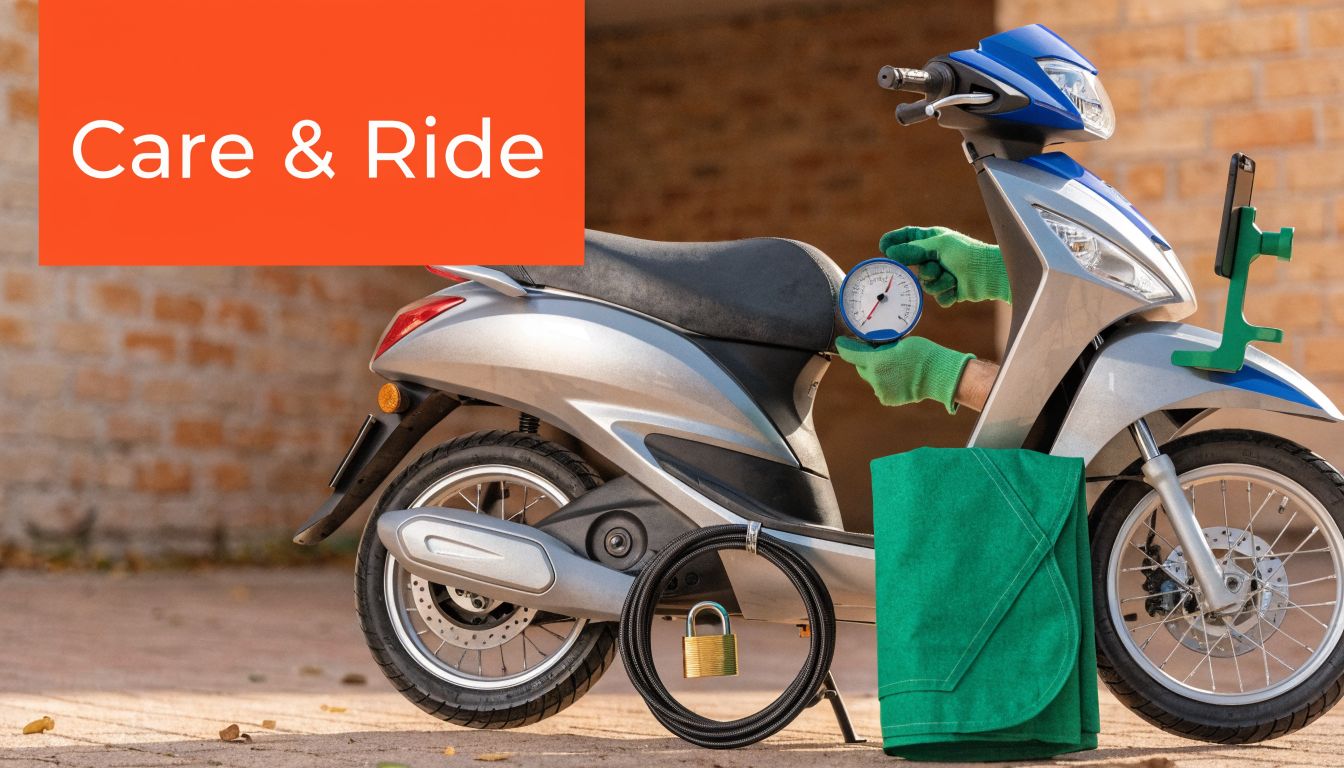
Good ownership starts with the small things riders often leave until too late. A dependable helmet, proper gloves, a serious lock, and weather-ready storage will improve daily life far more than a cosmetic add-on ever will.
Start with safety and security
The basics matter because they solve real problems:
- Helmet: Buy one that fits properly, not one that just looks tidy on a shelf.
- Gloves: They improve grip in wet weather and add protection if you come off.
- Lock: Urban scooters need proper theft deterrence, especially if they’re parked outside regularly.
- Waterproof layers: UK riding gets miserable quickly without them.
For navigation and deliveries, a secure phone mount also makes a big difference. A shock-resistant phone holder designed for scooter handlebars is useful because it keeps directions visible without letting the handset rattle around over rough city roads.
Choose accessories that match the job
A commuter and a courier won’t build the same setup.
A commuter usually benefits most from a top box, waterproof storage, and a clean cockpit layout. A delivery rider will care more about carrying capacity, easy access, and a bar-mounted phone position that stays readable through repeated stops.
Small upgrades that usually earn their keep include:
- Top box or rear rack setup for luggage and work kit
- Hand muffs or weather protection for winter shifts
- Phone mount for navigation
- USB charging option if the scooter supports it
- Disc lock reminder cable so you don’t make an expensive mistake
Keep maintenance simple and consistent
Electric scooters are usually easier to live with than petrol because there’s less routine engine-related servicing to think about. But “lower maintenance” doesn’t mean “no maintenance”.
Check these regularly:
- Tyre pressures: Low pressure hurts handling and range.
- Brake condition: Listen for rubbing, check feel at the lever, and don’t ignore changes.
- Lights and indicators: City riding demands visibility.
- Battery routine: Charge sensibly, store batteries correctly, and avoid careless neglect.
- Fasteners and fittings: Delivery use in particular can loosen luggage mounts over time.
Here’s a useful walkthrough to support the basics:
Look after tyres, brakes, and battery habits first. Those three areas solve most of the day to day problems riders blame on the scooter.
The riders who spend least on avoidable repairs are usually the ones who do quick checks often, not the ones who wait for a big annual problem.
Making Your Purchase with Flex Electric
A lot of UK riders reach this stage after comparing headline prices and still feeling unsure. A petrol 125 can look familiar and safe. An electric equivalent can look expensive until you factor in ULEZ exposure, fuel, servicing, and what you spend per mile on your commute or delivery shifts.
That is the point where the buying process matters.
A good dealer should help you match the scooter to your real mileage, charging setup, and budget over time. With electric, that matters more than showroom talk about peak speed or a claimed range figure. If your daily ride is 15 to 25 miles with home charging, the right electric model can make strong financial sense. If you regularly need longer distances without reliable charging, a petrol option such as a PCX125 may still be the better fit.
Warranty and support should be clear from day one
Ask direct questions before you pay. What is covered, for how long, and how are problems handled after delivery?
Flex Electric supplies bikes with a 2-year parts warranty and a 3-year battery warranty. Finance is available, subject to status and deposit requirements, and delivery is available across the UK from the Edinburgh showroom. Those details matter because electric ownership is usually easier when parts support, battery cover, and after-sales contact are clear upfront.
Finance only works if the running costs stack up
Monthly payments are only one part of the decision. The better question is what the scooter costs you over a full year.
For many urban riders, electric starts to look stronger once you include charging costs, lower routine servicing, and clean-air zone compliance. Petrol still wins on refuelling speed and can suit riders with longer, less predictable days. Electric often wins on cost per mile in city use. The right answer depends on how you ride, not just what the sticker says.
Before committing, check these points carefully:
- Deposit amount and finance terms
- Warranty cover for parts and battery
- Delivery timing and handover process
- Availability of after-sales support
- Whether the scooter suits your actual weekly mileage and charging routine
Buying online without avoidable friction
Online ordering is normal now, but the basics still matter. Confirm stock status, delivery dates, registration paperwork, and what condition the scooter arrives in. Keep emails and invoices in one place.
If you have dealt with missing parcels or poor order updates before, general guidance on how to resolve online order issues is useful for understanding what to document early and what to chase if communication slips.
That habit saves time.
What a sensible purchase process looks like
The cleanest purchases usually follow the same pattern:
- Choose the scooter around your real use, not an optimistic range claim
- Confirm licence, insurance, parking, and charging arrangements
- Read the finance and warranty terms properly
- Add the accessories you will need from day one
- Agree delivery or collection details in writing
That approach keeps the decision grounded in ownership cost, not sales talk.
If you are comparing the best scooters 125 and weighing electric against petrol, Flex Electric can help you assess the numbers. The useful comparison is not just purchase price. It is what the scooter will cost you to run on UK roads, whether it keeps you clear of ULEZ charges, and whether it fits the way you ride.
Find us
You will find us at 74 Dalry Road, Edinburgh, EH11 2AY
Showroom Opening Times:
Monday: By Appointment
Tuesday to Friday: 11am - 5:00pm
Saturday: 10am - 5pm
Sunday: By Appointment
