
Top cruiser 125cc bikes for 2026: licensing, cost, and reviews

Flex Electric
The UK's #1 Electric Moped and Electric Motorbike dealer.

Picture a classic, laid-back American motorcycle, the kind you see chewing up miles on an open highway. Now, imagine that same iconic style and relaxed attitude, but perfectly scaled for nipping through UK city streets. That's the magic of a cruiser 125cc bike—all the timeless cool, packed into a manageable, learner-friendly machine.
What Defines a Cruiser 125cc Motorcycle
If you think of the world of motorbikes like a big garage, you’ve got your high-strung superbikes—the two-wheeled equivalent of a track-day car, built for pure, blistering speed. Then you have the zippy little mopeds, designed to slice through traffic.
A 125cc cruiser, on the other hand, is like a comfortable grand tourer built for the city. It’s not about chasing lap times; it’s about enjoying the ride. This character comes from a few key design choices that set it apart from everything else on the road.
The Relaxed Riding Position
More than anything else, a cruiser is defined by how it feels to sit on it. While a sports bike forces you into an aggressive, forward-leaning tuck, a cruiser invites you to sit back and take it easy. This all comes down to its unique ergonomics:
- Low-Slung Seats: The seats on a cruiser are noticeably low. This is a huge confidence booster, especially for newer or shorter riders, as it lets you plant both feet firmly on the ground at a stoplight.
- Forward Foot Pegs: Instead of being tucked under you, the footpegs are positioned further forward. This creates a comfortable, almost chair-like posture that takes the strain off your knees and back on longer rides.
- Pulled-Back Handlebars: The bars sweep back towards you, so your arms are in a natural, relaxed position. This means no aching shoulders or wrists, even after a full day in the saddle.
This 'riding triangle'—the relationship between the seat, pegs, and bars—is engineered purely for comfort. It's a design philosophy that’s been refined for decades to make riding feel completely effortless.
The real point of a cruiser isn’t about hitting top speed; it’s about savouring the journey. That low seat, the forward controls, and the easy-going handlebars all come together to create an experience that’s as much about style and comfort as it is about getting from A to B.
Who Are Cruiser 125cc Bikes For?
This unique combination of easy handling and classic style makes cruiser 125cc bikes (and their modern electric equivalents) a brilliant choice for a whole host of UK riders. Their manageable power and confidence-inspiring feel appeal to a few key groups in particular:
- New Riders: If you've just completed your Compulsory Basic Training (CBT), a cruiser is a fantastic first "big bike." The low seat and stable nature provide a perfect platform for building your skills and getting comfortable on the road.
- Urban Commuters: Want to arrive at the office feeling relaxed and looking cool? A cruiser turns a dreary commute into a genuine pleasure. Its comfortable setup makes navigating rush-hour traffic far less of a chore.
- Delivery Riders: For professionals spending hours in the saddle for services like Deliveroo or Uber Eats, comfort is king. The upright, non-cramped riding position of a cruiser can make a massive difference, seriously cutting down on fatigue over a long shift.
Ultimately, these bikes are for anyone who appreciates classic design and wants a comfortable ride. Whether that's a traditional petrol model or one of the modern electric cruisers we offer at Flex Electric, the philosophy is exactly the same: ride in comfort, and arrive in style.
Right, let's get you on the road. Navigating the rules and regulations for riding a 125cc cruiser in the UK might seem daunting, but it's actually quite simple. The whole system is built around getting you comfortable and safe on two wheels, and it all starts with a single day of training.
For anyone 17 or older, the first step is the Compulsory Basic Training, or CBT. Don't let the name intimidate you; it's not a pass-or-fail test. Think of it more like a one-day workshop designed to give you the core skills for riding a 125cc bike safely.
You'll spend the day with an instructor, starting with the basics in a classroom before moving onto an off-road area to get a feel for the bike's controls. The most important part is the final session, where you'll spend at least two hours on public roads, learning how to handle real-world traffic under their guidance.
Your Ticket to Ride: The CBT and L-Plates
Once you've completed the course, you'll be handed a certificate that's valid for two years. This piece of paper is your green light to ride any motorcycle or moped up to 125cc. It comes with a few conditions, though:
- You have to display L-plates on the front and back of your cruiser (or D-plates if you're in Wales).
- Carrying a passenger is not allowed.
- You cannot ride on motorways.
For many, that's more than enough. A CBT is a fast and affordable way to get your cruiser on the road for commuting or delivery work. If the two years are up and you want to keep riding, you just take the CBT course again.
Think of your CBT certificate as the key that unlocks the world of 125cc riding. It's proof that you have the essential skills to be on the road, giving you the freedom to build your confidence and experience solo.
Going All In: The Full A1 Licence
Fancy ditching the L-plates, taking a mate on the back, or hitting the motorway for a longer trip? Then the A1 licence is your next goal. This is a full motorcycle licence for bikes up to 125cc. To earn it, you'll need to pass the motorcycle theory test, followed by two practical tests: Module 1 (off-road manoeuvres) and Module 2 (the on-road test).
Getting your A1 licence removes all the restrictions of a CBT. It's the perfect move for riders who see their 125cc cruiser as more than just a local runabout and want the full freedom that comes with a full licence.
Getting Covered: Insurance for Your Cruiser 125cc
Insuring your bike is non-negotiable, but here's the good news: 125cc cruisers are usually very easy on the wallet. Insurers categorise bikes into different groups based on things like their power, price, and how much they cost to fix. With their relaxed power and sensible top speeds, cruisers almost always land in the lower insurance groups.
This makes them a brilliant choice for new riders or delivery pros trying to keep running costs down.
Want to get that premium even lower? A few simple steps can make a real difference. Investing in good security, like a hefty chain, a disc lock, or a GPS tracker, tells insurers your bike is less of a risk. The same goes for where you keep it – if you can park it in a locked garage overnight, you'll likely see a healthy discount on your quote.
Petrol vs Electric: Which Cruiser Is Right for You?
So, you’re set on a 125cc cruiser. Fantastic choice. Now you’ve hit the first major fork in the road: do you go for a classic petrol engine or a modern electric motor? This isn't just a technical decision; it's about what kind of riding experience you really want. One path offers the familiar rumble of tradition, while the other provides the silent, instant punch of the future.
For years, the petrol 125cc was the only game in town. The appeal is easy to understand—that satisfying engine note, the convenience of filling up in five minutes at any petrol station, and an endless supply of mechanics who know them inside and out. It’s a proven formula.
But let's be honest, the world is changing. Rising fuel prices, the looming threat of emissions charges in our cities, and the constant need for maintenance like oil and filter changes are starting to take the shine off that classic experience. The old ways now come with new costs.
The Pull of a Petrol Engine
There's no denying the romance of a petrol bike. That mechanical connection, the sound, the whole ritual of riding is what draws many of us to two wheels in the first place. If you dream of spontaneous long rides out in the country, the freedom to refuel absolutely anywhere is a massive plus.
That said, the numbers tell a fascinating story. While overall UK motorcycle sales took a significant 18.3% plunge recently, the electric two-wheeler market shot up with robust 19.8% growth. It seems more and more riders are looking for an escape from the volatility and costs of petrol ownership.
The Electric Cruiser: A Different Breed of Bike
This is where the new wave of electric 125cc-equivalent cruisers from brands like Vmoto and LiveWire, available through Flex Electric, are turning heads. The experience is totally different, starting with the thrill of instant torque.
A petrol engine has to build up revs to deliver its power. An electric motor? It gives you everything the second you twist the throttle. What that feels like in the real world is lightning-fast, silent acceleration away from the lights, leaving traffic standing. It’s a huge confidence booster in busy urban environments.
It’s the silence that really gets you. Without the engine roar and vibration, you’re suddenly more connected to the ride itself. You can hear the wind, the sound of your tyres on the tarmac—it makes a daily commute feel surprisingly calm and focused.
Then there’s the maintenance, or rather, the lack of it. Forget oil changes, spark plugs, and clutch adjustments. With an electric motorcycle, you mainly just need to keep an eye on your tyres and brakes. This saves you a small fortune in servicing costs and a whole lot of hassle over the bike’s lifetime.
Whether you go for petrol or electric, the path to getting on the road is the same. This chart breaks down exactly what you need to do to get your licence for a 125cc.
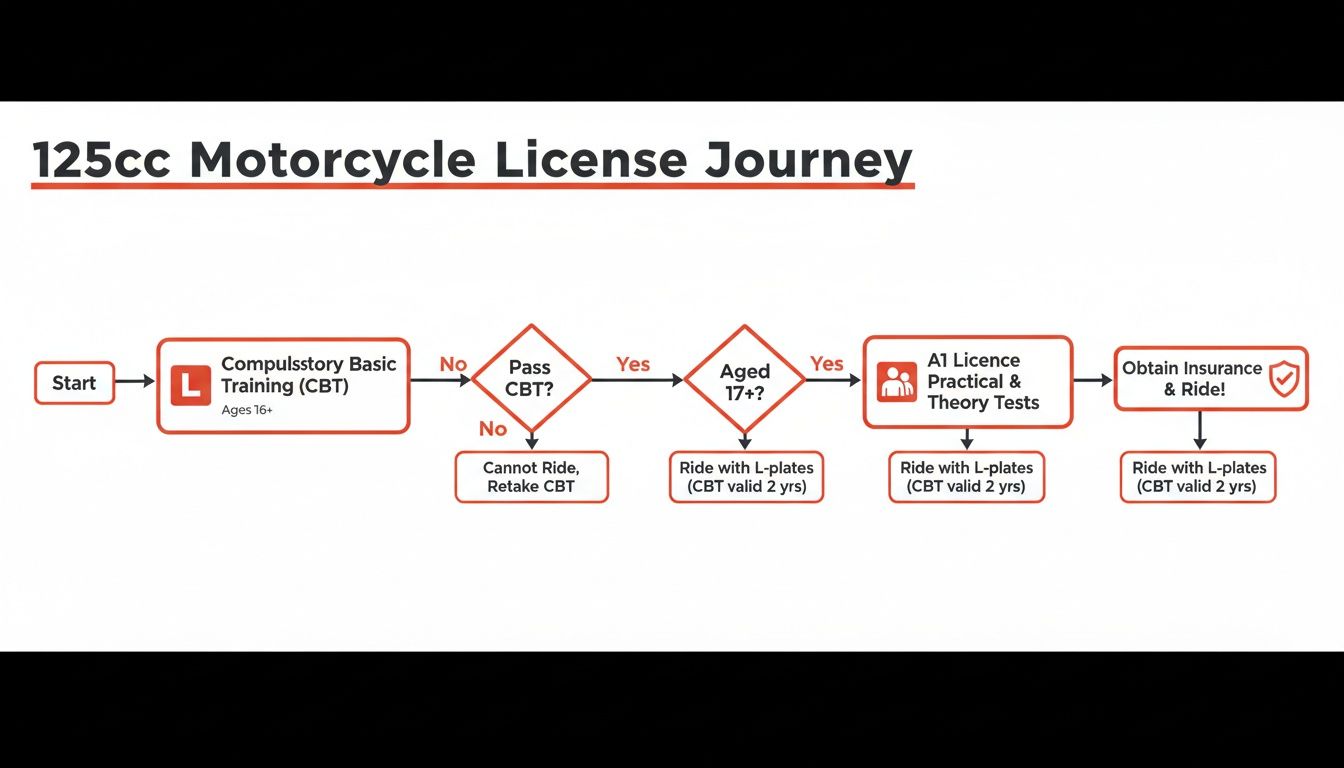
As you can see, it all kicks off with your CBT, which gets you on the road with L-plates. From there, you can choose to take the full A1 licence test to ditch the plates and carry a passenger.
But What About Range and Charging?
"Range anxiety" is the first thing everyone asks about, and it's a fair question. Let's tackle it with real-world numbers. A bike like the Vmoto Stash can genuinely cover up to 100 miles from a full charge. For most commuters or delivery riders, that’s easily enough for a few days of work without even thinking about plugging in.
And charging couldn’t be easier. Most of these bikes have removable batteries. You just park up, unclip the battery, and carry it inside to plug into a normal wall socket—just like your laptop or phone. You wake up every morning to a full "tank." Exploring the wider reasons for choosing electric driving can shed even more light on the practical benefits that apply just as much to two wheels as to four.
To make the choice clearer, let’s put the two options side-by-side.
Key Specs to Compare When Choosing Your Bike
Walking into a showroom or browsing online, you’re hit with a wall of numbers and technical terms. It’s easy to get bogged down in spec sheets, but what do those figures actually mean for you and your daily ride? Understanding a few key metrics is the difference between buying a bike that just looks the part and one that genuinely feels right on the road.
Let's cut through the jargon for both petrol and electric bikes. We’ll focus on what truly makes a difference out on UK roads, paying special attention to the electric alternatives we're so passionate about here at Flex Electric. After all, these bikes represent the future of easy, low-cost riding.
Power and Performance
At the end of the day, what you want to know is how a bike will feel. Will it be quick enough to keep up with traffic? Will it feel sluggish or responsive? These are the numbers that tell that story.
- Motor Power (kW): For electric motorcycles, this is the main power figure, much like horsepower on a petrol engine. For a 125cc equivalent, you’ll typically see motors rated between 5kW and 11kW. A higher number generally means punchier acceleration and a better top speed, making it much less stressful to merge or pull away from the lights.
- Torque: This is where electric bikes have a serious ace up their sleeve. A petrol engine needs to build up revs to deliver its peak power, but an electric motor gives you 100% of its torque the instant you twist the throttle. The result? A silent, immediate surge of acceleration that’s a massive advantage for nipping through gaps in city traffic.
- Battery Capacity (kWh): Put simply, this is the size of your "fuel tank." Measured in kilowatt-hours (kWh), a bigger number means the bike stores more energy, which translates directly into how far you can ride. That's why models like the Vmoto Stash are built with generous battery sizes designed for proper, real-world mileage.
You only have to look at the market to see what riders want. The Triumph Speed 400 shot to the top of the UK sales charts in 2024, proving there’s a huge appetite for affordable bikes with those comfortable, cruiser-style ergonomics. This trend plays perfectly to the strengths of electric cruisers, which offer that same relaxed riding position but with incredibly low running costs. As recent UK motorcycling market analysis shows, this shift towards accessible models is only growing.
Range and Charging
"So, how far will it actually go?" It's always the first question anyone asks about an electric motorcycle, and it’s a fair one. The answer hinges on the battery size and how you ride, but modern electrics are more than up to the task of the average UK commute and then some.
The real game-changer with electric bikes isn't just the range; it's the charging. Waking up to a full 'tank' every single morning completely changes your relationship with refuelling.
Real-World Range is the only figure that matters. While a manufacturer might quote a perfect-conditions lab figure, we prefer to talk about what you can realistically expect. Depending on speed, terrain, and even the weather, your mileage will vary. That’s why we give honest estimates—often up to 100 miles on a single charge for our premium models—so you know exactly what you’re getting.
Charging Times are the other side of the coin. The real magic here is the convenience. Forget about detours to the petrol station. Most of our electric motorcycles and mopeds feature removable batteries that you can carry inside and charge from any standard 3-pin UK wall socket. A full charge usually takes around 6-8 hours, so you just plug it in overnight. It quickly becomes a simple, cheap, and effortless routine.
Comfort and Safety
Power and range are important, but if a bike isn't comfortable or doesn't inspire confidence, you won't want to ride it. This is where cruisers have always excelled.
- Seat Height: Cruisers are known for their low-slung seats, and it's a massive advantage. A low seat height means you can easily plant both feet flat on the ground when you stop. For new riders or those on the shorter side, this is a huge confidence booster.
- Bike Weight: A lighter bike is simply easier to live with. It’s less intimidating to handle at walking pace, easier to wheel into a parking spot, and far less of a struggle to pick up if you have an unfortunate wobble. Electric motorcycles often feel even more manageable because the battery pack gives them a low centre of gravity, making them feel incredibly stable and well-balanced.
- Braking Systems: Modern braking tech is a lifesaver. You’ll want a bike with either a Combined Braking System (CBS) or an Anti-lock Braking System (ABS). CBS automatically links the front and rear brakes, helping you brake more effectively—a great feature for learners. ABS is the ultimate safety net, preventing the wheels from locking up and skidding during an emergency stop.
Comparing Total Running and Maintenance Costs
It’s easy to get fixated on the price you see on the tag, but that's only the first chapter of a bike's ownership story. To get a real sense of what a cruiser 125cc bike will cost you, you have to look at the bigger picture—the total running costs over months and years of riding.
When you crunch the numbers, the difference between petrol and electric isn't just small change. It's a dramatic shift in where your money goes. A traditional petrol bike comes with a steady stream of expenses, from fuel to tax to servicing.
On the other hand, an electric 125cc equivalent from Flex Electric completely rewrites the budget. By ditching the petrol station for a wall socket and swapping a complex engine for a simple, clean motor, the long-term cost of ownership drops through the floor. Let's break it down.
The True Cost of a Petrol 125cc Cruiser
Owning a petrol motorcycle means you’re signing up for more than just the thrill of the ride; you’re also signing up for a series of ongoing costs that are simply part of the package. It’s a constant drip-drip of expenses that can quickly add up.
Here’s a look at what you can typically expect to pay each year:
- Fuel: This is your most frequent and unpredictable cost. Even with a frugal 125cc engine, filling up the tank adds up fast, especially if you're commuting daily or working as a delivery rider.
- Vehicle Excise Duty (VED): You might know it as road tax. This is a mandatory annual payment, and for a 125cc motorcycle, it’s currently £25 per year.
- Scheduled Maintenance: Petrol engines are intricate machines. They need regular oil changes, new filters, chain adjustments, and bigger services to keep them running smoothly. Each trip to the mechanic is another hit to your wallet.
This steady financial upkeep is just the reality of owning a bike with an internal combustion engine. The initial purchase price might look appealing, but the long game often tells a very different financial story.
The Electric Advantage: Pounds and Pence
This is where the whole equation changes. Switching to an electric motorcycle, like the ones we offer at Flex Electric, completely overhauls your running costs. The savings aren't just a nice little bonus; they are substantial, and they start from your very first charge.
The real game-changer with an electric bike is how it almost completely erases "fuel" and regular maintenance from your budget. You’re trading expensive, fluctuating petrol prices for cheap, stable home electricity and swapping garage bills for simple, DIY checks.
Let's look at those same running costs through an electric lens:
- Energy: A full charge from a standard home plug socket will only set you back about £1-£2 in electricity. When you compare that to a £10-£15 tank of petrol, the savings are immediate and multiply with every mile you ride.
- Vehicle Excise Duty (VED): Better yet, all zero-emission electric motorcycles are completely exempt from VED. That's a guaranteed saving you’ll appreciate year after year.
- Minimal Maintenance: Electric motors have incredibly few moving parts. There’s no oil to change, no spark plugs or filters to replace, and no exhaust to worry about. Your main jobs are just checking your tyres and brakes.
The 51-125cc category is the most popular in the UK for a reason, as 2024 market data shows, with countless riders relying on them for commuting and deliveries. While their petrol counterparts are known for decent fuel efficiency, an electric 125cc-equivalent can slash your running costs by as much as 90% on fuel and maintenance alone. It’s simply a smarter financial move.
Long-Term Financial Peace of Mind
Beyond the day-to-day savings, there’s always the question of long-term reliability. The single most expensive component on an electric bike is its battery, and it's natural to have concerns about its lifespan.
At Flex Electric, we take that worry off the table. We stand by the quality of our bikes with solid warranty coverage that protects your investment for the long haul.
Every new electric motorcycle we sell includes:
- A comprehensive 2-year parts warranty
- An extensive 3-year battery warranty
This level of protection gives you the confidence to ride without the fear of being hit with a huge, unexpected repair bill. When you combine these warranties with the massive savings on running costs, the case for choosing an electric cruiser 125cc becomes undeniable. It’s not just a cheaper way to ride; it’s a far smarter way to own.
Why Go Electric with Flex Electric? We’re Here to Help
Thinking about switching from a petrol bike to an electric 125cc equivalent can feel like a huge leap. We get it. Our whole approach at Flex Electric is built around making that move straightforward and stress-free, offering honest advice and a clear path from the pump to the plug.
We’ve spent a lot of time with bikes from leading brands like Vmoto, Super Soco, and Horwin, and we only stock the ones that genuinely impress us. This isn't just about selling; it's about matching you with a machine that works for your life, whether you're navigating a daily commute or running a demanding delivery route.
Making Ownership Simple and Secure
We believe the cost of a new bike shouldn't be a barrier to enjoying all the benefits of electric riding. That’s why we’ve set up accessible Hire Purchase and PCP finance options. It’s a simple way to spread the cost over time without paying a single penny of interest, making a brand-new electric motorcycle much more affordable than you might imagine.
Your peace of mind is just as important. Knowing your new ride is protected against unexpected problems is crucial, so every bike we sell comes with a solid warranty package.
- You get a comprehensive 2-year parts warranty covering the entire machine.
- The battery, the heart of the bike, is protected by its own dedicated 3-year warranty.
This lets you ride with confidence, free from the worry of surprise repair bills down the road.
When you choose Flex Electric, you’re not just buying a motorcycle. You’re getting a team of genuine enthusiasts, based in our Edinburgh showroom, who are here to support you wherever you are in the UK.
Fully Equipped from Day One
Getting on the road involves more than just the bike, and we can help you get kitted out with all the essentials. We'll make sure your new electric motorcycle is ready for whatever you throw at it from the moment it arrives.
We can sort you out with:
- High-quality, certified helmets for your safety.
- Heavy-duty security locks to keep your bike safe.
- Practical rear racks and top boxes for carrying your gear.
So, whether you're a commuter with a laptop bag or a delivery rider needing to maximise your carrying capacity, we have the right accessories to get the job done. With nationwide UK delivery, full warranty cover, and all the gear you need in one place, we make switching to electric a smart, simple choice.
Your Questions Answered
Thinking about a 125cc cruiser, especially an electric one, naturally brings up a few questions. We get asked these all the time, so here are some straight-talking answers based on real-world experience to help you get started.
Do I Need a Special Licence for a 125cc Cruiser?
This is probably the most common question we hear, and it’s a good one. For almost everyone in the UK, you can't just hop on a 125cc bike with your car licence. The key is completing your Compulsory Basic Training (CBT).
Think of it as a one-day introductory course. Once you've passed, you can legally ride any 125cc motorcycle or moped (petrol or electric) with L-plates for two years. It's the gateway to two-wheeled freedom.
There’s a small exception for those who got their full car licence before 1st February 2001 – they can ride a 50cc moped without L-plates. But this doesn't apply to 125cc machines, so for any of the bikes we're talking about here, a CBT is your first port of call.
Are Electric 125cc Bikes Actually Powerful Enough for Hills?
Absolutely, and in many ways, they're even better suited for hills than their petrol counterparts. The secret weapon of an electric motor is instant torque.
Unlike a petrol engine that needs to rev up to find its power, an electric bike gives you all its pulling power the very second you twist the throttle. This gives you a strong, steady pull right from a standstill, making light work of steep inclines, even with a full load of deliveries.
It’s a smooth and surprisingly potent feeling. We specifically choose the electric motorbikes at Flex Electric for their real-world grit, ensuring they have the muscle to handle the hilly and demanding roads we have here in the UK.
How Much Could I Really Save Using an Electric Bike for Deliveries?
Honestly, the savings are game-changing. Many delivery riders we work with have slashed their daily running costs by as much as 90%. It’s not just one thing; the savings come from everywhere.
- Fuel vs. Electricity: Swapping petrol station prices for charging at home is the biggest win. A full charge will set you back around £1-£2, a tiny fraction of a tank of fuel.
- No Road Tax: Because they're zero-emission, all-electric motorcycles are exempt from Vehicle Excise Duty (VED). That’s a guaranteed saving every single year.
- Forget Engine Maintenance: There are no messy oil changes, no spark plugs to replace, and no filters to clog up. Your routine checks are basically just tyres, brakes, and chain – simple stuff.
When you add it all up over a year, you’re easily looking at thousands of pounds back in your pocket. It's a direct boost to your earnings.
Ready to feel the silent pull and see the savings for yourself? Take a look at the hand-picked range at Flex Electric and find the perfect partner for your commute or delivery hustle. Discover our electric motorcycles today!
Find us
You will find us at 74 Dalry Road, Edinburgh, EH11 2AY
Showroom Opening Times:
Monday: By Appointment
Tuesday to Friday: 11am - 5:00pm
Saturday: 10am - 5pm
Sunday: By Appointment
