
Electric Bike for Food Delivery: A Moped & Moto Guide
Flex Electric
The UK's #1 Electric Moped and Electric Motorbike dealer.

If you're doing food delivery on a petrol scooter right now, you already know where the money leaks out. Fuel goes up. A small fault turns into a workshop bill. Stop-start city riding punishes engines. Then there’s the time loss that doesn’t show up on a receipt: waiting for repairs, hunting for parking, dealing with noise, vibration, and the general drag of running an ageing machine for shift after shift.
That’s why so many riders search for an electric bike for food delivery, but the phrase causes confusion. Some people mean pedal-assist cycles. Others mean road-going electric scooters, mopeds, and motorcycles. For delivery work in the UK, that distinction matters a lot.
This guide focuses on road-legal electric mopeds and electric motorcycles used for paid delivery work. It does not cover pedal-assist EAPCs as a buying recommendation. That matters because the machines that suit many full-time delivery riders often sit in moped or motorcycle territory, with different rules, insurance needs, speeds, and carrying ability.
From a road-use point of view, the best delivery setup isn’t the one with the flashiest spec sheet. It’s the one that keeps you working, keeps you compliant, and keeps your weekly costs under control. A delivery machine has to cope with rain, repeated short trips, kerbs, hills, phone navigation, insulated luggage, and long hours. It also has to make financial sense. If it doesn’t raise your earning potential or lower your downtime, it’s the wrong tool.
Introduction The Shift to Smarter Deliveries
A lot of riders hit the same point. The scooter still runs, but it’s getting expensive in all the wrong ways. Petrol bites every week. Servicing never seems to arrive at a convenient time. Small mechanical issues stack up into missed shifts, and missed shifts hurt more than the repair bill itself.
Electric mopeds and motorcycles change that equation because delivery work is repetitive by nature. You’re doing the same kind of urban miles, the same stop-start pattern, the same low-speed acceleration, and the same short turnaround between jobs. That’s exactly the kind of work where electric drive starts making practical sense.
The other reason riders are switching is stress. Electric drive feels simpler on shift. Twist and go. No clutch work on learner-friendly models. No engine heat under you while you wait outside a takeaway. No vibration building up over hours on the road. The machine feels calmer, and that matters when your income depends on staying sharp late into the evening.
What this guide means by electric bike
For SEO, people often search electric bike for food delivery. In practice, this article is about electric mopeds and electric motorcycles. Those are the machines that suit riders who need more speed, more carrying confidence, and a setup built for daily commercial use.
That distinction matters because UK law treats pedal-assist cycles and motor vehicles very differently. If you buy the wrong thing for the way you work, you can end up with a machine that’s either underpowered for the job or non-compliant for the road use you have in mind.
The best delivery vehicle is the one that still feels like the right choice in bad weather, at the end of a long shift, and when the week’s costs are added up.
What works on the road
The machines that tend to work best for food delivery share a few traits:
- Predictable urban performance so you can pull away cleanly from junctions and gaps in traffic.
- Stable carrying ability for boxes, bags, and repeated pickups.
- Low day-to-day hassle because a delivery vehicle is a tool, not a weekend toy.
- Proper legal setup for commercial use in the UK.
That last point gets ignored in too many guides. It shouldn’t. A delivery rider can recover from a weak battery choice more easily than from the wrong licence, the wrong vehicle class, or the wrong insurance.
Why Go Electric The Business Case for Delivery Riders
Friday dinner rush. The rain starts, orders stack up, and every delay comes straight out of your hourly earnings. In that kind of shift, an electric moped earns its keep by cutting running costs, reducing workshop time, and making repeated urban stop-start work easier to manage.
Lower running costs improve margin
Delivery income is never just about how much the app shows on screen. What matters is what stays in your pocket after charging, maintenance, tyres, insurance, and time off the road.
That is why electric mopeds make business sense for many UK delivery riders. The upfront price is often higher than an older petrol scooter, but the day-to-day spend is usually lighter. Charging costs less than filling up. Routine servicing is simpler. Over a busy month, that difference is hard to ignore if you ride most days.
Purchase price still matters. So does cash flow. A cheaper petrol scooter can look like the safer buy if money is tight. But riders who only compare sticker price often miss the bigger picture. For delivery work, the vehicle is an earning tool, and the better question is whether it leaves you with more usable profit over time.
Less downtime means more earning hours
Uptime is where electric machines often pull ahead.
A delivery bike does not need fancy tech or a long feature list. It needs to switch on, pull cleanly in traffic, and be ready again for the next shift. Electric drivetrains are mechanically simpler than petrol scooters, which usually means fewer routine jobs and fewer small faults that chip away at your week. No oil changes. No exhaust issues. No fuel system problems after hard urban use.
Miss one evening to repairs and the loss is bigger than the workshop bill. You lose peak hours.
Urban riding suits electric power
Food delivery is repetitive riding. Junctions, lights, side roads, short hops, loaded starts, and constant low-speed acceleration. Electric power suits that pattern because the response is immediate and predictable. A good bike feels smooth pulling away with a full box on the back, which helps when you are working through traffic in poor weather.
Planning matters too. Riders who want tighter shifts and less wasted mileage should spend time understanding what route optimization is. Better routing will not fix the wrong bike, but it can raise the return you get from the right one.
Electric helps. The right legal setup matters just as much.
This article is focused on UK-compliant electric mopeds and motorcycles used for paid delivery work, not pedal-assist e-bikes. That distinction is important because the business case falls apart fast if the vehicle, licence category, or insurance does not match commercial road use.
A machine can be cheap to run and still be the wrong buy. I have seen riders save money on the purchase, then lose it again through weak range, poor load stability, or insurance trouble because they bought as if they were commuting, not working.
Common mistakes are predictable:
- Buying for the test ride, not the shift. A bike that feels lively unloaded can feel underpowered with food boxes and repeated starts.
- Believing headline range. Delivery riding, cold weather, and cargo cut real-world range.
- Treating charging like an afterthought. Poor charging discipline creates missed jobs and short battery life.
- Ignoring the legal class of the vehicle. For UK delivery work, getting the moped or motorcycle category wrong causes bigger problems than choosing the wrong colour or trim.
Get the setup right and an electric moped stops feeling like a risky switch. It becomes a practical way to protect margin, stay on the road, and make the shift less tiring.
Choosing Your Moped Key Specs for Food Delivery
A Friday dinner rush exposes weak specs fast. The battery drops quicker than expected, the bike feels soft pulling away with a loaded box, and wet roundabouts make cheap tyres and average brakes feel like a bad decision you now have to ride home on.
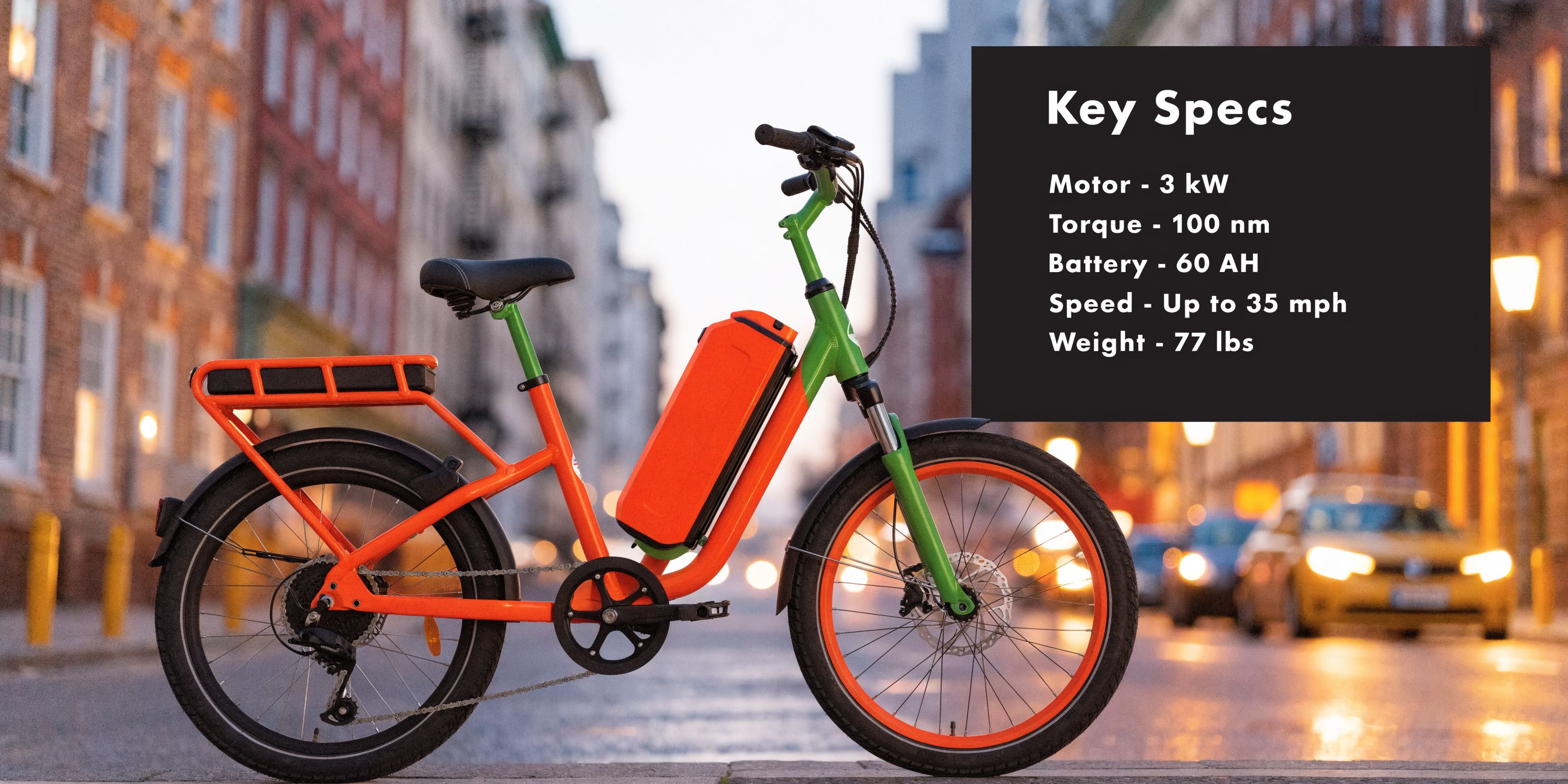
That is why spec sheets need translating into shift performance. For UK food delivery, the right electric moped or motorcycle is the one that keeps working through repeated stops, cold weather, cargo weight, and long hours. This section is about road-going electric mopeds and motorcycles used for paid work, not pedal-assist EAPCs.
Real-World Range
Range catches riders out before anything else. Delivery work means constant pullaways, stop-start traffic, cargo weight, heaters or lights running in winter, and very little of the gentle riding used to produce headline figures.
Use the claimed range as a starting point, then add margin for your shift. Riders doing short, tight urban runs can get away with less battery if charging is easy and reliable. Riders covering larger suburban patches, split shifts, or hilly areas need more reserve than the brochure suggests.
Cold weather exposes bad assumptions. A bike that looks fine on paper in July can become a problem in January.
The practical question is simple. Can this machine finish your busiest shift with enough battery left that you are not riding home in power-saving mode or hunting for a charge between orders?
Speed and class choice
Speed matters in relation to route type, not ego.
A lower-speed city moped works well in dense town centres where average traffic speed is already low and the day is mostly junctions, lights, and short hops. A stronger machine earns its keep on outer-city runs, steeper roads, ring-road sections, and areas where you regularly need to hold pace with faster traffic.
Buying too small creates fatigue because the bike always feels like it is working at the edge of its ability. Buying too much can push up purchase price and insurance cost for performance you rarely use. The right match is the bike that sits comfortably in the middle of your real working day.
Torque and hill performance
Torque is what you feel when the box is full and the road points uphill. It matters more than headline top speed for most delivery riders.
A bike with decent pull leaves lights cleanly, merges with less drama, and feels calmer on gradients. That matters in cities with steep streets, but it also matters in ordinary urban riding where you are carrying food, spare kit, and dealing with repeated starts for hours at a time.
I would rather ride a well-sorted moped with strong low-speed pull than a faster machine that feels flat under load. Delivery work rewards drive off the line and predictable response.
Payload and stability
Payload is not just a number on a spec sheet. What matters is how the bike behaves once it is fitted for work.
Some bikes feel fine unloaded, then become vague at the rear once a commercial top box and rack are fitted. Others stay planted because the frame, suspension, and mounting points were up to the job in the first place. That difference shows up in crosswinds, wet bends, and emergency stops.
Check these points before buying:
- Rear rack rating and whether it is designed for commercial delivery boxes
- Mounting position so the load does not sit too high or too far back
- Suspension behaviour with a box fitted, not just on a solo test ride
- Tyre quality and wheel size for wet grip and pothole stability
- Brake feel under load after repeated stops, not one clean stop outside the showroom
A stable bike saves energy every shift. An unstable one drains it.
Fixed battery or swappable battery
Battery setup needs to match where you live and how you work.
SetupBest forTrade-offFixed batteryRiders with secure off-street parking and straightforward charging accessHarder to live with if the bike is parked far from a socketSwappable batteryRiders in flats, shared housing, or longer shifts where battery changes keep the bike earningSpare batteries add cost and need disciplined charging and storage
Swappable packs suit riders who cannot bring the whole vehicle close to a charger. Fixed systems are often simpler if home charging is easy and the battery size already covers a full shift. Neither setup is better in every case. The better one is the one you will manage properly, every day.
What to ignore on a sales page
Delivery riders lose money by buying features that look good online but do little for a working shift.
Put the sales gloss to one side if the bike is weak in these areas:
- Usable range in cold, stop-start riding
- Pull under load
- Stability with a fitted delivery box
- Braking confidence in the wet
- Battery charging or swap practicality
- Dealer support, parts supply, and warranty terms
Dash tech, phone apps, and sharp styling come after the basics. If the bike cannot carry your kit properly, stop safely in the rain, and finish the shift without battery anxiety, it is the wrong tool for paid delivery work.
UK Licence Insurance and Legal Essentials
Many riders slip up at this point. They search for an electric bike for food delivery, see content about licence-free cycling rules, and assume the same logic applies to the more powerful electric mopeds that are better suited to full-time delivery. It doesn’t.
The line between EAPCs and motor vehicles
In the UK, EAPCs avoid licence and motorcycle insurance requirements only if they meet the legal definition, including pedals, motor output at or below 250W, and assistance that cuts out at 15.5mph, as set out in this legal-summary article covering delivery use. The same source says a 2023 UK government survey found 40% of delivery riders were unaware of these distinctions, with a risk of £1,000 fines.
That matters because many of the machines riders want for delivery are not EAPCs. They’re mopeds or motorcycles in legal terms. Once you cross into that category, you’re in motor-vehicle territory.
What delivery riders often get wrong
The dangerous assumption is that “electric” means “bike rules”. It doesn’t.
If you’re using a road-going electric moped or motorcycle for paid delivery work, you need to think like a motor-vehicle operator, not a cyclist. That means checking the requirements that apply to the class of machine you’re buying and your own entitlement to ride it.
Typical areas to confirm include:
- Licence category that matches the vehicle
- CBT status where relevant
- DVLA registration
- Number plate and road-legal setup
- Tax and MOT obligations where applicable
- Insurance that explicitly covers delivery work
Hire and reward is not optional
This is the part riders cannot afford to be casual about. Personal social, domestic, and commuting cover is not the same thing as commercial delivery use. If you’re carrying food for payment, you need insurance that covers that activity properly.
That usually means Hire and Reward cover, or a policy structure that clearly includes courier or food delivery use. Riders sometimes assume they’re covered because they hold an ordinary motor policy. That assumption can go very badly after a collision or theft.
If you ever need to make a claim and you’re not clear on the paperwork trail, it helps to understand how to file an auto insurance claim before you’re under pressure. The process is much easier when you’ve already thought through photos, contact details, police reference numbers where relevant, and insurer notification timing.
If your insurer doesn’t know you’re doing delivery work, you should assume there’s a problem until proven otherwise.
A practical compliance checklist
Use this before you start work on any electric moped or motorcycle:
CheckWhy it mattersVehicle classificationTells you which legal rules applyYour licence entitlementConfirms you can ride that class of machineInsurance wordingStops you relying on cover that excludes deliveryRegistration statusPrevents basic compliance failuresRoad equipmentLights, plate, tyres, and general road legality need to be rightPlatform policyApp-based courier platforms may have their own vehicle requirements
Platform assumptions can mislead you
A rider can be accepted on an app and still be improperly insured or incorrectly set up for the machine they’re using. App onboarding is not a legal clearance certificate. You still need your vehicle, documents, and insurance to line up with UK law and the work you’re doing.
This is one reason some riders are better off slowing the buying process down. A slightly longer purchase decision is far cheaper than buying the wrong class of machine, insuring it badly, then discovering the problem after enforcement or an accident.
The weekly view is the one that matters
Riders feel cost week by week.
You notice it after a long run of shifts, when one bike keeps asking for fuel, oil, and workshop time, while another just needs charging and basic checks. That is the right way to judge an electric delivery moped. As noted earlier, lower day-to-day running costs are one of the main reasons some riders switch. The better question is whether the full setup works for your mileage, charging access, and workload.
Weekly cost usually comes down to five things: what you paid to get the bike, what it costs to keep legal and insured, what it uses in energy, what wears out under delivery mileage, and how often it leaves you off the road.
What goes into the actual calculation
A proper comparison should include:
- Purchase price or deposit
- Finance payments, if applicable
- Insurance premium for hire and reward or the correct delivery use
- Charging cost
- Routine maintenance, including tyres and brake parts
- Repairs and warranty support
- Lost earning time during servicing, faults, or parts delays
- Delivery fit-out costs, such as racks, box mounts, and phone setup
- Battery arrangement, especially if the model uses removable packs that may need replacement later
That last point catches riders out. Battery design affects cost, convenience, and downtime. A removable battery can make home charging easier if you live in a flat, but it also adds another expensive component to assess when you buy used or compare warranty terms.
A practical comparison mindset
Use a simple working test.
Ask what the bike costs per week over the way you ride. Ask how many miles you expect to do, where you will charge it, and how badly a missed weekend shift would hurt your income. A cheaper bike with weak dealer support can end up costing more than a better-supported model that stays on the road.
I would also separate "normal wear" from "unexpected trouble." Tyres, pads, and consumables are part of the job. Random electrical faults, poor parts availability, and repeated workshop visits are what damage your margin.
Riders often underestimate cost in three areas
First, downtime.
If the bike is in for repair for two days, the total cost is not just the invoice. It is two days of missed orders. For riders working peak lunch and evening blocks, that loss can matter more than the repair bill itself.
Second, fit-out.
A delivery machine needs more than number plates and a battery. It needs luggage that stays stable, mounts that do not loosen, weather protection for your phone and charger, and a setup you can work from quickly at every stop. Those costs are easy to ignore when you are focused on the purchase.
Third, fatigue.
Some bikes are fine on paper and tiring in real use. Poor weather protection, awkward storage, twitchy low-speed balance, or a harsh seat all wear you down over a long shift. That affects pace, concentration, and how long you stay out earning.
Bottom line: The best delivery moped is the one that gives you the lowest cost to earn, not the lowest price to buy.
Financing can make the switch workable
Some riders stay on petrol because the upfront gap feels too big. That is understandable. But weekly cash flow matters more than the headline price if the electric bike is cheaper to run and spends more time earning.
Finance only works if the payment still leaves room for insurance, maintenance, and the rest of your work costs. Run the numbers on a realistic week, not a best-case week. If the bike only makes sense when everything goes perfectly, it is not a safe buying decision.
Must-Have Accessories and Delivery Fit-Outs
A delivery bike becomes useful when it’s fitted for the job. The base vehicle matters, but the setup around it often decides whether your shift runs smoothly or feels like a string of avoidable annoyances.
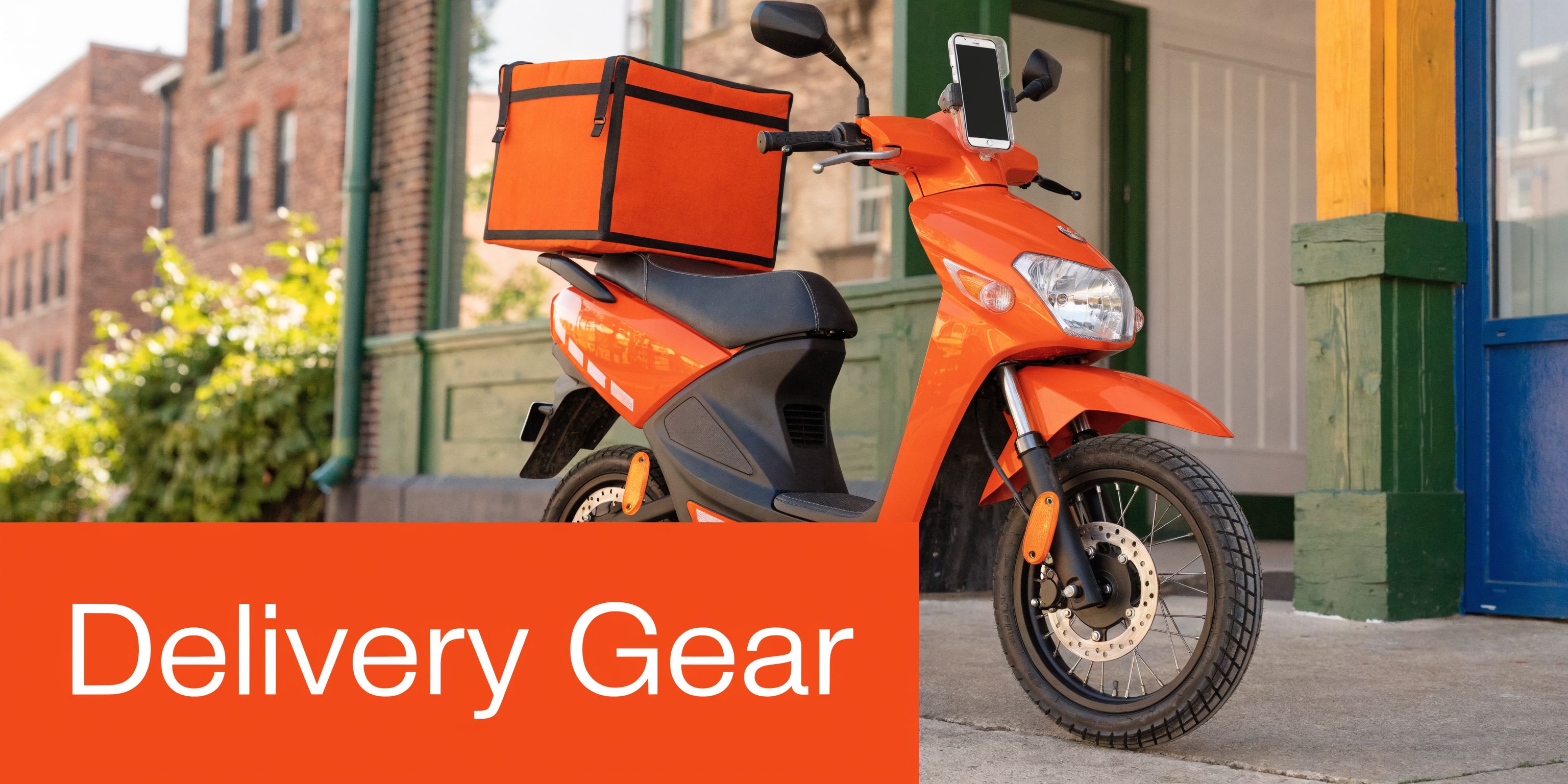
Luggage that stays stable
The wrong luggage setup causes wobble, slow pickups, and unhappy customers. The right one keeps food upright, easy to access, and secure when the road surface gets rough.
For most moped-based delivery work, riders tend to choose between a hard top box and a soft insulated bag. Both can work.
- Hard top box suits riders who want security, shape retention, and a cleaner professional setup.
- Soft insulated bag can be lighter and more flexible, especially for mixed order sizes.
- Solid mounting hardware matters either way. A poor rack or loose plate will turn every pothole into a problem.
If the luggage shifts under braking or when cornering, the bike will tell you immediately. Fix that before the shift, not after the near miss.
Security needs layers
Delivery bikes are visible working assets. They’re parked outside restaurants, flats, and shops all day. A single weak lock isn’t enough.
A better approach is layered security:
- Primary lock such as a quality chain or D-lock through a solid anchor point
- Secondary deterrent like a disc lock or alarm
- Tracker so recovery is at least possible if the bike is taken
- Secure box hardware because weak luggage fixings are an easy theft point too
Don’t build your entire security plan around “I’m only stopping for a minute”. Riders say that right before the expensive lesson.
Your phone setup is part of the bike
For delivery work, navigation isn’t an accessory. It’s operating equipment. A bad phone mount wastes time and creates risk because you’ll keep glancing down or stopping to reposition it.
A good mount should hold steady over rough surfaces, keep the screen readable in rain, and allow charging if your shifts are long. Cable routing matters too. Loose cables look untidy and eventually become one more thing to fail.
Here’s a useful visual on practical delivery setup and rider thinking mid-shift:
Weather kit protects your earnings
Bad weather ruins shifts when riders treat clothing as an afterthought. You don’t need fancy gear for the sake of it. You need gear that keeps you functional.
Focus on:
- Waterproof outer layer that doesn’t flap and distract at speed
- Gloves that stay usable in rain
- Footwear with grip for repeated stop-start work on wet surfaces
- Layers you can adjust as the shift changes temperature
Cold hands slow everything down. Wet kit wrecks concentration. Fogged visors make routine junctions more stressful than they need to be.
A comfortable rider makes cleaner decisions. Cleaner decisions usually mean faster, safer, less frustrating shifts.
Small upgrades that earn their keep
Some accessories don’t look important until you’ve worked without them.
A practical shortlist:
AccessoryWhy it matters on shiftPhone mountFaster routing, fewer stops, less fumblingTop box or delivery bagBetter load control and food protectionWeatherproof glovesMore control and less fatigueLock setProtects the machine during constant short stopsUSB charging solutionKeeps navigation alive through long sessions
The best fit-out doesn’t have to be complicated. It just needs to remove friction from the work.
Recommended Models and Fleet Electrification
Friday night in a UK city usually exposes bad buying decisions fast. A rider on a light 50cc-equivalent machine is fine in the centre, then struggles the moment the app starts pushing jobs out to steeper roads or faster A-road links. Another rider buys a bigger bike than the work really needs and gives away money on purchase price, insurance, and extra bulk at every stop. For food delivery, the right answer is route fit, legal fit, and support fit.
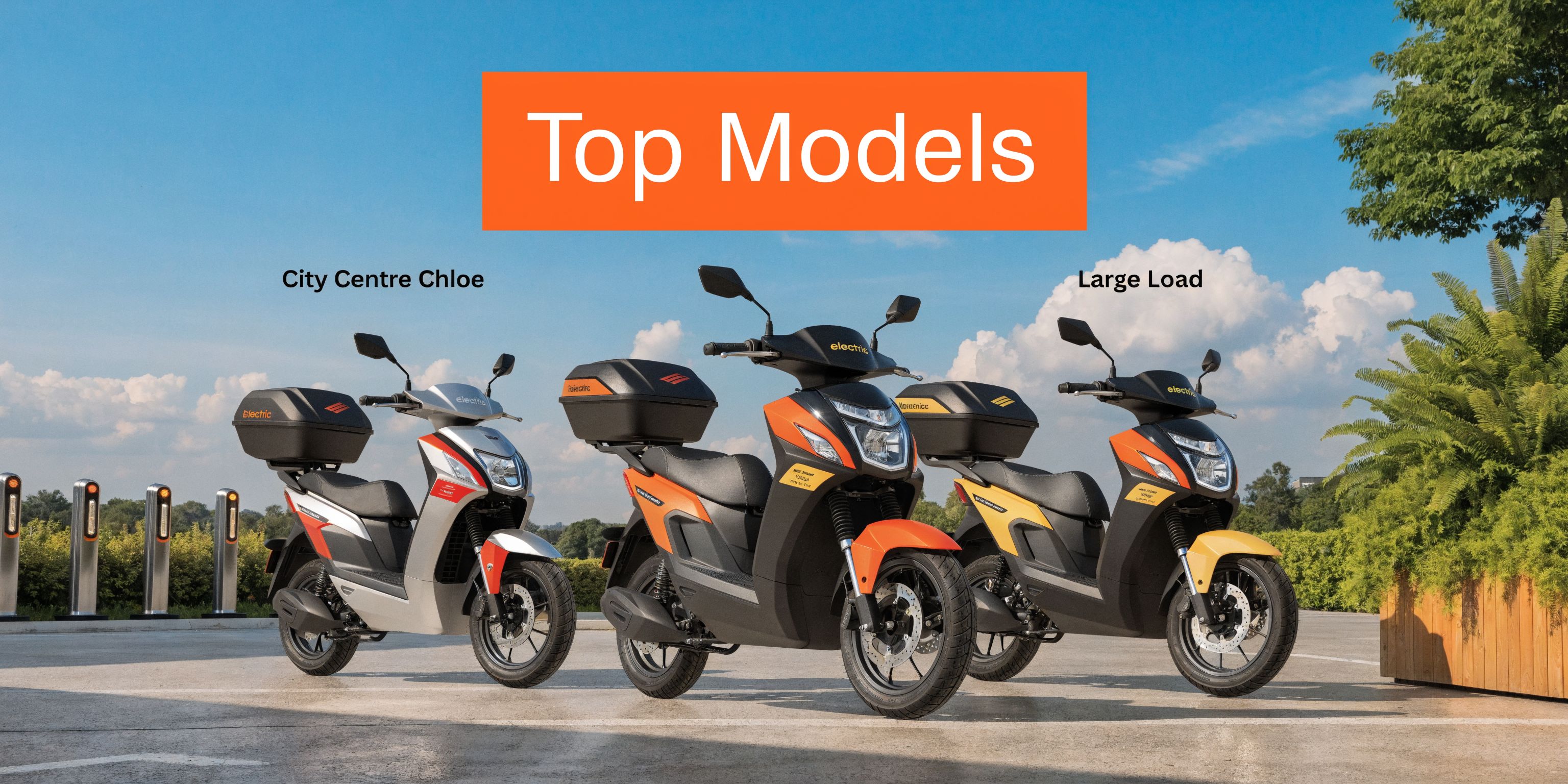
This matters even more because this guide is not about pedal-assist e-bikes or EAPCs. It is about UK-compliant electric mopeds and motorcycles used for paid delivery work, where registration, licensing, road legality, and hire-and-reward insurance change the buying decision completely.
City-centre riders
Dense urban work rewards a machine that is light, predictable, and easy to park ten times an hour. If most jobs stay inside a compact zone, a smaller electric moped often does the job better than a larger 125cc-equivalent bike.
That setup suits riders who spend most of the shift in traffic, deal with tight parking, and rarely need sustained higher-speed road work.
A city-focused machine is usually the better fit for riders who:
- Stay inside a small delivery radius
- Handle frequent short drops
- Need sharp pull-away response at low speed
- Want lower weight and easier filtering
Models from brands such as Super Soco CPX often suit this type of work because they are built around urban use, not headline speed.
Riders covering broader territory
Suburban and mixed-route delivery is a different job. A bike can feel perfectly acceptable in the centre, then start to feel strained on hills, ring-road sections, or longer runs between restaurant clusters and housing estates.
That is where a 125cc-equivalent electric moped or motorcycle starts to make more sense. The benefit is not image. It is keeping pace safely, carrying a loaded box without the bike feeling flat, and finishing the shift without worrying that every longer job is draining the battery plan.
Stronger road-going models, including bikes in the Vmoto Stash category, are better suited to riders who regularly work outside dense city cores.
What works for restaurants and takeaway fleets
Fleet electrification only works when the business treats the vehicles as working tools, not showroom pieces. The best fleet setups are boring in a good way. Same bike class, same luggage layout, same charging routine, same handover process.
For restaurants and takeaways, standardisation usually matters more than chasing the latest model. If one rider uses a small moped, another uses a larger motorcycle, and a third uses something with a different battery and charger setup, small operational problems pile up every day.
Fleet operators usually get better results when they standardise:
- Vehicle type so training and servicing stay consistent
- Luggage setup so food protection is the same across every rider
- Charging process so bikes are ready for the next shift
- Security routine for keys, parking, and overnight storage
A proper fleet choice also has to stay inside UK moped and motorcycle rules. That means registered road vehicles, the correct rider licence or CBT status, and insurance written for delivery use. Pedal-assist e-bike advice does not cover that problem.
Where model selection goes wrong
The common mistakes are predictable.
Some riders buy too small because the entry price looks easier. Then the bike spends every busy shift working at the edge of what it can comfortably do. Others buy too much performance for a short-radius delivery zone and carry the extra cost without getting much back.
Businesses make a different mistake. They mix several models into one fleet, then deal with mismatched chargers, uneven maintenance schedules, and confused rider handovers.
The profitable approach is simpler. Match the machine to the route, not the ideal route. Match battery capacity or swap strategy to the longest normal shift. Match the carrying setup to the size and type of orders being moved.
Buy for the hardest regular shift you work. That is the setup that protects earnings.
Brand and support matter more for working riders
A delivery rider needs more than a decent spec sheet. Parts availability, warranty support, dealer competence, and downtime risk all affect income.
That is why established brands with real UK moped and motorcycle support are usually the safer bet for paid delivery work. Names such as Vmoto, Super Soco, Horwin, Segway, Naxeon, and LiveWire sit in different parts of the market, and they are not equally suited to the same rider. Some fit city delivery far better than others.
The main point is straightforward. Choose from the road-legal electric moped and motorcycle market, then filter by your route, licence position, and insurance reality. That is how working riders avoid expensive mistakes.
Conclusion Your Next Step to Higher Earnings
If you’ve been searching for the best electric bike for food delivery, the main lesson is straightforward. For serious UK delivery work, the better answer is often an electric moped or electric motorcycle, not a pedal-assist cycle.
The case for switching comes down to three things. Lower running costs. Better fit for urban stop-start work. Fewer of the routine petrol hassles that drain your week. When the bike is chosen properly, fitted properly, and insured properly, it becomes a stronger business tool.
The part riders shouldn’t rush is the legal and practical detail. Get the vehicle class right. Get the insurance right. Buy enough range and torque for your route, not for an ideal summer afternoon. Fit the bike for the job with secure luggage, proper locks, and a navigation setup you can trust.
That’s what raises earnings over time. Not hype. Not a glossy spec sheet. Just a machine that works hard, stays compliant, and keeps your costs under control while you’re out earning.
If you’re ready to move from petrol costs and constant workshop headaches into a delivery setup that’s built for UK roads, have a look at Flex Electric. They specialise in electric mopeds, scooters, and motorbikes rather than pedal-assist bicycles, and they offer the kind of straight-talking advice delivery riders need on speed, range, finance, accessories, and real-world suitability.
Find us
You will find us at 74 Dalry Road, Edinburgh, EH11 2AY
Showroom Opening Times:
Monday: By Appointment
Tuesday to Friday: 11am - 5:00pm
Saturday: 10am - 5pm
Sunday: By Appointment
