
Electric Bike For Food Delivery: Maximize Your Profits
Flex Electric
The UK's #1 Electric Moped and Electric Motorbike dealer.

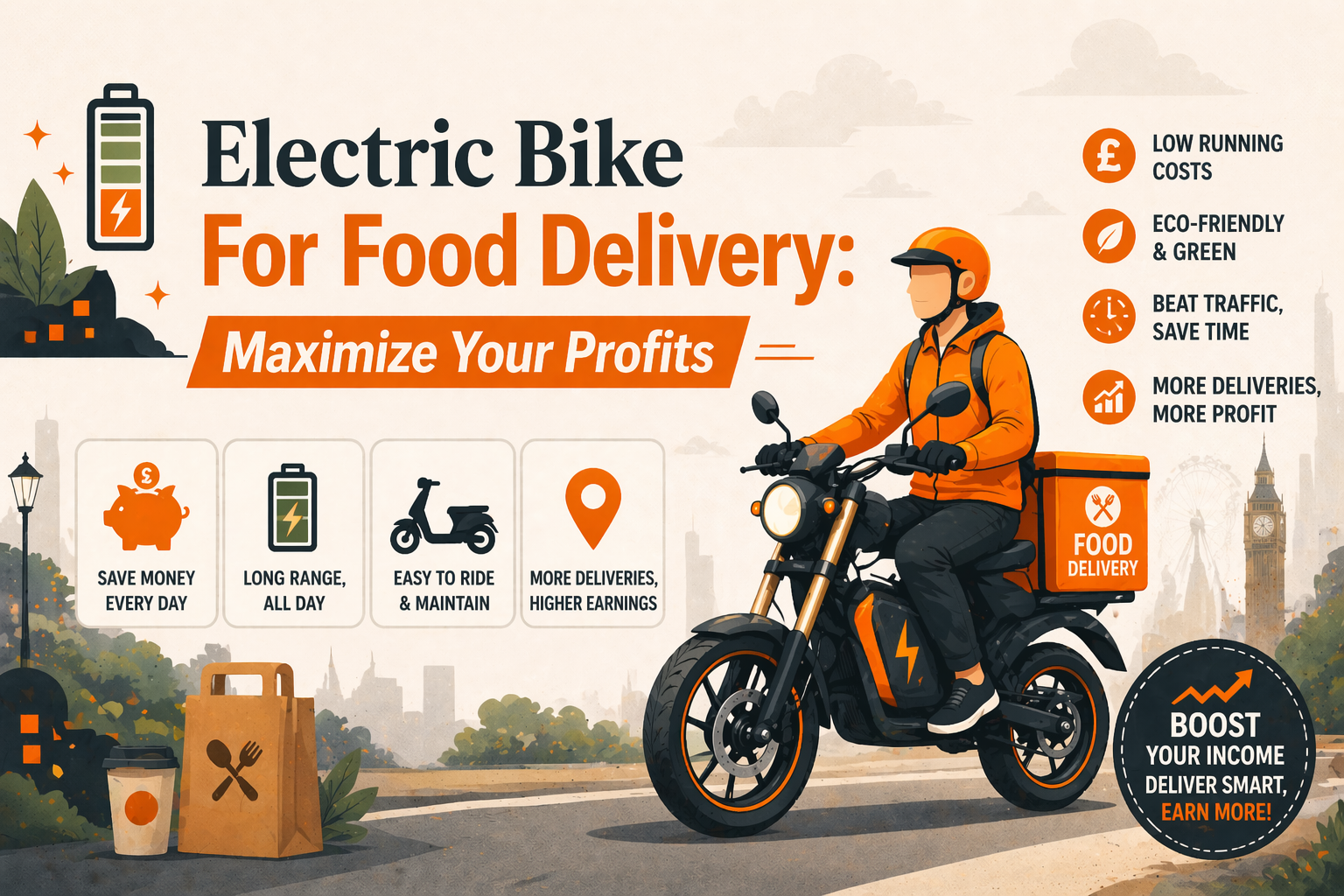
If you're searching for an electric bike for food delivery, you're probably trying to solve a practical problem. You need to finish more drops, spend less on the vehicle, and stop losing money to fuel, repairs, and downtime.
A lot of riders start on a petrol scooter because it feels like the obvious middle ground. It’s quicker than a push bike, easier than a car, and familiar. Then significant costs appear. Fuel keeps draining your weekly takings. Small mechanical faults turn into missed shifts. A cheap scooter becomes expensive the moment it sits off the road.
That’s why more working riders have moved electric. But there’s an important distinction that most guides blur. A pedal-assist e-bike and a proper electric moped or motorcycle are not the same tool. If you're riding a few casual hours in a dense city core, a legal pedal-assist bike can work. If you're trying to do professional food delivery across full shifts, carry bulky orders, and keep earning without compromise, an electric moped is usually the better fit.
Introduction Why Pros Use Mopeds Not Pedal Bikes
The phrase electric bike for food delivery gets used to describe everything from a 250W pedal-assist cycle to a full road-legal electric scooter. That causes confusion, especially in the UK, where the legal and practical gap between those machines is massive.
The rider I see most often is already doing the maths in their head. They know what they’re spending on petrol. They know how many short trips, stop-start miles, and idle minutes make a fuel bill feel worse than it should. They also know a delivery vehicle isn’t there to be interesting. It’s there to make the shift work.
That’s where electric starts making sense.
According to Market Report Analytics on electric delivery bikes, riders report weekly operating expenses of £3-£5 for charging, versus £60-£80 for petrol scooters, translating to annual savings of over £2,000 per rider. The same source says these vehicles can reduce delivery times by up to 30% in congested traffic.
Those numbers explain why riders search this topic aggressively. But they don’t settle the equipment question.
What works for casual riders versus full-time riders
A pedal-assist bike has a place. It’s cheap to run, simple, and useful in bike-heavy city centres. But once delivery becomes a serious income stream, the weak points show up fast:
- Range pressure: Shorter runtime turns into charging anxiety mid-shift.
- Load issues: Heavy bags and stacked orders change the handling.
- Weather fatigue: Long UK shifts in wind and rain are harder when the machine still expects a lot from your legs.
- Speed limits: Urban riding isn’t only about top speed. It’s also about maintaining momentum with load.
A proper electric moped handles that workload better. You get road presence, more consistent pace, better carrying ability, and a platform built around transport rather than exercise.
Practical rule: If the vehicle is directly tied to your income, choose the one that protects uptime first.
The business side riders often ignore
Platforms matter too. Riders often focus on the vehicle before they look at where the work comes from, what order types they’re likely to carry, and which operators suit their area. If you’re comparing platforms or looking at how restaurants choose dispatch partners, this guide to best delivery services for restaurants gives useful context on how the delivery ecosystem functions.
That matters because your vehicle choice should match the kind of jobs you’re most likely to get. Tight city-core jobs reward agility. Wider suburban runs reward range and road speed. Mixed app work rewards flexibility most of all.
Understanding UK Law for Your Delivery Moped
The first mistake riders make is assuming that if it’s electric, it’s all broadly the same in the eyes of UK law. It isn’t.
What counts as an EAPC
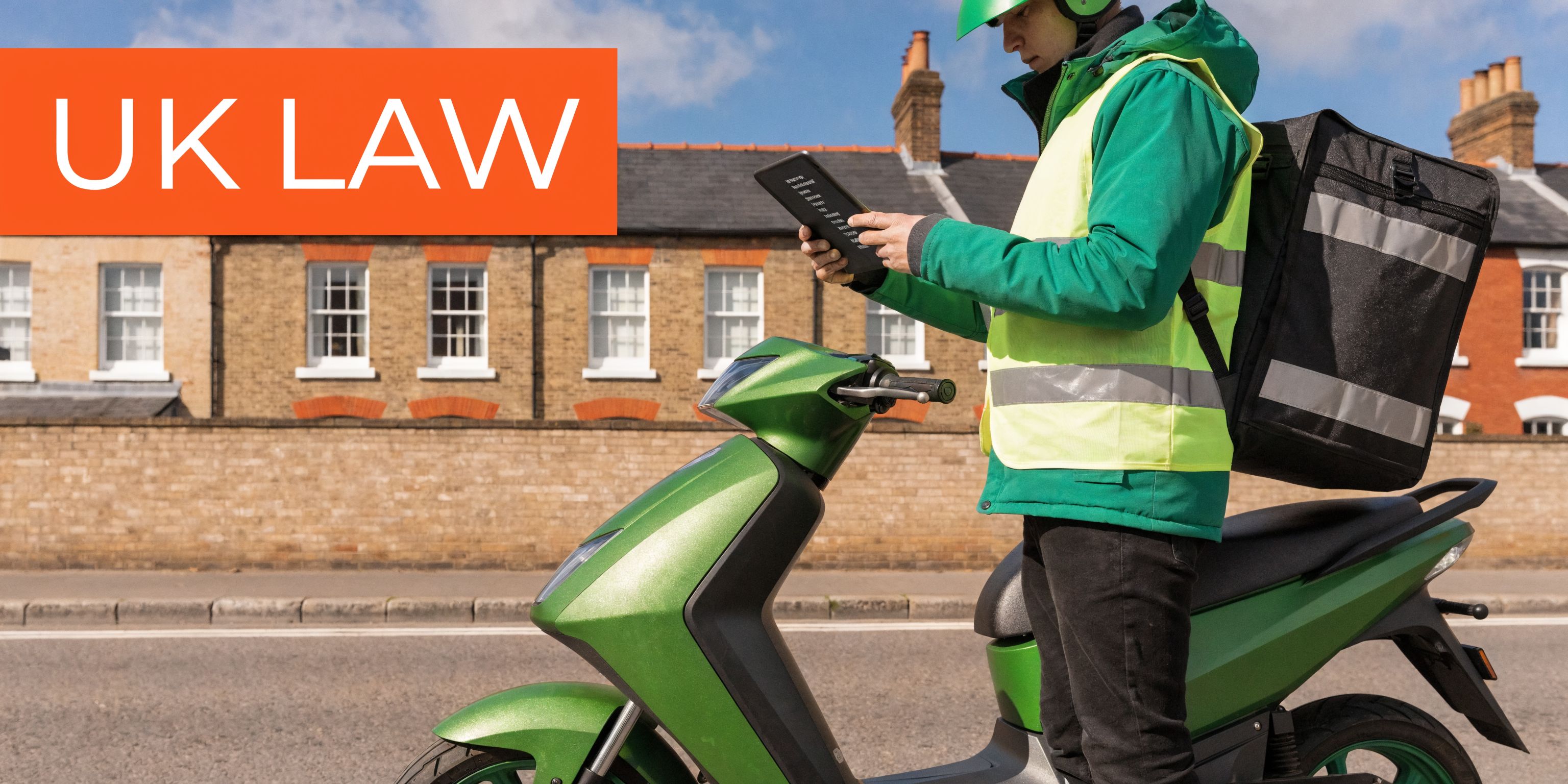
In the UK, a pedal-assist e-bike is usually treated as an Electrically Assisted Pedal Cycle, often shortened to EAPC.
The key limit is simple. UK law caps these machines at 250W continuous rated power and 15.5 mph assisted speed, which is why they can be used without the normal motorcycle requirements. The same source also makes the practical split clear. Electric mopeds require a CBT or AM licence but offer unassisted performance better suited to professional delivery work, as outlined by Segway’s guide to food delivery e-bikes and mopeds.
If you're relying on your vehicle for long shifts and regular earnings, that distinction matters more than the marketing label.
Why pedal-assist limits matter in real delivery work
On paper, licence-free sounds attractive. In practice, the legal cap shapes everything.
A 250W pedal-assist setup is built around bicycle rules, not commercial carrying work. Once you add a loaded delivery box, repeated pull-aways, gradients, wind, and long hours, you’re asking a bicycle-class machine to do a moped’s job.
That doesn’t mean EAPCs are useless. It means you should be honest about the work.
A rider working a compact city patch may still do fine on a legal pedal-assist machine. A rider crossing larger zones, running back-to-back orders, or carrying heavier loads is usually better served by an electric moped.
The legal category tells you what the vehicle was designed to be. Don’t ignore that just because the word “bike” appears in the listing.
What an electric moped changes
Once you move into a road-going electric moped or motorcycle, the vehicle sits in a different legal category from an EAPC.
That brings obligations. It also brings capability.
You should expect to deal with:
- CBT and licence position: For many riders, that means completing CBT and checking which class they’re entitled to ride.
- Insurance: You’re on a motor vehicle, so proper cover matters.
- Registration: Road-legal electric mopeds need to be registered.
- Road compliance: Lights, mirrors, tyres, braking setup, and the rest need to meet the standard for road use.
What you get back is a machine designed for powered transport, not assisted pedalling.
The simple decision test
Use this quick test before buying anything sold as an electric bike for food delivery.
QuestionPedal-assist EAPCElectric mopedNo licence, insurance, or registration wantedUsually yesNoCarrying regular delivery load over longer shiftsLimited fitStrong fitBuilt for professional road-speed delivery workNot reallyYesBest for riders treating delivery as a businessSometimesUsually
A lot of riders waste money by buying for convenience first and suitability second. That usually ends with a resale, an upgrade, or a legal headache.
Choosing Your Electric Delivery Moped Key Specifications
Most buying mistakes come from chasing the wrong spec. Riders fixate on headline speed, then discover the primary issue is battery runtime, cargo setup, or whether the machine still feels stable with food on the back.
Range matters more than bragging rights
For delivery work, range is an earnings spec.
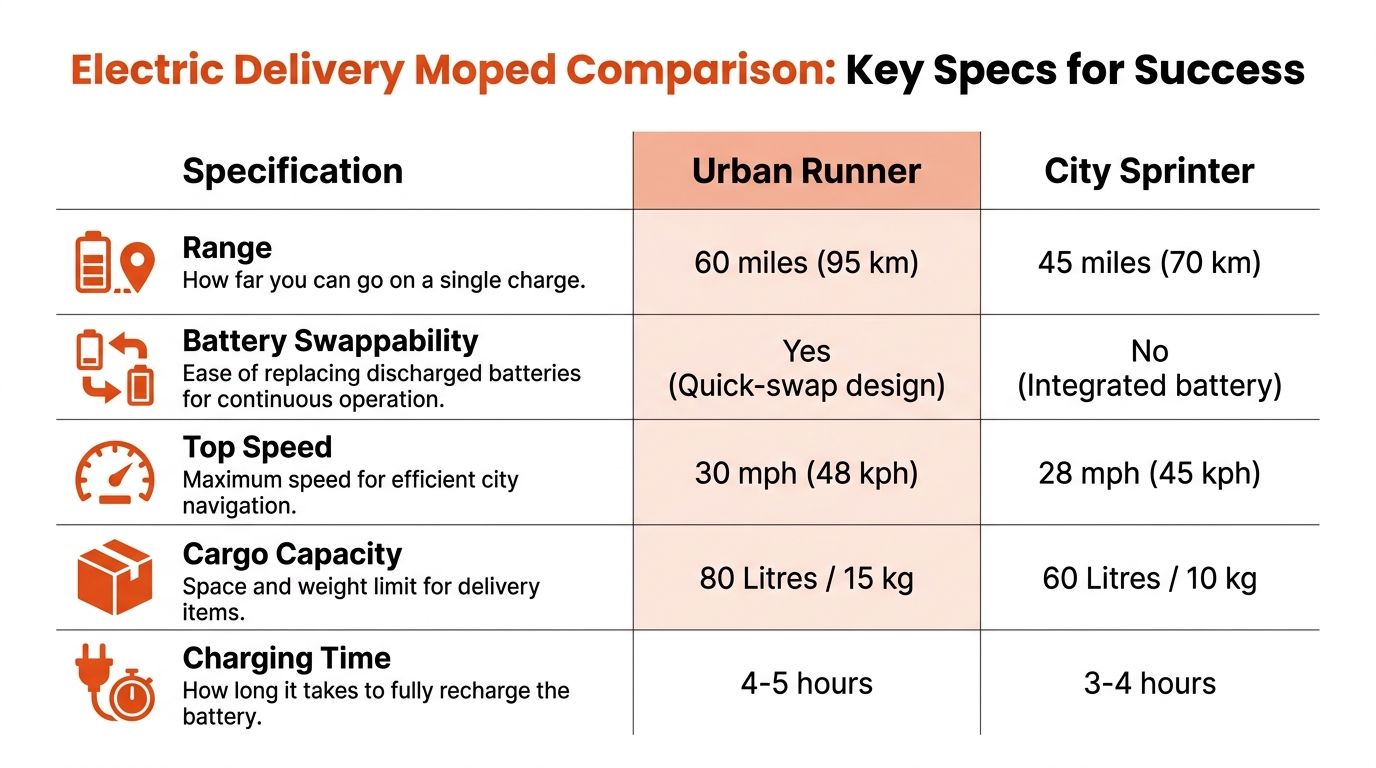
A battery that runs out early doesn’t just inconvenience you. It cuts the shift in half, forces you home, or leaves you charging when other riders are taking orders. According to Zoomo’s guide to choosing the best e-bike for delivery, battery capacity directly dictates delivery earnings. The same source says a 17.5Ah battery can enable over 70 miles per shift, boosting daily orders by 25% through uninterrupted runtime compared to smaller batteries only viable for 4-hour shifts.
That’s one of the few stats in this space that aligns with what riders experience. Runtime changes how long you can stay in the game.
What to look for in real use
Ignore claimed performance until you’ve answered these questions:
- How long is your normal shift? A dinner rush setup is different from a full-day multi-app shift.
- How spread out is your zone? Dense central work and suburban work are different jobs.
- Do you climb hills often? Terrain changes battery draw and rider stress.
- Can you swap batteries quickly? Swappable packs are a major advantage for commercial use.
A lot of riders are better off with a slightly less flashy machine and a more practical battery setup.
Swappable batteries are a working rider feature
If you do enough hours, swappable batteries stop being a nice bonus and start becoming operationally important.
You don’t have to structure the day around one charging window. You can keep moving. That’s one reason delivery-focused mopeds often make more sense than machines designed mainly for leisure commuting.
Workshop view: A delivery vehicle should fit the shift. The shift should not have to fit the vehicle.
Payload and carrying stability
Food delivery punishes weak rear setups. The machine has to stay composed with a loaded box, repeated stops, uneven roads, and sharp turns into side streets.
You want a chassis that stays calm under load, not one that feels twitchy once the bag fills up. Delivery riding means your vehicle rarely runs empty for long. That’s why rear rack quality, mounting points, and suspension behaviour matter.
Good carrying ability helps with:
- Larger orders: Better fit for stacked bags and drinks.
- Safer handling: Less wobble at low speed.
- Cleaner workflow: Easier loading and unloading between drops.
Speed and acceleration in town
For city delivery, usable acceleration often matters more than headline maximum speed.
You’re constantly pulling away from lights, filtering through moving traffic, and merging after short stops. A machine that gets up to pace cleanly feels easier to work on than one that only looks good on paper.
There’s also a difference between a city-centre rider and a rider who spends time on faster connecting roads. The first rider can prioritise manoeuvrability. The second usually needs more performance headroom.
Charging time and operating rhythm
Charging time affects how disciplined your shift planning has to be.
If you only ride short windows, slower charging can be manageable. If delivery is your main income, downtime quickly becomes the hidden cost nobody advertises. Riders doing back-to-back lunch and dinner sessions should think carefully about whether one battery and one charging cycle fits their week.
Electric Moped Tiers for Food Delivery
Specification50cc Equivalent (L1e-B)125cc Equivalent (L3e-A1)Best useDense city centres, shorter urban routesMixed city and suburban routesLicensing burdenLower entry point for many ridersMore involved, but more capableRoad paceWell suited to local delivery trafficBetter for longer links and broader zonesCarrying confidenceGood for standard delivery loadsBetter for heavier or more demanding useTypical rider fitNew riders, compact delivery areasFull-time riders, wider territories
What doesn’t work
Some choices look cheap at the point of sale and get expensive later.
Avoid these mistakes:
- Buying by top speed alone: That’s how riders end up with the wrong battery and poor carrying setup.
- Ignoring seat and riding position: You’ll feel that decision by the end of the week.
- Choosing a machine with awkward luggage mounting: Bad mounting wastes time every shift.
- Treating delivery like commuting: A commuter machine can cope with work. A work machine is built for repetition.
The right electric bike for food delivery, if you mean a true delivery-ready moped, should make the work easier hour after hour. If it only feels good in a showroom or on a short test ride, keep looking.
Essential Accessories for Professional Delivery Riders
A stock moped is only the starting point. The riders who work smoothly usually have a setup that’s organised, weather-ready, and quick to use between orders.
Carrying kit that helps
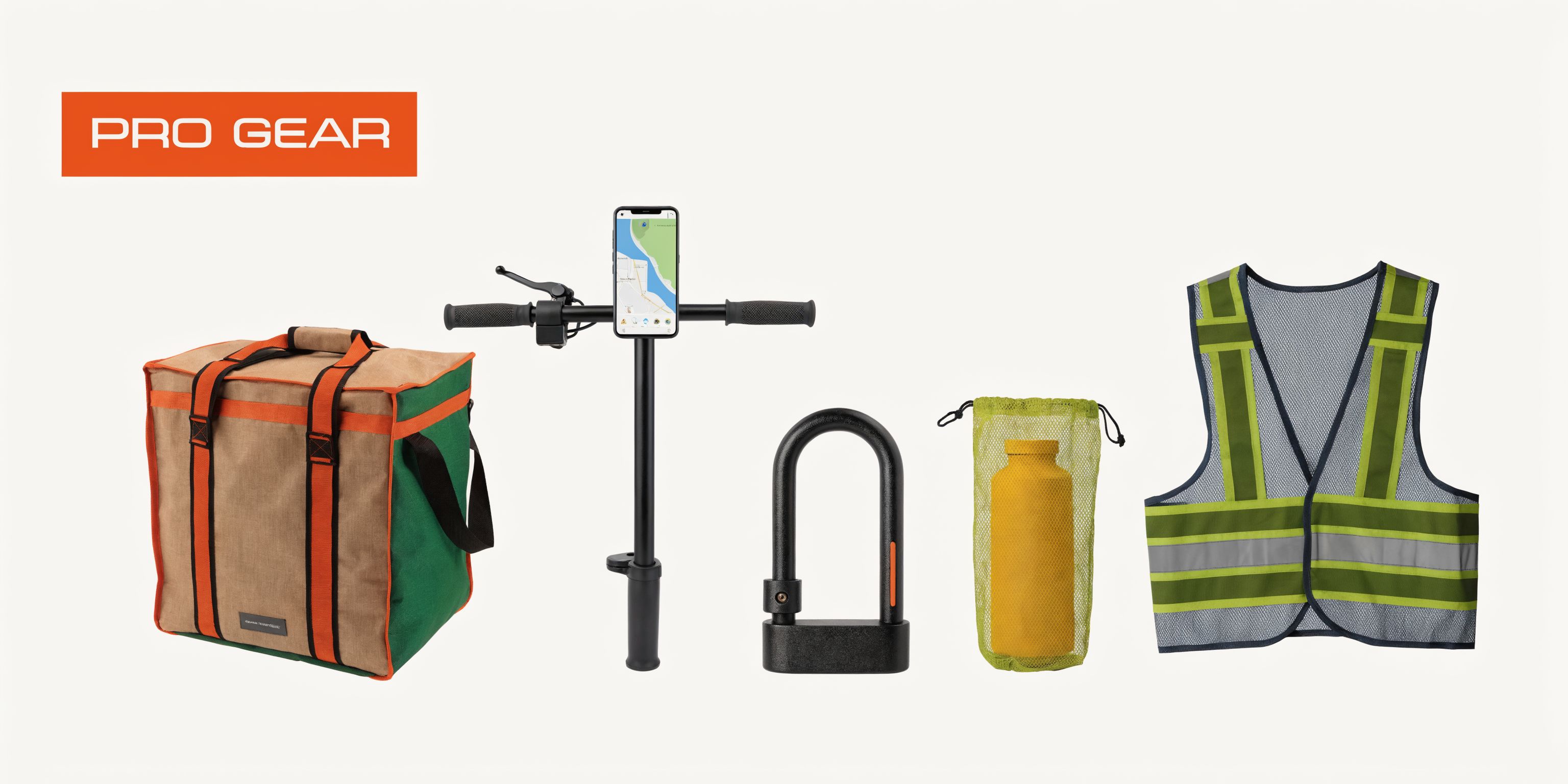
Start with the load system. A proper insulated top box or delivery bag mount saves time and protects the order.
Choose based on the work you do most:
- Top boxes: Better for structure, weather protection, and keeping the load secure.
- Soft insulated bags: More flexible for mixed order shapes.
- Side storage: Useful for small extras, but it shouldn’t upset balance.
Restaurants are also changing how they pack takeaway orders. If you work with businesses reviewing packaging choices, this guide to sustainable takeaway containers is useful because bad packaging creates spillage, crushed food, and complaints before the rider even sets off.
Navigation and charging on the move
A weak phone mount is one of the most annoying failures on shift. It shakes, slips, or points the screen somewhere useless.
Use a mount that’s secure, easy to glance at, and resistant to wet weather. If the moped has USB charging, use it. If it doesn’t, plan for power before the shift starts.
Good navigation setup means:
- Faster decision-making at junctions and drop-off points
- Less fumbling with gloves on
- Fewer delays when the app updates mid-ride
Security and day-end peace of mind
Delivery bikes and mopeds get parked in unpredictable places. That makes security essential.
Carry layered protection:
- A solid lock for quick stops
- A second deterrent if the area is poor
- A tracker if your vehicle or insurer setup supports one
Cheap security usually feels fine until the day it isn’t.
A quick visual walkthrough helps here:
Rider kit that keeps you working
The rider matters as much as the machine. If you're cold, soaked, or constantly adjusting bad kit, your pace drops and your judgement goes with it.
Prioritise:
- A proper helmet: Comfortable enough to wear all shift.
- Waterproof outerwear: UK weather doesn’t wait for the end of the rush.
- Gloves suited to wet riding: Grip and comfort both matter.
- Hi-vis where needed: Especially useful in poor light and roadside pick-up points.
A rider who stays dry and organised usually rides more smoothly than a rider with the fanciest machine and the worst setup.
Operating Your Electric Moped Charging and Maintenance
Most riders overestimate how complicated electric ownership is. Day to day, it’s usually simpler than running petrol.
Charging without drama
The best charging routine is the one you will stick to. For most riders, that means plugging in at home after the shift and starting the next day full.
If you use swappable batteries, the routine gets easier because you can rotate packs and reduce pressure on a single charging window. The key point is consistency. Delivery work rewards preparation more than improvisation.
A sensible rhythm looks like this:
- Finish the shift and charge promptly
- Keep the battery in a suitable place
- Check charge status before leaving, not when you’re already late
- Avoid treating every day like an emergency top-up session
Battery habits that help
A battery is one of the most valuable parts of the vehicle, so treat it like working equipment, not an afterthought.
Good habits include:
- Keep it clean and dry
- Use the proper charger
- Watch for damage or loose fittings
- Don’t ignore changes in normal performance
Many riders coming from petrol focus on motors and forget the battery is an essential operating asset.
Maintenance is simpler, but not optional
Electric mopeds remove a lot of the small petrol annoyances. No oil changes. No spark plugs. No engine vibration shaking things loose in the same way.
That doesn’t mean you can neglect the bike.
Check the basics regularly:
- Tyres: Wear, pressure, puncture risk
- Brakes: Pads, feel, stopping confidence
- Lights: Visibility matters for legal and practical reasons
- Fasteners and racks: Delivery work puts strain on fittings
What riders often miss
There’s still a market knowledge gap around electric delivery vehicles in the UK, especially around legal use and practical setup. That gap is noted in Gyroor’s discussion of delivery e-bike regulation awareness, which highlights that many riders are unclear on power constraints, licensing, and legal operation.
That same confusion shows up in maintenance. Riders either overcomplicate electric ownership or treat it as maintenance-free. Neither approach helps.
Keep the routine boring. Boring vehicles make money.
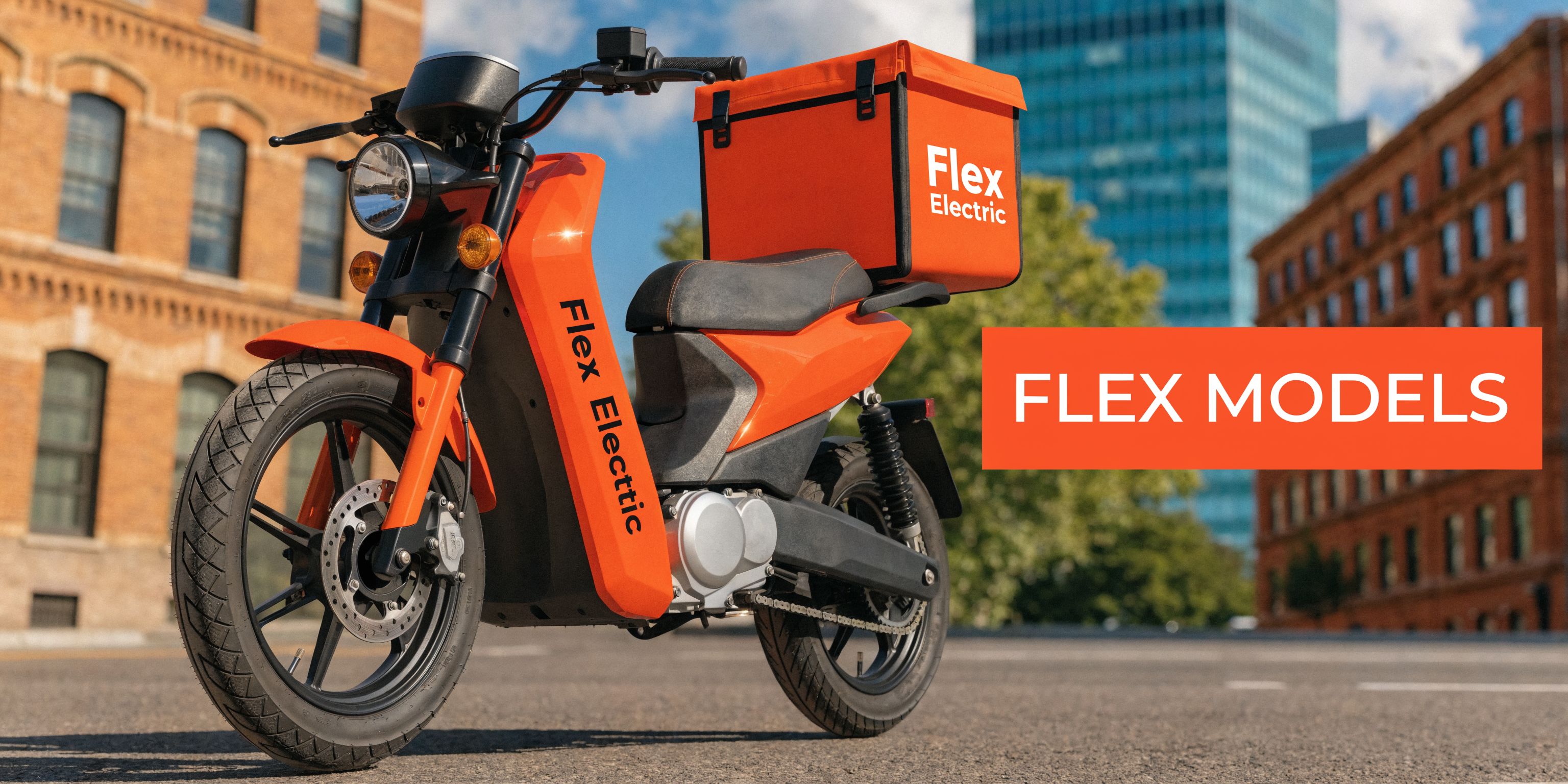
Flex Electric Models and Programmes for Delivery
For delivery work, different electric mopeds suit different operating patterns. The right choice depends less on style and more on where you ride, how long you ride, and what kind of jobs you take.
City-centre riders
Dense urban riders usually need a machine that feels narrow, light, and easy to manage in repeated stop-start traffic.
That’s where models in the 50cc-equivalent electric moped class often make the most sense. They’re well suited to compact zones, quick pick-ups, and shorter turnarounds between orders. Riders working central London, Edinburgh, or similarly tight streets often care more about ease of use than outright pace.
The best fit here is usually a model that offers:
- straightforward controls
- easy loading with a rear box
- simple charging routine
- predictable handling in traffic
Names riders commonly look at in this category include Segway and Vmoto machines, because they sit in the practical middle ground between city agility and daily usability.
Riders covering broader territory
Some riders don’t stay in a neat city-core loop. They get pushed into wider zones, larger roads, and longer runs between restaurants and customers.
That’s where a 125cc-equivalent electric moped or motorcycle starts to earn its keep. The extra capability gives more breathing room on mixed roads and reduces the feeling that the machine is working at its limit.
This class is usually the better option for:
- riders doing long sessions across multiple areas
- suburban delivery routes
- businesses assigning staff to regular local delivery rounds
- riders who want one machine for work and general transport
Models from brands such as Horwin, Vmoto & Segway are more relevant here than anything sold as a bicycle alternative.
Fleet use versus solo rider use
A solo rider often buys for flexibility. A business buys for repeatability.
If you’re running takeaway deliveries for a restaurant, dark kitchen, florist, or venue, the key issues are different from those of an app rider. You care about whether staff can learn the bikes quickly, whether servicing is organised, and whether the fleet can be standardised around one charging and maintenance routine.
For business use, electric mopeds can make daily operation cleaner and easier to manage because:
- they’re quieter around residential areas
- they reduce the fuss of petrol refuelling and engine upkeep
- they can be equipped consistently with boxes, racks, and rider kit
- they present a more organised image to customers
Off-road bikes are not delivery bikes
This distinction is important; plenty of riders browse all-electric categories and assume any two-wheeler might be adaptable.
It isn’t.
An off-road electric motorcycle or kids motocross bike is not the answer for food delivery. Those machines are built for private land or specialist use, not road-going commercial work. If the bike isn’t road-legal and properly equipped for the street, it has no place in a delivery setup.
What the better buyers do
The riders and operators who choose well usually ask boring questions first.
They ask:
- Will this machine stay comfortable over repeated shifts?
- Is the luggage setup straightforward?
- Can I get support and servicing without chasing people?
- Does the class of vehicle match the roads I use?
That’s the right mindset. Delivery work rewards practical choices, not novelty.
Conclusion The Smart Switch to Electric Delivery
The term electric bike for food delivery sends a lot of riders into the wrong part of the market. If you deliver occasionally in a tightly packed urban centre, a legal pedal-assist bike may be enough. If you rely on delivery income, a road-legal electric moped or motorcycle is usually the smarter working tool.
The case for switching isn’t complicated. You want lower running costs, fewer petrol-related headaches, less maintenance fuss, and a vehicle that suits long, repetitive commercial use. You also want something that matches UK law instead of skimming past it.
The riders who do best usually treat the vehicle as part of the business. They don’t buy the cheapest option and hope. They buy for uptime, legal compliance, carrying ability, and shift length.
That's the true difference between a machine that looks affordable and one that improves your net earnings.
If you're weighing up the move, focus on your route type, your shift length, and the kind of loads you carry most often. Buy for the job you do every week, not the one you imagine on a perfect day.
Frequently Asked Questions
Can I use an off-road electric motorcycle for food delivery
No. If it isn’t road-legal, insured where required, and properly registered where required, it isn’t suitable for delivery work on public roads.
Off-road machines are built for different conditions and a different legal environment. They’re not a shortcut into professional delivery.
Is a car licence enough to ride an electric delivery moped
It depends on your licence history and the vehicle class. Riders should check the exact entitlement attached to their licence and the category of machine they want to use.
If you’re not sure, verify it before you buy. Delivery work is not the place for assumptions about licensing.
Are pedal-assist e-bikes better because they don’t need insurance and registration
They’re simpler legally, but that doesn’t automatically make them better for the job.
For lighter-duty urban work, a legal EAPC can be useful. For riders treating delivery as serious paid work, the limitations often matter more than the convenience.
What matters more for earnings, speed or battery
Battery usually matters more over a full working day.
A vehicle that keeps you out on the road and available for more jobs tends to outperform one that looks faster but forces interruptions.
Is electric maintenance really that much easier than petrol
In normal use, yes. You still need to check tyres, brakes, lights, and fittings, but the routine is usually cleaner and simpler than petrol ownership.
The main benefit isn’t magic. It’s fewer engine-related maintenance demands.
How does 0% APR finance usually work
In simple terms, you pay for the vehicle over time without added interest, subject to the provider’s terms and approval process.
You still need to understand the deposit, payment schedule, and any eligibility requirements before signing anything.
Should I buy a 50cc-equivalent or 125cc-equivalent model
Choose based on the roads and distances you ride.
A 50cc-equivalent machine often suits dense urban delivery. A 125cc-equivalent machine usually makes more sense if your routes are broader, faster, or more demanding.
Can one electric moped work for both app delivery and business use
Yes, if the machine has the right carrying setup and the performance matches your route pattern.
That said, a rider doing ad hoc app work and a business running regular branded deliveries may need different accessories and support arrangements.
If you're ready to move from searching to choosing, Flex Electric is a strong place to start. They specialise in UK electric mopeds, scooters, motorbikes, off-road models, and kids MX bikes, with straight advice, nationwide delivery, 0% APR finance options, and a range built around real-world riding rather than vague marketing claims.
Find us
You will find us at 74 Dalry Road, Edinburgh, EH11 2AY
Showroom Opening Times:
Monday: By Appointment
Tuesday to Friday: 11am - 5:00pm
Saturday: 10am - 5pm
Sunday: By Appointment
