
Best Electric Commuter Bike UK Options for 2026
Flex Electric
The UK's #1 Electric Moped and Electric Motorbike dealer.

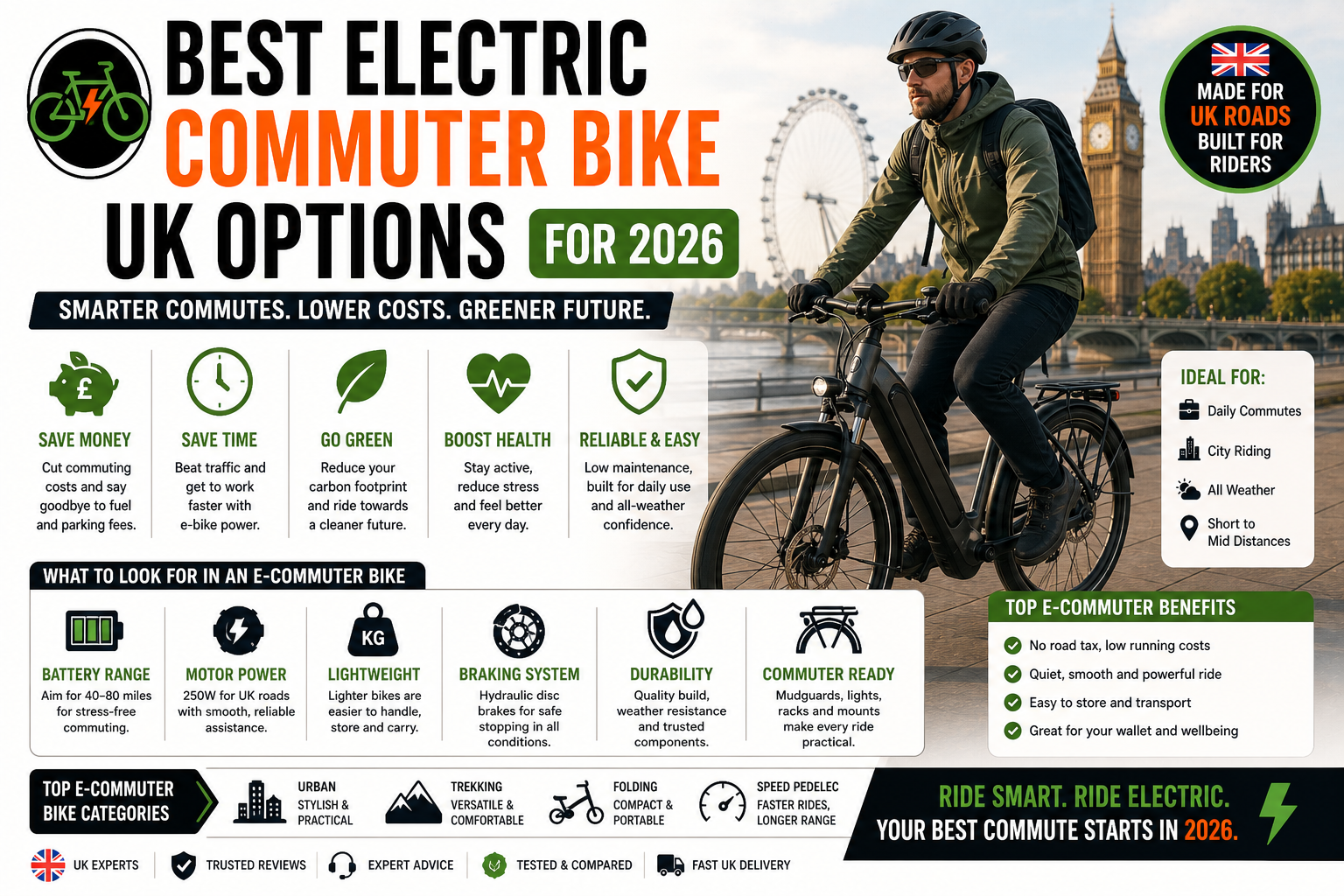
Most advice around the electric commuter bike uk search points you to a pedal-assist bicycle. That’s fine if your trip is short, your route is cycle-friendly, and you’re happy to work within bicycle rules and bicycle limits.
But a lot of UK commuters aren’t looking for a bicycle. They’re looking for a practical electric vehicle that gets them to work reliably, carries what they need, copes with poor weather, and doesn’t run out of usefulness the moment traffic speeds up. For many of those riders, especially delivery riders, an electric moped or motorcycle is the better answer.
Is an Electric Bike What You Really Need for Your UK Commute
Search for electric commuter bike uk and the advice usually points in the same direction. Buy a pedal-assist bicycle and treat the question as settled. That works for some riders. It misses a large group of commuters who are not trying to make cycling easier. They are trying to replace a car, a train leg, or a petrol scooter with something electric that can handle daily transport properly.

A significant gap exists between what many riders search for and what suits the job. Search results tend to centre on pedal-assist bikes and largely skip over electric mopeds and motorcycles, even though those machines often fit UK commuting better once the route gets longer, faster, heavier, or more weather-exposed.
When an e-bike is the wrong tool
An e-bike suits short urban trips, lighter loads, and riders who want the freedom of bicycle access. It also suits commuters with good cycle lanes, secure storage, and no pressure to arrive fresh for a full shift.
The limits show up quickly outside that narrow brief.
A rider covering suburban miles, mixing with faster traffic, carrying work kit, or doing delivery runs after office hours usually needs more than bicycle-level assistance. In practice, the common pressure points are easy to spot:
- Traffic pace: Pedal-assist bikes are comfortable in slower city traffic, but they feel out of their depth once roads open up and surrounding vehicles hold higher speeds.
- Load carrying: A laptop, lock, waterproofs, shopping, or a delivery bag can turn a light bicycle setup into a compromise.
- Poor-weather use: Winter commuting exposes weak points fast. Splash protection, riding position, and stability matter more than brochure photos suggest.
- Daily repeat use: A commuter vehicle has to perform on cold mornings, wet evenings, and back-to-back workdays, not just on a fair-weather test ride.
Many riders searching for an electric commuter bike are solving a transport problem, not shopping for a leisure bike.
What serious commuters usually value
Once the marketing is stripped away, UK commuters usually judge a machine by a few practical outcomes:
NeedWhy it matters on a UK commutePredictable journey timeYou need a vehicle that keeps up with the route you actually rideEnough range with marginCommuting is easier when detours, extra errands, or a second trip do not create charging stressCarrying capacityWork gear, shopping, or delivery equipment changes what is practicalComfort in poor weatherA bike that feels acceptable in July can feel punishing in JanuaryPractical ownershipCharging, storage, theft risk, and legal use affect the decision as much as the ride itself
That is why electric mopeds and motorcycles deserve far more attention in this conversation. They are built as transport first. For a large share of UK commuters, and especially riders who depend on their bike to earn, that makes them a better fit than an assisted bicycle.
The Legal Difference Between E-Bikes and Electric Mopeds
Search results often blur these categories together. UK law does not.
A compliant EAPC is treated broadly as a bicycle. An electric moped or electric motorcycle is treated as a motor vehicle. That single distinction affects where you can ride, what paperwork you need, what performance you can legally use, and what the bike is built to do day after day.
What counts as an EAPC
UK rules for an Electrically Assisted Pedal Cycle are tight. The bike must have working pedals. Motor assistance has to be linked to pedalling, apart from walk-assist, and the commonly cited commuter standard is a 250W continuous rated motor with assistance cutting off at 15.5 mph (25 km/h), as explained by Electric Bike 360’s guide to UK commuter e-bike law.
If a bike stays within that definition, the appeal is obvious. Riders aged 14 or over can use it without the licensing, registration, insurance, and number plate requirements that apply to road-going motor vehicles.
That freedom is real. So is the ceiling.
Once assistance cuts out, the rider is doing the work. On flatter, shorter urban trips, that can be perfectly sensible. On longer commutes, hilly routes, or stop-start work with cargo on board, the legal limit starts to shape the whole experience.
What changes with an electric moped
An electric moped is built under a different legal and engineering brief. It is not a bicycle with support. It is a powered road vehicle.
That changes the ownership requirements straight away:
- Licence: You need the correct entitlement for the class of vehicle.
- Registration: The bike has to be registered for road use.
- Insurance: Insurance is required.
- Number plate: A legal road setup includes one.
- Type approval and road compliance: The vehicle has to meet motor vehicle standards rather than bicycle rules.
It also changes what the machine can realistically deliver. Higher power, stronger acceleration, and better ability to hold pace with urban traffic are the practical upsides. The trade-off is straightforward. More capability comes with more legal responsibility.
Why commuters get this wrong
A lot of riders search for an electric commuter bike when what they need is light electric motor transport.
For a rider covering a short, flat trip with secure bike storage and no need to carry much, an EAPC can be the right answer. For a commuter using faster A-road sections, carrying tools or delivery kit, riding in poor weather, or relying on the vehicle for repeated daily mileage, the motor-vehicle category often fits the job better.
That is the point many bike roundups miss. They compare assisted bicycles against other assisted bicycles, then treat the moped category as if it is outside the conversation. For a large part of the UK market, especially working riders, it belongs at the centre of it.
Legal category is not a technicality. It determines the speed envelope, the carrying potential, the road role, and the admin you take on in return. Choose the category first. Then choose the machine.
A Head-to-Head Comparison for UK Commuters
The practical gap between an EAPC and an electric moped is wider than many buying guides admit. One is built around pedalling with motor assistance. The other is built to replace a powered trip.

For UK commuting, that difference shows up quickly. It affects route choice, arrival time, what you can carry, how tired you are by day's end, and whether the machine still feels like the right tool in January rain.
Side-by-side practicality
FeatureEAPC (Typical E-Bike)50cc Equivalent E-Moped125cc Equivalent E-MotorcycleLegal categoryBicycle-equivalent if compliantMotor vehicleMotor vehicleTypical use caseShort urban rides, lighter commutingCity commuting, errands, delivery workLonger commutes, faster roads, heavier daily useTraffic paceBest where cycling infrastructure is decent or traffic is slowBetter match for urban traffic flowBetter choice for faster roads and wider route optionsCarrying luggageFine for a backpack or light panniersBetter suited to boxes, racks and work kitBest for larger loads and more secure storage setupsWeather practicalityHighest rider exposureUsually more practical for poor weatherBetter for regular year-round road commutingRider effortYou still pedalMotor-driven transportMotor-driven transportBest fitRiders who want exercise built into the tripRiders replacing local car, bus or train journeysRiders treating commuting as serious daily transport
What changes on the road
Speed matters because road context matters.
An EAPC works well on short city routes, especially where cycle lanes are usable and junctions are close together. It becomes less convincing once the commute includes open stretches, faster traffic, a passenger-sized backpack, or the need to keep a consistent pace without arriving sweaty.
A 50cc-equivalent electric moped usually suits the middle ground. It takes the strain out of daily urban mileage, carries luggage better, and feels more natural as a replacement for public transport or a small car on shorter runs. For many commuters, that is the category that should be compared with an "electric commuter bike", even though plenty of roundups ignore it.
A 125cc-equivalent electric motorcycle goes a step further. It is the stronger option for riders using faster roads, covering longer distances, or commuting at fixed times when traffic conditions are less forgiving. It also gives delivery riders more headroom. More acceleration, more stability under load, and less compromise once the bike is a work tool rather than a lifestyle purchase.
Payload changes the buying decision
Commuters often focus on battery size first. In practice, carrying ability can matter just as much.
A bike that manages the mileage but struggles with a lock, waterproofs, laptop, shopping, or delivery gear will wear thin quickly. EAPCs can handle light luggage with the right racks and bags, but they are still bicycle-based machines. Electric mopeds and motorcycles are generally better at carrying cargo securely because the chassis, seating position and storage options are built around transport use.
That trade-off is easy to miss in showroom marketing. It becomes obvious in week three of a wet commute.
A good commuter machine is not the one with the nicest brochure spec. It is the one that fits your route, your load, and your working week with the least friction.
A simple decision filter
Use the route, not the label.
- Choose an EAPC if the trip is short, cycle-friendly, and you want the ride to include pedalling.
- Choose a 50cc-equivalent electric moped if you want practical urban transport with better carrying ability and less physical effort.
- Choose a 125cc-equivalent electric motorcycle if you need more road range, stronger traffic performance, or a machine that can handle commuting and work use properly.
That marks the split for UK riders. Many articles stop at pedal-assist bikes. A lot of commuters, and most serious delivery riders, should be looking at mopeds or light electric motorcycles instead.
Decoding Real-World Range and Charging
Range claims sell bikes. Charging routine decides whether you still like the bike after a month.
For a UK commuter, the useful question is not "What is the maximum claimed range?" It is "Can this machine cover my actual week without constant battery anxiety?" That answer changes fast once you add hills, cold weather, traffic, luggage, and back-to-back trips.
Pedal-assist e-bikes can look impressive on paper because the rider is still supplying part of the energy. That matters. A quoted range on an EAPC assumes some level of pedalling support, and often a fairly gentle test setup. An electric moped or motorcycle is doing the transport work itself, so its battery is under a different kind of load from the start.
Claimed range is a brochure number. Usable range is what counts.
Manufacturers are not wrong to publish best-case figures, but commuters should treat them as an upper boundary, not a promise.
Usable range drops for predictable reasons:
- Hilly routes use more energy: Climbing and repeated pullaways from junctions drain a battery faster than a flat canal path or a steady suburban run.
- Winter reduces performance: Cold batteries are less efficient, and UK winter commuting exposes that quickly.
- Payload changes consumption: A rider carrying a laptop, lock, waterproofs, groceries, or delivery kit will not match a light test rider.
- Speed and riding style matter: Higher assist settings on an e-bike, or hard throttle use on a moped, shorten the distance you will achieve.
This is one reason many riders searching for an "electric commuter bike" are really better served by an electric moped. The job is not weekend cycling. The job is dependable transport, in mixed weather, with enough battery left over for detours, errands, or an extra shift.
Battery size means different things on different machines
A small or mid-size battery can work well on an EAPC if the route is short and the rider is happy to pedal properly. That same battery logic does not transfer neatly to a moped or light motorcycle, because there is no human power filling the gap.
Here is the practical difference:
Vehicle typeWhat the battery has to do in real useEAPCReduce your effort and help you keep speed on a bicycle50cc-equivalent e-mopedHandle urban trips as a motor vehicle, often with little or no physical effort from the rider125cc-equivalent e-motorcycleSupport longer and faster road use with stronger acceleration and more sustained power demand
That distinction gets missed in a lot of e-bike content. For a rider doing a short rail-to-office hop, pedal assist can be enough. For a commuter replacing daily road travel, or a delivery rider stacking multiple runs, battery capacity and charging setup matter more than cycle-style range claims.
Charging matters more than peak range for many UK riders
Home charging sounds simple until the bike is parked on the street and the flat is on the third floor.
A removable battery makes ownership far easier for many city commuters. You can charge at home, at work, or keep a spare in rotation if the bike supports it. Without that option, the nicest specification sheet in the world will not fix a bad charging routine.
Practical rule: Choose the machine that fits your charging reality, not the one with the most flattering maximum-range figure.
For office commuters, that can make an e-bike very convenient. For riders without secure cycle parking, or for anyone using the vehicle heavily each day, an electric moped or motorcycle with a workable charging plan often becomes the more sensible tool.
Here’s a useful visual on electric two-wheel commuting and charging habits:
What usually works in practice
The best commuter setups tend to share a few traits:
- Charging access is easy: Removable batteries suit flats, offices, and shared housing far better.
- There is range headroom: A commuter should not be planned around perfect conditions every day.
- The battery matches the job: Short city hops are one thing. Full-day transport use is another.
- The vehicle matches the route: EAPCs suit cycle-friendly, lower-effort journeys. Mopeds and light motorcycles make more sense for repeat road miles and heavier use.
The common buying mistake is simple. Riders shop for the biggest claimed range, then discover that charging access, weather, and daily workload matter more. In UK commuting, the better machine is usually the one that fits your route and your routine with the least compromise.
Calculating the True Cost and Savings of an Electric Moped
Price matters less than fit. For UK commuters, the real question is whether the vehicle cuts enough weekly transport cost and hassle to justify stepping up from an e-bike to a road-legal electric moped.
That comparison gets more interesting once you look at what riders already spend on higher-end pedal-assist bikes. The 2025 UK electric bike statistics compiled by Reight Good Bikes project 165,000 UK e-bike sales in 2025, up from 146,000 in 2024, with an average e-bike value of £2,850. The same analysis also notes that commuting accounts for 58% of e-bike use, with average commute distance rising to 7.8 miles in 2025 from 6.2 miles in 2023. Once buyers are already spending near that level for daily transport, it is reasonable to compare an e-bike with an electric moped rather than assuming the bicycle format is always the cheaper answer.
A premium EAPC still suits plenty of riders. It keeps bicycle access, avoids registration, and can be easier to store.
But cost is not just purchase price. It is purchase price plus what the machine replaces.
For many commuters, an electric moped starts to pull ahead when it removes repeated train fares, bus spending, petrol use, or the need for a second household vehicle. For delivery riders, the calculation shifts even faster because carrying capacity, road speed, and full-day usability have direct earning value.
The price tag isn’t the whole story
Use a total-cost view:
- Upfront cost: Cash purchase or monthly finance
- Energy cost: Home charging usually costs far less than petrol
- Insurance and legal costs: Mopeds add costs that EAPCs do not
- Maintenance: Electric drivetrains avoid oil changes, but tyres, brakes, suspension parts, and consumables still matter
- Trip replacement value: The more journeys it replaces, the stronger the economics
- Time cost: A vehicle that reliably handles your full route has value beyond the spreadsheet
That legal-cost line is where many articles on "electric commuter bike uk" lose the plot. They compare an e-bike with a car and stop there. The more useful comparison for some riders is between a premium e-bike and a light electric moped that can cover longer road miles, carry more kit, and keep pace with urban traffic.
A practical ownership worksheet
Use your own numbers, not marketing claims.
- Add your current monthly travel costs
Include fuel, train fares, bus fares, parking, congestion-related costs, and the taxi trips people forget to count. - Estimate moped running costs
Include charging, insurance, tyres, brake wear, and routine servicing. - Set the buying method
Work out the total paid under cash or finance, not just the monthly figure. - Count replaced journeys
Separate core commuting from shopping, evening trips, station runs, and work use. - Price in reliability
If the vehicle removes late trains, fuel station stops, or parking hunts, that has real value in a working week.
Here is the trade-off in plain English. An e-bike is often cheaper to own on paper. An electric moped can be cheaper per useful journey if it covers far more of your life.
Where the savings usually appear
The strongest moped case tends to come from riders who face one or more of these conditions:
- A longer suburban or outer-urban commute
- Regular road sections where 15.5 mph assist becomes a limit
- Heavy bags, tools, work kit, or food-delivery loads
- A need to ride in all weather without arriving exhausted
- A transport pattern that currently mixes trains, buses, taxis, and occasional car use
That is why many serious commuters outgrow the e-bike calculation. They do not necessarily want a bicycle with a bigger battery. They want a machine that behaves like proper transport.
A premium e-bike can still be the right buy. But if you need road speed, stronger carrying ability, and broader trip replacement, an electric moped often gives better value over time despite the extra legal and insurance costs.
Equipping Your Bike for Commuting and Delivery
The vehicle matters. The setup matters just as much. A badly equipped commuter machine is frustrating. A properly set up one becomes part of your routine.
That matters more now because urban demand is concentrated. The YasYas analysis of the UK e-bike market says urban trips account for 71.34% of total e-bike revenue in the UK, showing how strongly city riders value vehicles that handle repeated stop-start use. The same practical pressure applies to mopeds and motorcycles, especially for commuting and delivery work.
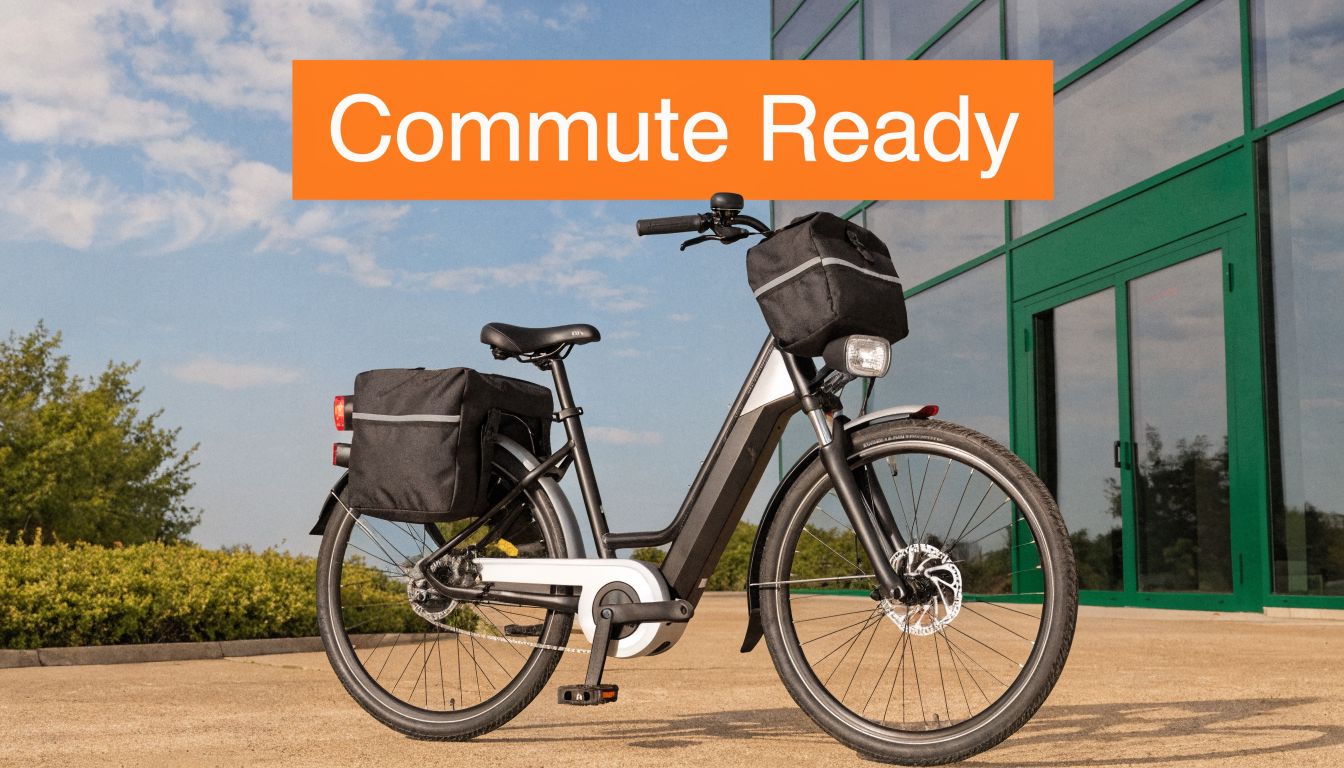
Commuters need a different setup from weekend riders
A commuter shouldn’t accessorise for style first. They should equip for friction reduction. Every small annoyance becomes a daily tax if you ride often.
Start with the essentials:
- Helmet quality: Buy for comfort and everyday wearability, not just a legal minimum mindset.
- Security: A serious lock setup matters because commuter vehicles sit unattended more often.
- Phone mounting: Navigation has to be visible without becoming a distraction.
- Weather management: Gloves, waterproof layers and storage that keeps work kit dry matter more than cosmetic upgrades.
Delivery riders need a work tool
Delivery work exposes weak setups quickly. An unsuitable bike feels fine for the first hour, then starts wasting time and energy. Poor luggage mounting, awkward battery access and unstable cargo handling all cut into efficiency.
For delivery use, the best setups usually include:
Accessory or featureWhy it mattersTop box or secure rear storageKeeps gear protected and organisedStable rack systemHelps the vehicle carry load without upsetting balanceReliable phone mountEssential for route management and order handlingProtective riding kitReduces fatigue in poor weatherCharging routine that fits shiftsKeeps the vehicle usable across repeated trips
What works in the real world
Commuters usually do best with a simple, durable setup. One secure storage solution is better than several loose bags. A dependable mount is better than improvising with pockets. Clean cable routing and secure fixings matter because daily vibration exposes cheap accessories fast.
Delivery riders should think even more strictly. Your vehicle isn’t just personal transport. It’s part of your workflow. That means your setup should support:
- Fast stop-start riding
- Easy pickup and drop-off
- Protected food or parcel carrying
- Minimal faff between jobs
The best commuting setup feels boring in the best possible way. Everything works, nothing shifts, and you stop thinking about it.
That’s the standard to aim for, whether you’re commuting to the office or running evening drops across town.
Choosing Your Bike with Flex Electric
Buying the right electric commuter machine starts with an honest question. Do you need bicycle rules and bicycle performance, or do you need a road-going vehicle that handles distance, pace and load without compromise?
For plenty of UK riders, especially anyone covering longer suburban miles or carrying kit for work, the better answer is an electric moped or motorcycle. That distinction gets lost in generic “electric commuter bike uk” roundups, which usually treat pedal-assist bikes, throttled machines and full road-legal two-wheelers as if they serve the same job. They do not.
A specialist dealer should be able to sort that quickly. You want clear guidance on where a 50cc-equivalent suits urban commuting, where a 125cc-equivalent makes more sense, and where stepping up again saves frustration later. Good advice is less about headline specs and more about route type, licence position, carrying needs, charging routine and whether the bike will still suit you six months into daily use.
What to look for in a specialist
The retailer matters because support after purchase affects ownership almost as much as the bike itself.
Look for:
- Practical fit for your commute: advice based on your actual roads, speed requirements and daily mileage
- Battery guidance: sensible help on charging habits, storage and expected use over time
- Clear warranty terms: no guesswork about what is covered and what is not
- After-sales support: help with setup, faults, parts and routine questions after delivery
- A focused range: enough choice to cover different commuting and delivery needs, without burying you in lookalike models
Flex Electric stands apart because it concentrates on electric mopeds, scooters and motorbikes, plus off-road electric motorcycles and kids MX bikes. That focus matters. It means the conversation starts with the vehicles that many serious commuters and delivery riders need, not with bicycle assumptions.
Why that focus matters
A tight range is often more useful than a huge catalogue. Buyers rarely benefit from scrolling through dozens of near-identical machines with minor spec differences and vague descriptions. They benefit from a shorter list where each model has a clear purpose.
That usually means one group of bikes aimed at straightforward city commuting, another suited to riders who need the extra pace and road presence of the 125cc-equivalent class, and stronger-performance options for riders who want more than basic utility. The accessories matter too. Locks, racks, top boxes and phone mounts are part of the working setup, not add-ons you figure out later.
As noted earlier, Flex Electric also offers ownership support and finance options that may matter if you are replacing a car, retiring an e-bike, or setting a vehicle up for work rather than occasional leisure use.
One practical point often missed in buyer guides. A specialist in electric mopeds and motorcycles is more likely to tell you not to overspend. If your route is short, low-speed and easy to park at both ends, a smaller machine may do the job perfectly well. If your commute includes faster A-roads, poor weather and luggage, buying too small usually becomes expensive twice.
The right vehicle is the one that matches the job
An EAPC still makes sense for short, bicycle-friendly trips. But many riders searching for an electric commuter bike in the UK are really asking for something easier than a pushbike and more capable than an e-bike.
In that case, a proper electric moped or motorcycle is often the better fit. It carries speed more comfortably, copes with heavier daily use, and works far better for riders who need their transport to function like transport, not like exercise with assistance.
Find us
You will find us at 74 Dalry Road, Edinburgh, EH11 2AY
Showroom Opening Times:
Monday: By Appointment
Tuesday to Friday: 11am - 5:00pm
Saturday: 10am - 5pm
Sunday: By Appointment
