
Electric Motorbikes for Commuting: Why They Make Sense

Flex Electric
The UK's #1 Electric Moped and Electric Motorbike dealer.

Your commute probably already tells you the answer.
You sit in traffic for journeys that should be short. Or you pay more than you want to for trains and buses that still turn up late. Or you ride a petrol scooter, watch fuel and servicing costs stack up, and wonder why getting to work has become a running expense you barely control. For a lot of UK riders, an electric motorbike for commuting fixes exactly that problem.
It won't suit everyone. But for city riders, delivery couriers, and anyone doing repeat urban miles, it makes far more sense than is commonly understood. The key is to stop looking at headline specs in isolation and start judging electric bikes by how they integrate with UK roads, UK licences, UK charging habits, and UK running costs.
Is an Electric Motorbike Right for Your Commute
Monday morning in a UK city usually looks the same. Cars are crawling. Buses are full. Rail apps are already showing delays. If your trip is short but painful, that's exactly where an electric motorbike starts to look less like a novelty and more like the obvious tool for the job.
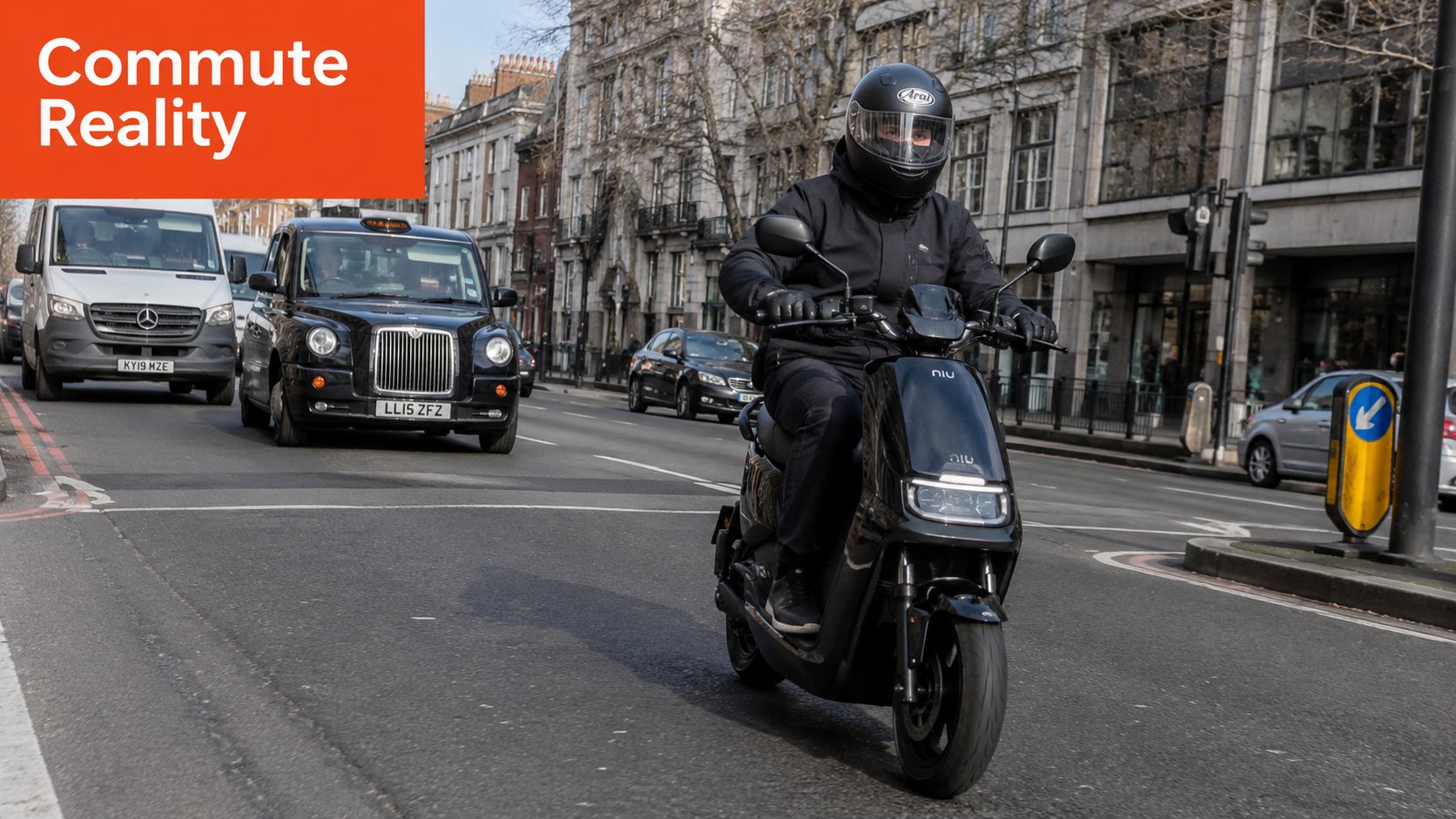
I see the same pattern again and again. A rider starts by wanting to cut costs. Then they realise the bigger win is control. You leave when you want, avoid the worst of urban congestion, and stop building your day around someone else's timetable.
That shift isn't niche anymore. According to the UK Department for Transport's “Vehicle licensing statistics: 2023” bulletin, the number of licensed electric motor vehicles, including motorcycles and mopeds, rose from 1,200 in 2018 to nearly 19,300 by the end of 2023, representing an annualised growth rate of close to 70% (supporting reference). Riders aren't moving to electric two-wheelers out of curiosity. They're doing it because urban transport has become expensive, unreliable, and slow.
The commute profile that suits electric
An electric motorbike for commuting makes the most sense if your daily riding looks like this:
- Mostly urban roads with regular stop-start traffic
- Short to medium repeat journeys where consistency matters more than motorway touring
- Home or workplace charging access, even if that means charging a removable battery indoors
- A need to keep running costs predictable, especially if you ride for work
If that sounds familiar, electric is already in your lane.
Straight advice: If your current commute frustrates you more because of wasted time and repeated costs than because of distance, you should be looking at electric now.
Think beyond the bike itself
A commuter setup isn't just the machine. It's your daily routine. Storage, weather kit, and what you carry matter. If you're building a cleaner, simpler everyday loadout, HYDAWAY's commuting collection is worth a look because compact commuting gear often makes the switch easier than people expect.
The riders who get the most from electric aren't chasing bragging rights. They want a machine that starts every day, handles city traffic calmly, and costs less to keep on the road. That's the appeal.
The Real Benefits of Commuting by Electric Motorbike
The biggest mistake people make is treating an electric commuter bike like a compromise. For the right rider, it's an upgrade.
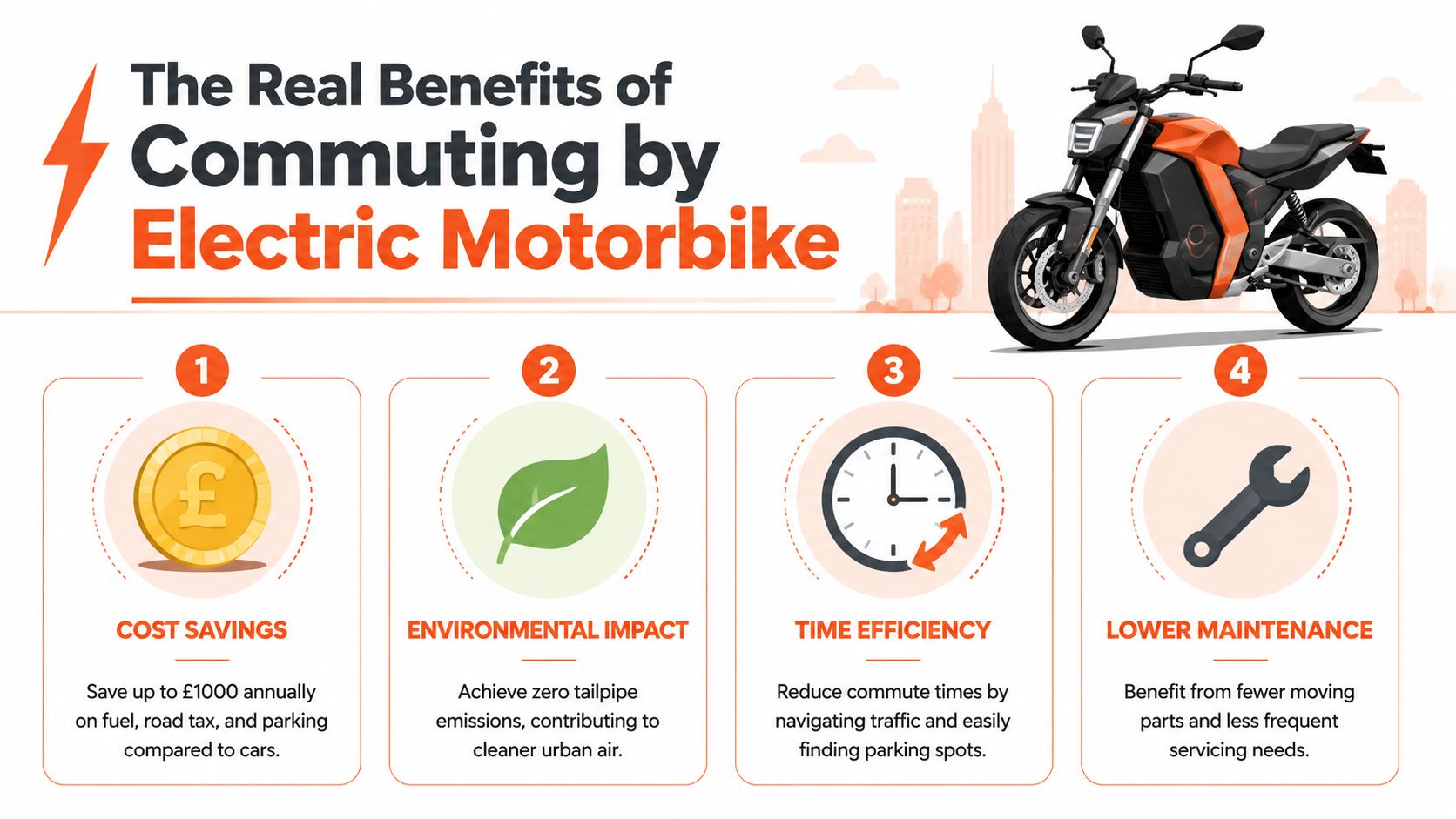
You're not switching just to avoid petrol. You're switching because electric commuting lines up well with how people in UK cities travel. UK government travel surveys show that the average urban commuter's one-way trip to work is under 10 miles, which means even mid-range electric mopeds with 50 to 70 mile ranges can serve multiple days of commuting on a single charge (market summary).
That matters because it kills the most common objection in one go. Most urban riders don't need huge range. They need enough range, every day, without drama.
Why commuting by electric works so well
Here's what you gain in practical terms:
- Lower routine spend: Electric two-wheelers avoid petrol costs and usually cut the number of regular maintenance jobs you deal with.
- Simpler urban use: They're well suited to short, frequent journeys, which is where petrol engines often feel least efficient.
- Cleaner city riding: Zero tailpipe emissions matter more in dense traffic than on open roads.
- Less hassle in daily ownership: No fuel station detours. No oil changes. Less heat, less noise, less mechanical fuss.
You don't need touring-bike range for an office run, a station hop, or a delivery shift in town. You need reliable urban miles and easy charging.
Model choice now makes the switch easier
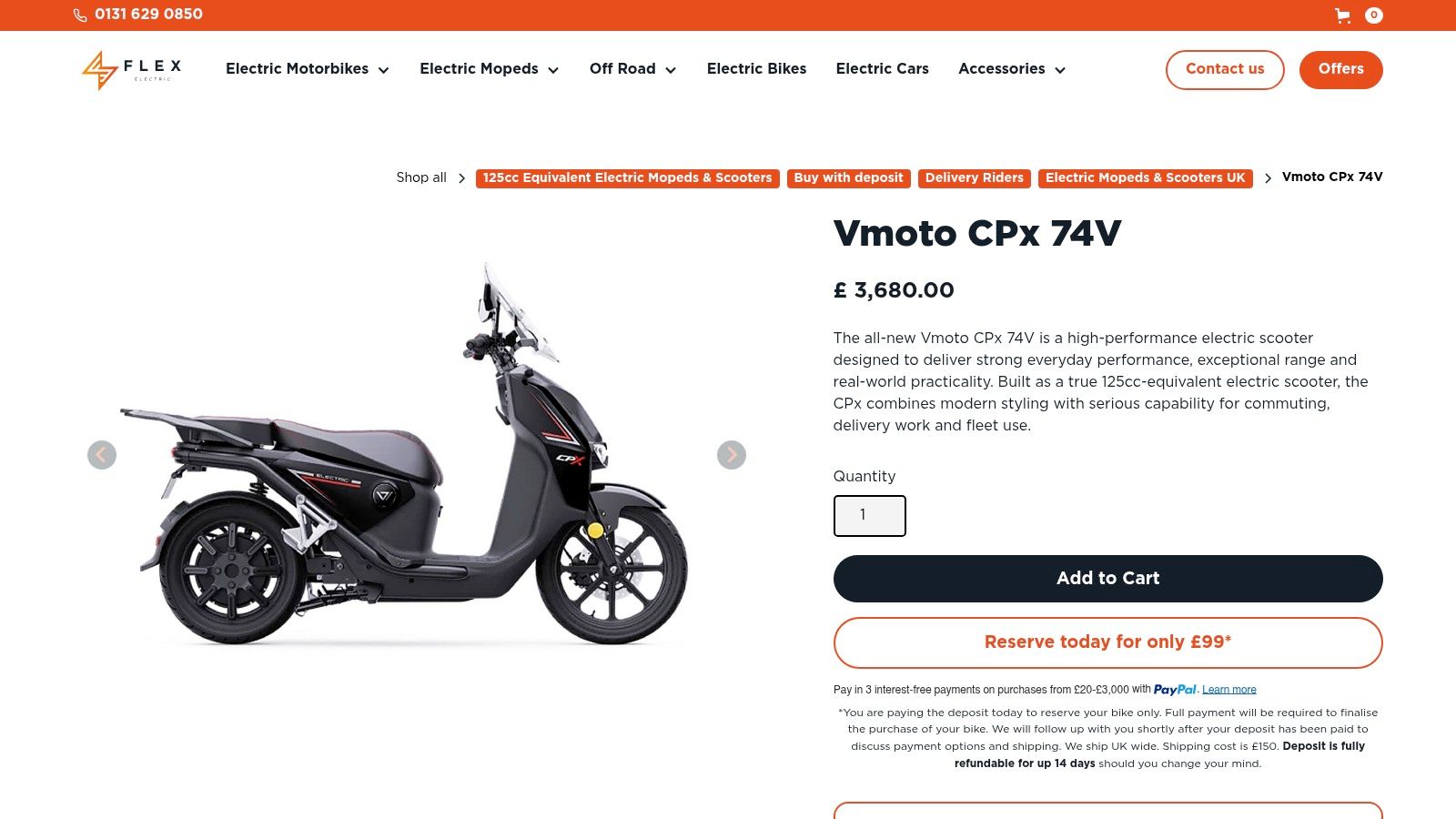
A few years ago, commuters had to accept weak choices. That's no longer true. A machine like the Vmoto CPX 74V shows where the commuter category now sits. It's a 125cc-equivalent electric scooter built for commuting, delivery work and fleet use, with up to 87 mile range and a 56mph top speed. That's the kind of spec that handles real UK roads, not just idealised city-centre loops.
The practical benefit is confidence. You can choose a bike that matches your route instead of forcing your route to match the bike.
The benefit most riders notice first
It's quiet. That sounds minor until you live with it.
You stop doing every journey with engine vibration in the background. Slow-speed filtering feels calmer. Early starts feel less intrusive. Long weeks feel less wearing. Commuting isn't suddenly fun every day, but it usually becomes less annoying, and that matters more than marketing claims ever will.
Understanding UK Electric Motorbike Licences and Classes
Licensing puts a lot of people off because the rules look more complicated than they are. In practice, once you map electric bikes to familiar petrol classes, it becomes much easier to understand.

Most commuter questions come down to this. Are you looking at a light moped-style machine for urban use, a 125cc-equivalent for mixed city riding, or something more powerful? Your answer tells you which licence route matters.
The easiest way to think about classes
Use the petrol equivalent as a shortcut.
ClassTypical electric equivalentWhat it suitsAMLight moped classShort city trips, lower-speed urban useA1125cc-equivalent commuter classEveryday commuting, urban and A-road useA2Medium-power bikes up to 35 kWFaster riders and broader route useAFull power accessAny electric motorcycle
In the UK, riders aged 17 and over with a full Category A1 licence can operate electric motorcycles up to 11 kW, which covers the popular 125cc-equivalent commuter class, often requiring just a CBT to ride with L-plates (licence guide reference). For most new commuter riders, that's the key line.
What that means in plain English
If you're new to riding, the usual commuter starting point is the 125cc-equivalent class. That's where many electric scooters and motorbikes for commuting sit because it gives a useful balance of accessible licensing, urban practicality, and enough speed for more than back streets.
For riders moving up, the next step is straightforward:
- A1 riders can use the common commuter class up to 11 kW
- A2 riders aged 19 and over can operate electric motorcycles up to 35 kW
- A licence holders can ride any power electric motorcycle
That's the route commonly needed. Simple, not glamorous.
A quick visual walkthrough helps if you're comparing age and power categories:
My recommendation for first-time commuters
Don't overbike your first electric commuter.
Start with a class that fits your actual route, not your ego. If your riding is mainly city streets, ring roads, and occasional A-road stretches, a 125cc-equivalent electric machine is usually the sensible choice. It keeps the learning curve manageable and gives you enough performance for real commuting without pushing you into a category you don't need.
Licence rule: Match the bike to the roads you actually ride five days a week, not the ride you imagine doing once a month.
Real-World Range and Everyday Charging Explained
Range anxiety usually comes from reading the wrong numbers. Brochure range and real commuting range aren't the same thing, and riders who understand that from day one tend to be much happier with their bike.
For typical UK urban commutes, an electric motorbike with a 3 to 4 kW motor and a 2.5 to 3.5 kWh battery pack can comfortably deliver 50 to 80 miles of real-world range, with lithium-ion packs supporting 1,500 to 2,000+ charge cycles, translating to roughly 5 to 7 years of daily commuting (commuting battery guide). Those are the numbers that matter. Not optimistic test-stand claims. Real-world use.
What changes your actual range
Your battery doesn't care what the advert says. It responds to how and where you ride.
The main factors are:
- Speed: The faster you sit at the top end, the quicker range drops.
- Weather: Cold conditions can reduce usable performance and efficiency.
- Load: A heavier rider, passenger, or delivery setup asks more from the bike.
- Riding style: Hard launches and constant full-throttle use drain the pack faster.
- Route type: Stop-start city use can work well. Longer higher-speed stretches usually cost more range.
That's why I advise riders to buy with margin. If your actual daily use is moderate, don't buy the bike that only just covers it on paper. Buy the one that covers it comfortably in average UK conditions.
Charging at home, at work, and in the real world
For a lot of commuters, charging is easier than they expect. The cleanest setup is charging overnight at home or topping up at work. If your bike uses removable batteries, that gets even simpler because you don't need to park next to a charger to stay practical.
Public charging is where people need to be realistic. The UK network exists, but it isn't perfectly designed around electric motorbikes. That means your ownership decision should lean first on reliable home, workplace, or depot charging, then treat public charging as support rather than your only plan.
If you can charge where you live or where you work, daily electric commuting becomes simple. If you need public charging for every single day, plan carefully before you buy.
How to make battery life last
Battery life is partly chemistry and partly rider behaviour. If you want your pack to stay healthy for the long haul, keep it boring.
- Avoid constant full-throttle riding unless the route demands it
- Charge consistently instead of repeatedly running the battery very low
- Store and charge sensibly in safe, practical conditions
- Choose a bike with realistic capacity for your route so the pack isn't stressed every day
Riders often overcomplicate this. You don't need to baby the battery. You just need to stop treating every commute like a race.
Calculating Your Total Cost of Ownership
Electric often wins the argument.
Purchase price matters, but commuter ownership is mostly about what happens after the sale. If you ride regularly, the question isn't “What does it cost to buy?” It's “What does it cost to run for the next few years?” That's where petrol scooters start giving ground.
The cleanest fixed saving is tax. The UK's Vehicle Excise Duty regime provides an annual zero-VED rate for all fully electric motorcycles and mopeds, whereas equivalent 125cc internal-combustion machines pay around £114 per year, creating a clear £570+ saving on tax alone over five years (VED comparison reference).
The comparison that actually matters
You asked for practicality, so here it is in plain form.
3-Year Cost Comparison Electric vs Petrol Commuter
Cost AreaElectric Motorbike (Estimate)Petrol Scooter (Estimate)3-Year SavingsEnergy or fuelLower running energy costsHigher fuel costsElectric usually comes out aheadVED£0About £342About £342Routine servicingLower, with fewer service itemsHigher, with more regular engine-related servicingElectric usually comes out aheadUrban compliance and charging strategyDepends on your route and charging accessDepends on your route and fuel useCase by caseTotal ownership trendMore front-loaded at purchase, lower in useOften cheaper upfront, higher in useElectric improves with mileage
I'm being deliberate here. I'm not inventing a fake “average rider” spreadsheet with made-up annual mileage and invented fuel assumptions. But the direction is clear. Electric commuter ownership usually shifts more of the cost to day one and strips out a lot of repeat spend later.
Where delivery riders and small fleets should focus
If you ride for work, TCO matters more than badge appeal.
For food delivery riders and small businesses, I'd focus on four questions:
- How many repeat urban miles are you doing each week?
The more regular your use, the more lower running costs matter. - Can you charge consistently at home, work, or a hub?
Good charging access makes the economics much cleaner. - How costly is downtime?
A simpler electric drivetrain can be attractive if your bike is a working asset. - Are you buying personally or through a company?
Tax treatment can change the picture. For directors or small business owners, understanding EV tax for limited company directors is a useful starting point before you structure a purchase or lease.
My blunt view on finance
If the bike fits your route, don't obsess over buying outright just because it feels tidier. HP and PCP can make perfectly good sense when they keep your monthly outlay stable and let the lower running costs do some of the work. What matters is the total picture, not whether you can say you paid cash.
That's especially true for riders replacing a petrol commuter they're constantly feeding with fuel, tax and servicing.
How to Choose the Right Bike and Accessories
Choose the bike for the commute you routinely do on a wet Tuesday in February. Not the one that looks good in a product photo, and not the one with a headline spec you will rarely use.
A good commuter bike earns its keep in ordinary UK conditions. It starts with the roads you use, where you park, what you carry, and how you charge. Get those right first. Speed, styling and bragging rights come later.
The specs that matter most
I tell riders to judge an electric motorbike for commuting on five practical points:
- Road fit: Match the bike to your regular roads. If your route includes faster A-roads, buy a machine that feels settled at those speeds rather than one that is only happy in town.
- Range with a buffer: Buy enough battery for your normal week, plus some margin for cold weather, detours and battery ageing.
- Battery format: Removable batteries make life much easier if you live in a flat, use on-street parking, or cannot charge right beside the bike.
- Carrying ability: Commuters quickly get fed up with bikes that have nowhere for a lock, waterproofs, lunch or work gear.
- Daily durability: Look for decent weather protection, solid build quality, good lighting and security features you will use every day.
A buying filter that actually helps
Skip vague categories and sort yourself by use case.
- Short city commute: Prioritise low running costs, easy parking, removable battery options and simple handling in traffic.
- Mixed urban and suburban commute: Aim for 125cc-equivalent performance, better weather protection and a chassis that stays composed on rougher roads.
- Delivery rider: Put reliability, luggage options, battery practicality and all-day comfort ahead of appearance.
- Small business or fleet use: Standardise around bikes that are easy to charge, easy to maintain and simple for different riders to use without fuss.
That last group needs more discipline than private buyers. Fleet decisions should focus on downtime, charging routine, replacement parts and whether the bike can take the abuse of repeated short trips. A cheaper bike is not cheaper if it creates missed shifts or off-road time.
Accessories that are worth buying straight away
Accessories are not an afterthought for a commuter. They decide whether the bike is genuinely useful.
Start with this kit:
- A comfortable, properly fitted helmet: If it pinches, whistles badly or feels heavy in traffic, you will regret it quickly.
- A serious lock: UK urban parking demands more than a token cable lock.
- Top box or luggage setup: This matters even more for delivery riders, who need secure storage and predictable load space.
- Phone mount: Daily commuting usually means live navigation, traffic checks or delivery app use.
- Waterproof riding kit: British weather will test your commitment fast.
I would add hand protection or heated kit if you ride year-round. It makes winter commuting far more realistic, and it helps you stay consistent rather than giving up and taking the car.
Flex Electric sells commuter-focused electric mopeds, scooters and motorbikes, plus the accessories that make daily riding practical. That matters because choosing the right setup in one go usually avoids the usual mistakes. Buying a bike that is too slow for your route, skipping proper security, or ignoring luggage until week two.
Your Next Steps to Going Electric with Flex Electric
If your commute is short to medium, urban, repetitive, and more expensive than it should be, an electric motorbike is a serious solution. Not a gimmick. Not a future idea. A practical one.
The switch makes the most sense when you judge it properly. Look at your route, your licence position, your charging options, and your full ownership costs. Don't get distracted by hype. Buy a bike that fits your real week and the decision gets much easier.
If you're still unsure, do three things. Narrow your route requirements. Check what licence class you need. Then sit on the bikes you're considering and ask blunt questions about range, charging, servicing and support. That's how you avoid buying the wrong machine.
Going electric should make commuting simpler. If it doesn't, you're looking at the wrong bike.
If you're ready to compare commuter-ready electric mopeds, scooters and motorbikes, browse Flex Electric. You can also speak to the team for straight-talking guidance, look at finance options including HP and PCP, or arrange a visit to the Edinburgh showroom to see which setup suits your commute.
Find us
You will find us at 74 Dalry Road, Edinburgh, EH11 2AY
Showroom Opening Times:
Monday: By Appointment
Tuesday to Friday: 11am - 5:00pm
Saturday: 10am - 5pm
Sunday: By Appointment
