
Electric Motorbikes UK Your Ultimate Guide to Choosing the Perfect E-Motorbike
Flex Electric
The UK's #1 Electric Moped and Electric Motorbike dealer.

Sick of being stuck in traffic? Fed up with the ever-increasing cost of fuel? You're definitely not the only one. Right across the UK, there's a quiet revolution happening on our city streets as people and businesses discover a smarter, cheaper, and greener way to get around: electric motorbikes.
Welcome to the UK Electric Revolution
The buzz around electric motorbikes in the UK isn't just a fleeting trend. It's a real change in how we’re starting to think about getting from A to B. From the packed roads of London to the steep hills of Edinburgh, electric mopeds and motorbikes are offering a genuinely practical escape from the usual travel headaches. It’s a move towards cleaner air, quieter streets, and running costs that don't make your eyes water.
This guide is your complete roadmap. We'll skip the confusing jargon and give you straight-talking, practical advice on everything you need to know. Think of us as your mate in the know, here to help you understand the real-world benefits of going electric.
Why Is Everyone Making the Switch Now?
You can feel the momentum building. The UK e-bike market is absolutely booming, with revenue expected to more than double from USD 2,574.5 million in 2025 to an estimated USD 5,528.2 million by 2033. That incredible jump, driven by a 9.7% compound annual growth rate, shows just how many people are ditching their cars for these zippy, efficient alternatives. You can dive deeper into the UK e-bike market growth to see the full picture.
Making the switch brings benefits you'll feel straight away. Whether you're commuting every day, delivering goods for a living, or managing a fleet of vehicles, going electric can make a massive difference to your daily grind and your bank balance.
This guide is all about giving you the right knowledge. We’re not just here to sell you a bike; we want to help you make a properly informed choice you’ll be happy with for years.
What You'll Find Inside This Guide
We’ve laid everything out to take you from being simply curious to feeling confident about buying. We'll walk through all the important stuff you need to think about, making sure you find a bike that fits your life and your budget perfectly.
Here’s a quick look at what’s coming up:
- Navigating UK Laws: We’ll make sense of the rules for different types of electric bikes and mopeds so you know exactly where you stand.
- Choosing Your Ideal Bike: We'll help you nail down the right model for what you need, whether it's for the daily commute or for commercial deliveries.
- Decoding the Specs: We’ll translate technical details like battery range and motor power into what they actually mean for your ride.
- Calculating the True Costs: Get a proper breakdown of running expenses, what you’ll save on maintenance, and the overall value.
- Your Final Checklist: A step-by-step plan to get you ready to buy, covering warranties, finance options, and getting the right support.
Right then, let's get you started on a smarter way to travel.
Navigating UK Electric Motorbike and Moped Laws
Figuring out the rules for electric bikes in the UK can feel like wading through legal jargon. But it’s actually pretty simple once you grasp the main difference: is the vehicle you’re looking at legally a bicycle that gives you a little help, or is it powerful enough to be classed as a moped?
Getting this right is absolutely essential. It’s the difference between needing a licence or not, paying for insurance, and even the minimum age you have to be to ride it. Let’s cut through the confusion and get you on the road safely and legally.
The Two Main Categories Explained
When it comes to the law, electric bikes are split into two clear camps. Knowing which one your bike falls into tells you everything you need to know about what’s required to ride it.
First up, you have Electrically Assisted Pedal Cycles, or EAPCs. Just think of them as regular bicycles with an electric boost. They’re treated exactly like a normal push bike, which makes them incredibly simple to own and ride.
Then you’ve got the more powerful machines. These are legally classed as electric mopeds or motorcycles because they pack more of a punch and don't need you to pedal. As you’d expect, they come with a different set of rules, much like their petrol-powered cousins.
What Is an EAPC?
The EAPC is the type of electric bike you’ll see everywhere, from city cycle lanes to country trails. For a bike to legally qualify as an EAPC, it has to tick three specific boxes.
- Pedal Assist Only: The motor is only there to help you when you’re pedalling. There's no throttle to let you zip along without any effort.
- Maximum Power: The motor’s power output can't be more than 250 watts.
- Speed Limit: The electric assistance must switch off when you hit 15.5 mph (25 km/h). You can, of course, pedal faster than that, but it’ll be all down to your own leg power.
If a bike meets these three rules, it's an EAPC. This is great news because it means you don't need a licence, registration, tax, or insurance. Anyone aged 14 or over can legally hop on and ride.
Electric Mopeds and Motorcycles
What happens if a bike breaks any of those EAPC rules? Maybe it has a motor more powerful than 250W, or perhaps the assistance doesn't cut out at 15.5 mph. In that case, the law no longer sees it as a bicycle. It's now officially an electric moped or motorcycle.
This changes everything. For these machines, you'll need a proper licence – at the very least, a provisional licence and a Compulsory Basic Training (CBT) certificate. You’ll also have to register it with the DVLA, sort out vehicle tax (which is usually £0 for electric vehicles, but still needs to be done), and get it insured.
Here’s a quick guide to what you’ll need:
- 50cc Equivalents (AM category): These are limited to 28 mph. You must be at least 16 years old and have a CBT.
- 125cc Equivalents (A1 category): For these more powerful bikes, you need to be at least 17, have a CBT, and display L-plates while you ride.
While these rules are specific to electric bikes and mopeds, it can be helpful to understand where they fit into the broader UK transport law.
To make it even clearer, here’s a quick reference table breaking down the key requirements for each category.
Helmets, Insurance and Practical Rules
When it comes to helmets, the rules are very clear. For an EAPC, wearing a helmet is strongly recommended for your own safety, but it isn't a legal requirement. For any electric moped or motorcycle, you must wear a UK-compliant motorcycle helmet. No exceptions.
Insurance works the same way. It's not legally required for an EAPC, but taking out a policy to cover theft and liability is a very smart move. For any vehicle classed as an electric moped or motorcycle, having at least third-party insurance is a legal necessity to ride on public roads.
How to Choose the Right E-Motorbike or moped for Your Lifestyle
Figuring out the 'best' electric bike isn't about finding one model that ticks every box for everyone. It's much more personal than that. The perfect e-bike is the one that slots so neatly into your daily routine you'll wonder how you ever managed without it.
So, let's move past the generic sales pitches and get down to what different types of riders in the UK actually need from their machine. By matching the right features to real-world scenarios, you'll be able to spot the perfect ride for your daily grind or your weekend escape. Let's see which of these sounds most like you.
For the Urban Commuter
If your main goal is to weave through city traffic and put a serious dent in your travel costs, you’re in good company. This is the biggest and fastest-growing group of e-bike riders out there. The numbers are staggering; the UK e-bike market is valued at USD 1,191.0 million in 2024 and is expected to more than double to USD 2,499.0 million by 2035. This explosion is almost entirely driven by commuters looking for a smarter way to get around town. While commuting is king, leisure riding is the fastest-rising segment, showing just how much we've fallen for personal electric transport. You can learn more about the forces driving the UK e-bike market here.
For a daily commuter, the ideal e-bike is nimble, dependable, and above all, practical.
- Agility is Key: You'll want a lightweight frame and responsive handling to navigate tight city streets and filter past all that stationary traffic.
- Sufficient Range: You don't need a monster battery. Just make sure it can comfortably cover your round-trip journey with about 20-30% charge left in the tank.
- Security Features: A removable battery is a massive win. You can carry it inside to charge, which makes the bike itself a much less appealing target for thieves.
This flowchart makes the legal side of things crystal clear, helping you see which category of bike is right for your commute based on its power and whether you need a licence.

As the diagram shows, the moment a bike's motor goes over 250W or can provide power without you pedalling, it legally becomes a moped. That means you'll need a licence, tax, and insurance.
For the Delivery Professional
For delivery riders on platforms like Deliveroo or Uber Eats, an electric moped is more than just a ride—it's your most important tool. Here, the focus shifts completely to durability, efficiency, and keeping downtime to an absolute minimum.
A standard consumer e-bike just won't survive the job. You need a commercial-grade workhorse built to handle long hours and constant use, day in and day out.
A delivery pro's bike has to be an asset, not a liability. The top priorities are rock-solid reliability, low running costs, and the ability to stay on the road for a full shift without a single interruption.
For most, the single most critical feature is a swappable battery system. The ability to pull into a depot and swap a dead battery for a fully charged one in less than a minute is a game-changer. It means you never have to stop working, maximising your earnings and cutting out hours of charging time.
For the Business Fleet Manager
Switching your business fleet to electric, whether you run a local restaurant, florist, or a team of service engineers, can offer a fantastic return on investment. But a fleet manager's priorities are different again. It's all about operational efficiency, cost control, and brand image.
Here’s what you should be looking for:
- Low Maintenance: Electric mopeds have far fewer moving parts than petrol scooters. Forget oil changes, spark plugs, or complex engine servicing. This drastically cuts maintenance costs and keeps your vehicles on the road, where they belong.
- Total Cost of Ownership: The sticker price is just the beginning. With 'fuel' costs at just pennies per mile and minimal servicing, the total cost of owning an electric moped over its lifetime is significantly lower.
- Branding Opportunity: A fleet of quiet, zero-emission electric bikes sends a powerful message. It tells your customers you're a modern, responsible, and forward-thinking business.
For the Weekend Enthusiast and New Rider
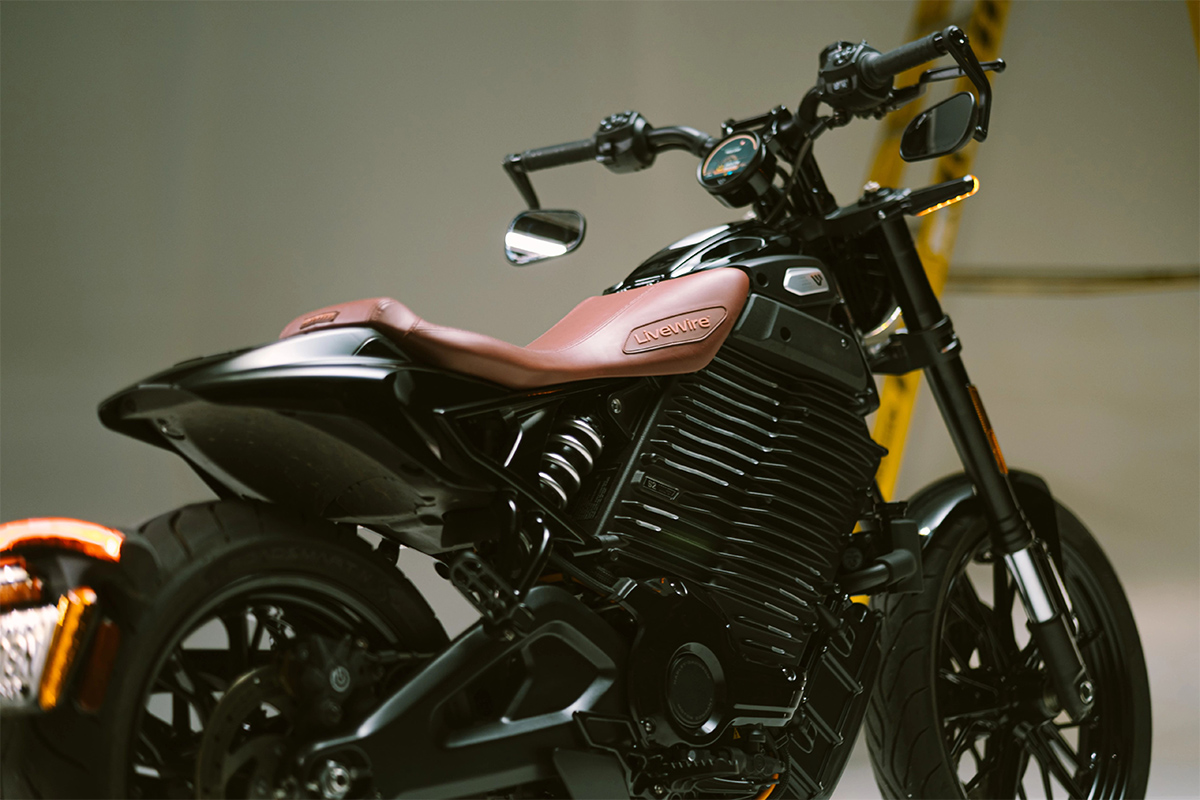
Of course, not every electric bike is about work. For some, it's all about performance and the simple thrill of the ride. High-performance models like the LiveWire S2 or Vmoto Stash deliver instant torque and acceleration that can leave many petrol equivalents standing still, making them perfect toys for weekend enthusiasts.
At the other end of the scale, we have new riders. Learner-friendly electric mopeds in the 50cc and 125cc equivalent categories are absolutely ideal for building confidence on the road. They’re lightweight, incredibly easy to handle, and provide a gentle introduction to two-wheeled transport without the noise, vibration, and fuss of a petrol engine. It makes them a brilliant and accessible starting point for anyone looking to get on the road for the first time.
What Do All Those E-Bike Numbers Actually Mean?
Looking at a spec sheet for an electric bike can feel like trying to read a foreign language. All those numbers and acronyms can be a bit much, but they’re not as complicated as they look. Once you understand what they mean for your everyday ride, you can see right past the marketing jargon and pick a bike that’s genuinely right for you.
Let’s translate the most important numbers so you can confidently compare different electric bikes UK models.
Battery Capacity: The Size of Your Fuel Tank
Think of an e-bike's battery capacity as its fuel tank. It's measured in Watt-hours (Wh), and it’s simple: the bigger the number, the more juice it holds, and the further you can go on a single charge. A smaller battery of around 300-400Wh is great for quick city hops, whereas a long-range model might pack 700Wh or more.
But here’s the thing—the advertised range is almost always a best-case scenario. It’s like a car's 'miles per gallon' figure; your real-world result will almost certainly be different, and this is where UK geography really comes into play.
A bike with a claimed '45-mile range' will give a rider in flat Cambridge a completely different experience to someone tackling the steep hills of Sheffield. The Sheffield rider is going to be asking a lot more from the motor, draining the battery much faster and cutting that range down significantly.
Motor Power: Your Bike's Muscle
Next up is motor power, which is measured in Watts (W). For any road-legal e-bike (or EAPC) in the UK, the motor is capped at a continuous power output of 250W. So, what does that actually feel like on the road?
Think of this motor as your personal assistant for the tough parts of a ride. It provides the torque—that’s the pulling power—to get you up hills without feeling like you’ve just run a marathon. It also helps you get a smooth, quick start from traffic lights.
Of course, more powerful electric mopeds, measured in kilowatts (kW), offer much punchier acceleration and can hold higher speeds, putting them on par with 50cc or 125cc petrol scooters.
The real secret isn't just the power figure itself, but how that power is delivered. A well-designed 250W motor with a smart torque sensor feels incredibly natural and responsive, whereas a cheaper system can give you a sudden, jerky push.
The Real-World Factors That Change Everything
Your bike’s spec sheet is only half the story. A handful of real-world factors can dramatically affect your range and performance, so it’s crucial to keep them in mind.
- Rider Weight: It’s simple physics. A heavier rider needs more energy to get moving, which means the motor works harder and uses more battery.
- Terrain: Hills are the ultimate battery drainer. If your route is mostly flat, you'll get much closer to the manufacturer's claimed range.
- Riding Style: Are you always in the highest assistance mode and accelerating hard? That will chew through your battery far quicker than a smooth, conservative riding style.
- Weather: You might not think it, but the weather makes a difference. A strong headwind is like riding uphill, and very cold temperatures can slash your battery's efficiency, sometimes reducing range by up to 20-30%.
Real-World Electric Moped Spec Comparison
To see how all this comes together, it helps to look at electric mopeds, which have more power than e-bikes and show a clearer link between specs and performance.
The table below breaks down a few popular models to show how their numbers translate into real-world use.
.tbl-scroll{contain:inline-size;overflow-x:auto;-webkit-overflow-scrolling:touch}.tbl-scroll table{min-width:600px;width:100%;border-collapse:collapse;margin-bottom:20px}.tbl-scroll th{border:1px solid #ddd;padding:8px;text-align:left;background-color:#f2f2f2;white-space:nowrap}.tbl-scroll td{border:1px solid #ddd;padding:8px;text-align:left}Model ExampleCategoryTop Speed (Real World)Average RangeTypical Use CaseSuper Soco CU Mini50cc Equivalent28 mph25-30 milesShort city commutes, local errandsNIU MQi GT EVO125cc Equivalent62 mph40-50 milesLonger commutes, dual-carriageway useVmoto StashPerformance75 mph+70-90 milesEnthusiast riding, longer journeys
As you can see, a more powerful motor (a 125cc equivalent versus a 50cc) gives you a much higher top speed. To make that speed useful, these bikes are almost always paired with a larger battery to provide a decent, practical range. Understanding this relationship is the key to matching a bike’s capabilities to what you actually need it for.
Calculating the True Cost of Electric Motorbike Ownership
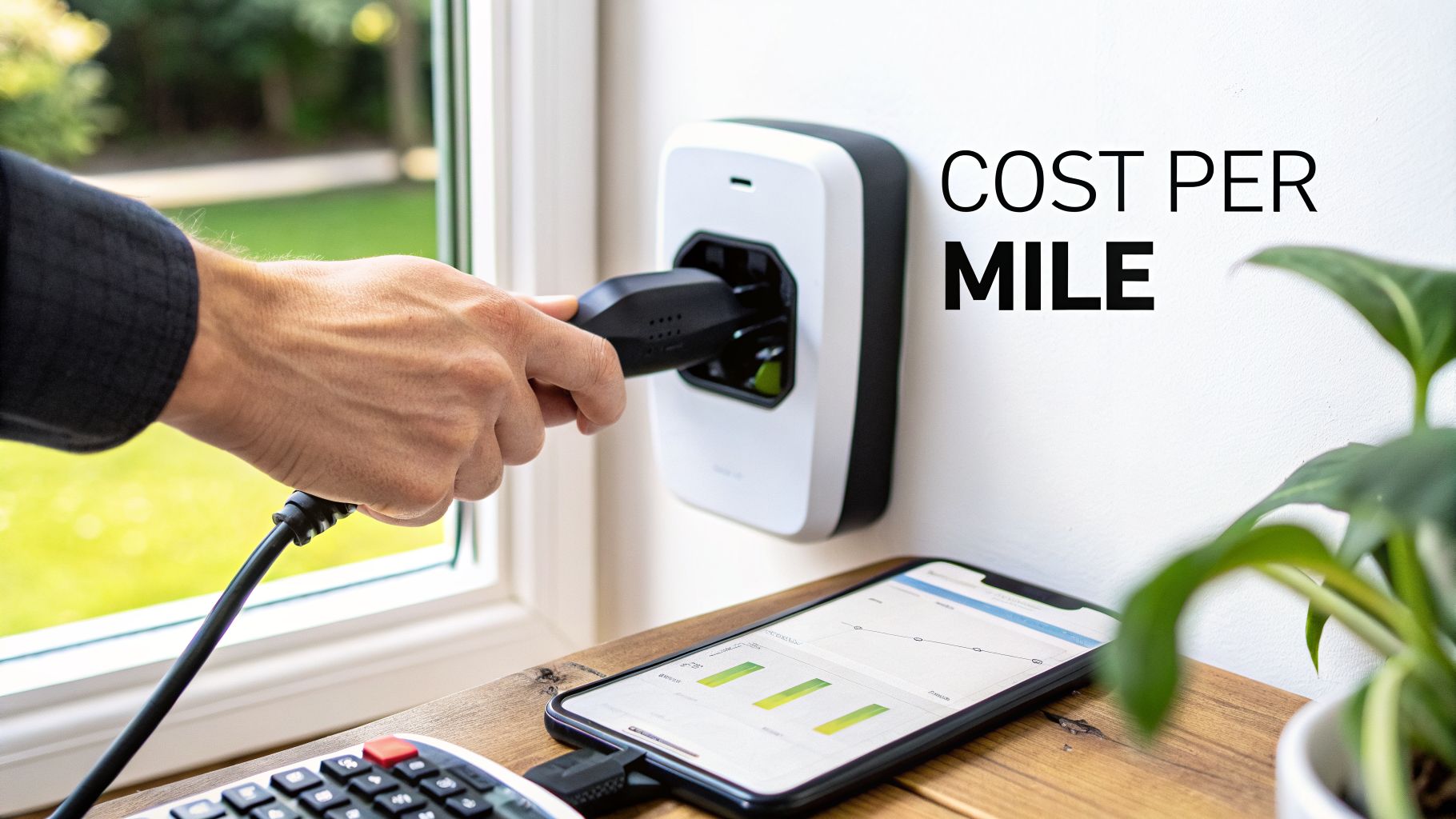
One of the biggest draws for anyone considering an electric bike in the UK has to be the savings. It's easy to focus on the initial price tag, but the real story unfolds in the day-to-day running costs. Once you look at the numbers, the financial argument for going electric is incredibly compelling.
Let's cut to the chase: how much does it cost per mile? For a typical electric moped, you're looking at less than £1 for a full charge based on average UK electricity prices. That works out to an astonishing one or two pence per mile. Put that next to a small petrol car or scooter, and you could easily be paying ten to fifteen times more just for fuel.
This isn’t a small saving we're talking about. It’s a complete change in your transport spending. For a daily commuter, those pennies quickly add up to hundreds, or even thousands, of pounds saved over the course of a year.
Beyond the "Fuel" Bill
The savings don't stop at what you put in the "tank." An electric moped cleverly avoids many of the other costs that come bundled with owning a petrol vehicle, which can make a huge dent in your annual budget.
- Zero Road Tax: That's right. Fully electric vehicles are exempt from Vehicle Excise Duty (road tax) here in the UK, giving you an instant, guaranteed saving every year.
- Cheaper Insurance: You still need insurance, of course, but premiums for electric mopeds are often noticeably lower than for petrol equivalents, thanks to their simpler design and different risk profile.
- No Congestion Charges: If you ride in London or other cities with clean air zones, an electric bike is your free pass. You can travel without worrying about daily charges.
These benefits stack up quickly, and that's before we even touch on the biggest hidden cost of traditional vehicles: maintenance.
The Maintenance Advantage
This is where electric bikes really shine. A petrol engine is a brilliantly complex machine with hundreds of moving parts, all of which need regular, and often costly, servicing.
An electric motor, on the other hand, is refreshingly simple. There are no oil changes to schedule, no spark plugs to replace, no filters to get clogged, and no exhaust systems to rust away. This dramatically cuts down on both the cost and the hassle of keeping your bike on the road.
For a business owner with a delivery fleet or a commuter who depends on their bike daily, this is a game-changer. Less downtime in the workshop means more time on the road, whether that's earning money or just getting on with your day.
Routine checks are usually limited to the basics like brakes, tyres, and lights—the kind of things you’d check on a normal pushbike. This simplicity doesn't just save you money; it gives you genuine peace of mind.
Charging Is Easier Than You Think
If the idea of charging feels like a new hassle, the reality is much simpler. For most riders, charging happens overnight at home, just like your phone. You simply pop the battery out, take it inside, and plug it into any standard wall socket. By the next morning, you’re good to go.
This completely removes the need for trips to the petrol station. And if you do need a top-up while you're out, the UK's public charging network is growing all the time, offering more and more flexibility. For anyone weighing up their electric bikes UK options, the sheer affordability and convenience of charging makes the decision to switch that much easier.
Your Smart Purchase Checklist and What Comes Next
You’ve done the hard yards. You’ve waded through the legal stuff, figured out which type of rider you are, and got your head around all the tech specs. Now you’re on the home straight, ready to move from being a curious researcher to a confident owner. This final checklist pulls everything together, making sure you make a smart investment that you’ll love riding for years.
Think of it as your final pre-ride check. You’re about to join the thousands of people across the UK who are switching to a better way of getting around. Interest in electric bikes has absolutely exploded, jumping from 3.90% of the market in 2019 to 5.90% in 2020 as more of us looked for alternatives to crowded public transport. All the signs point to this trend continuing, thanks to zero fuel costs and next-to-no maintenance. If you're interested in the data, you can read the full e-bike adoption research here.
With that momentum behind us, let’s make sure you’re ready to roll.
Your Essential Buying Checklist
Before you pull the trigger, run through these four key questions. Having solid answers will guarantee the bike you choose is the perfect fit for your lifestyle and your wallet.
- Settle the Legal Question: First things first, do you want a simple EAPC that needs no licence, or are you after a more powerful electric moped that requires a CBT? Nailing this down will instantly narrow your options.
- Pinpoint Your Main Use: Be realistic about what you’ll be doing most. Is this for a daily 5-mile city commute? A 50-mile weekend blast through the countryside? Or is it a workhorse for a demanding delivery job?
- Compare the Specs That Matter: Focus on the numbers that will make a real difference to you. That might mean prioritising swappable batteries for delivery work, a lightweight frame for carrying up flat stairs, or the maximum possible range for those long leisure rides.
- Work Out Your Total Budget: Don’t just look at the ticket price. Remember to factor in the huge savings you’ll make on fuel, tax, and maintenance. It's also worth looking into flexible finance options, which can make a higher-quality, longer-lasting bike much more affordable.
Once you have these points locked in, you’ll have a crystal-clear picture of your ideal machine.
Finding the Right Partner, Not Just the Right Bike
The last step is arguably the most important one: choosing who you buy from. The journey doesn't end when you pay; it’s really just beginning. A trusted partner like Flex Electric provides the kind of support that makes owning an e-bike easy and completely stress-free.
A great bike from a poor dealer can quickly become a headache. Excellent customer service, a comprehensive warranty, and reliable after-sales support are just as important as the bike’s specifications.
You want a specialist who gives straight-talking advice, offers flexible financing, and stands by their products with solid warranties, like a 2-year parts and 3-year battery warranty. That level of backup gives you genuine peace of mind.
With your checklist complete and a good partner ready to help, you're all set. It’s time to find the perfect ride for your journey and join the UK's electric revolution.
Got Questions About Electric Bikes? We've Got Answers
Stepping into the world of electric bikes can feel a bit like learning a new language. There are new terms, new rules, and it’s natural to have a few questions. Let's clear up some of the most common queries we hear from riders in the UK.
Do I Need a Licence for an Electric Bike in the UK?
This is the big one, and the answer is all about power. For a standard electric bicycle, or what the law calls an Electrically Assisted Pedal Cycle (EAPC), you don't need a licence at all. These are bikes with a motor up to 250W that only assists you up to 15.5mph.
However, the moment you step up to more powerful electric mopeds and motorbikes (the kind often described as '50cc' or '125cc equivalents'), the rules change. For these, you'll need at least a provisional licence and to have completed your Compulsory Basic Training (CBT).
How Much Does It Cost to Charge an Electric Moped?
This is where you'll really appreciate the switch to electric. Based on typical UK electricity rates, giving a commuter moped a full charge for a 60-mile range will often cost you less than £1. That works out to just over a penny per mile – a tiny fraction of what you'd spend on petrol.
If you're wondering about the practicalities, it's worth knowing that you don't need a special setup. You can learn more about charging an electric vehicle from a standard 13-amp socket, which is exactly how most e-bikes are charged.
This unbelievably low running cost is one of the biggest wins of going electric. Daily commuters often save hundreds of pounds a year on "fuel" alone.
Are There Government Grants for Electric Motorbikes?
Yes, there are! The government is keen to get more people on electric vehicles, so certain electric mopeds and motorbikes qualify for the OZEV (Office for Zero Emission Vehicles) Plug-in Motorcycle Grant. This scheme can knock a decent chunk off the purchase price.
The good news is that most reputable dealers, including us, will have already factored this grant into the sticker price. This saves you the paperwork and makes getting on a high-quality electric bike that much more affordable.
Ready to find the perfect electric bike for your lifestyle? At Flex Electric, we offer straight-talking advice, a carefully curated range of top brands, and flexible finance options to make your switch to electric simple and affordable. Explore our collection at https://www.flexelectric.co.uk and start your journey today.
Written with Outrank app
Find us
You will find us at 74 Dalry Road, Edinburgh, EH11 2AY
Showroom Opening Times:
Monday: By Appointment
Tuesday to Friday: 11am - 5:00pm
Saturday: 10am - 5pm
Sunday: By Appointment
