
Best Electric Motorcycles for Sale in UK 2026
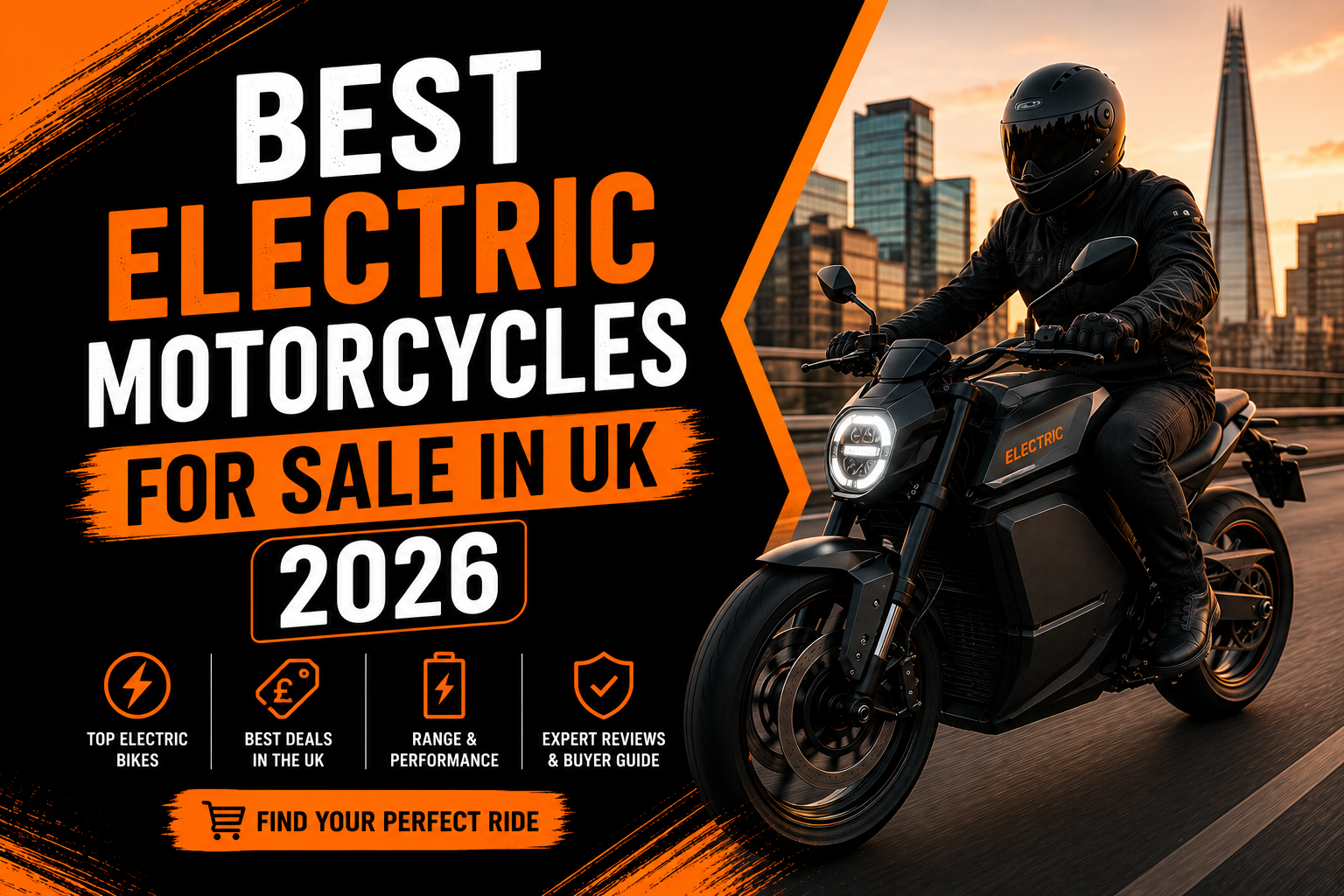
Flex Electric
The UK's #1 Electric Moped and Electric Motorbike dealer.

If you're looking at electric motorcycles for sale in uk, there's a good chance you're already tired of the usual compromises. Petrol costs keep biting. Urban riding keeps getting more expensive and more restricted. If you commute into town, run food deliveries, or just want a bike that feels modern instead of mechanical for the sake of it, electric starts to make a lot more sense once you look past the marketing.
That shift isn't theoretical. The UK electric motorcycles market reached USD 1.41 billion in 2024 and is projected to reach USD 6.59 billion by 2033, with a projected 18.67% CAGR during 2025 to 2033, according to UK electric motorcycle market analysis. What matters more than the headline is the direction. Riders are still moving toward electric even while the wider motorcycle market has had a tougher time.
A first-time buyer usually asks the same practical questions. What range will I really get in British weather? Can I charge it at home? What licence do I need? Is pre-owned worth it? And what kind of electric bike suits commuting, delivery work, off-road riding, or a kid's motocross setup?
One safety concern also comes up early, and fairly. If you're weighing electric against petrol, it's worth spending a few minutes understanding EV fire rates so you're working from evidence rather than hearsay.
Table of Contents
- Urban commuters and first-time riders
- Delivery riders, business users, and enthusiasts
- Off-road riders and kids motocross buyers
Is 2026 the Year You Go Electric
For a lot of UK riders, 2026 looks less like a leap and more like a sensible switch. The buyer who used to dismiss electric as niche now has a different set of priorities. Daily reliability matters more than engine noise. Home charging matters more than fuel station visits. Clean access to city centres matters more than old-school bike culture.
The market has been moving that way already. As noted earlier, the UK electric motorcycle sector has grown strongly even while the broader motorcycle market has been under pressure. That matters because it tells you this isn't just curiosity buying. People are choosing these bikes for actual use.
What has changed for everyday riders
The strongest use case is still simple. If most of your miles are commuting, local work, short business runs, food delivery, or regular urban travel, electric is often a better fit than petrol. You get immediate drive, less routine servicing, and a quieter bike that's easier to live with.
That doesn't mean every electric motorcycle suits every rider.
Buy the bike for your real week, not your fantasy Sunday.
If your riding is mostly short urban trips, a lighter 50cc or 125cc equivalent can be spot on. If you're doing mixed roads and want stronger overtakes or more motorway confidence, you need to look harder at continuous power, charging setup, and real-world range rather than badge prestige.
Who should take a serious look now
A few groups are especially well placed to move now:
- City commuters: Electric works best when you ride predictable routes and can charge at home or at base.
- Delivery riders: Stop-start traffic suits electric torque well, but range honesty matters more than brochure claims.
- First-time riders: Simpler controls and smooth power delivery can make the learning curve less intimidating.
- Off-road families: Electric off-road bikes and kids motocross models remove a lot of the mess, heat, and maintenance that put parents off petrol.
The key is buying with clear expectations. Done properly, going electric feels practical from day one. Done badly, it feels like you've bought a spec sheet instead of a bike.
Choosing Your Ride New Pre-Owned and Where to Buy
Buying the right electric motorcycle isn't just about model choice. It's also about how much risk you're prepared to carry. New and pre-owned can both make sense, but they don't carry the same after-sales reality.
The UK market includes established names such as Zero Motorcycles, Harley-Davidson's LiveWire, and growing electric brands including Super Soco, Vmoto, and Horwin, as outlined in UK electric motorcycle market coverage. That variety is useful, but it also means a first-time buyer can end up comparing completely different kinds of machine without realising it.
When new makes more sense
New is usually the easier route if this is your first electric bike. You're getting the latest battery condition, current warranty cover, and a cleaner line of accountability if something needs attention.
That matters more with electric than many buyers expect. On a petrol bike, a rough private sale might still be recoverable with workshop time. On an electric bike, battery history, software condition, charging habits, and parts support can have a much bigger effect on ownership.
A good new-bike purchase should give you:
- Clear battery cover: You need to know what is covered, for how long, and who handles claims.
- Known charging compatibility: Home charging is simple on the right bike and awkward on the wrong one.
- Support after delivery: Many buyers only discover what dealer quality means when they need parts, setup help, or diagnostics.
When pre-owned is the smarter buy
Pre-owned can be excellent value if the bike has been properly checked and the seller understands electric motorcycles rather than treating them like generic used stock. A well-selected used bike often suits riders moving up from a 50cc equivalent or testing whether electric works for their routine before they commit to a newer machine.
Private sales are where people get caught out. The price can look tempting, but you may be buying uncertainty along with the bike. If you're going used, check the frame details, service history, battery health information if available, and whether any manufacturer or dealer support still applies. It's also sensible to review top VIN report providers before handing over money on any pre-owned machine.
Practical rule: If the seller can't explain how the bike has been charged, stored, and maintained, walk away.
A specialist dealer has an edge here because they tend to curate rather than just list. They know which models suit urban riding, which ones work for delivery use, and which bikes are worth avoiding if your priority is support rather than novelty.
Decoding the Specs What Really Matters for UK Riders
Most buyers get misled by the wrong numbers first. Brochures push max range, peak power, and shiny headline stats because they sell emotion. Real ownership in the UK runs on different questions. Can it do your route in winter? Can you charge it where you live? Will the battery still feel healthy after regular use? Does the bike's power delivery match your licence and confidence level?
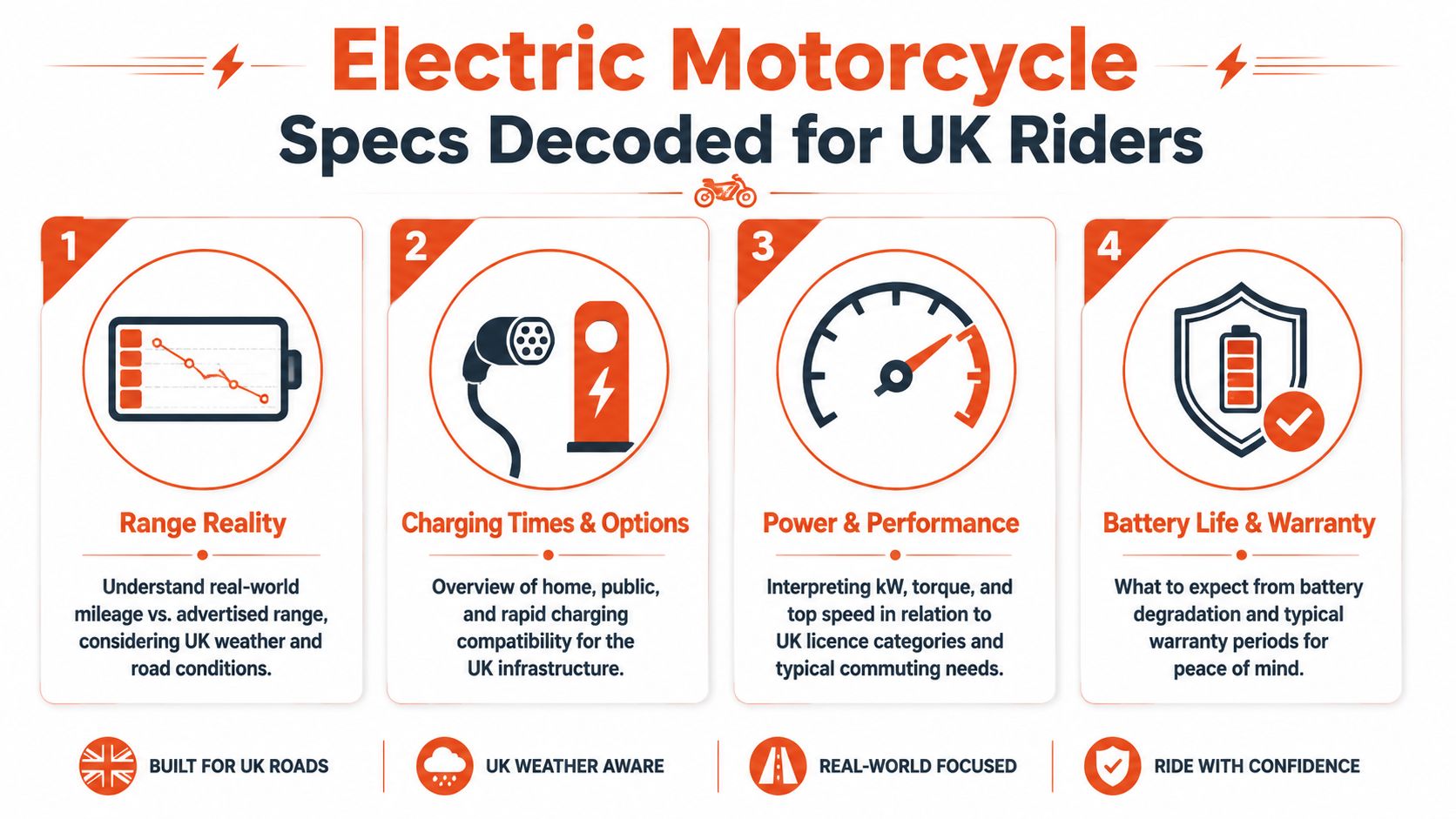
Range claims versus British reality
This is the biggest gap between marketing and ownership. Some official specs claim up to 146 miles of range, but UK-specific tests in 2025 found mixed-use averages closer to 40 to 60 miles, and 62% of delivery riders reported range anxiety, according to UK range findings on electric motorcycles.
That doesn't mean electric bikes are poor. It means you need to interpret the numbers properly.
Cold weather, payload, road speed, hills, and hard acceleration all cut range. A bike used for food delivery in winter traffic with a rider, insulated bag, repeated stops, and aggressive pullaways won't behave like the same bike in a warm-weather lab figure.
A better way to judge range
Use this simple filter before you buy:
Riding patternWhat to focus onShort urban commutingConsistent real-world range, easy home charging, low weightDelivery workBattery confidence, stop-start efficiency, practical charging accessWeekend leisure ridingComfort at the speeds you actually use, not only top speedMixed roadsContinuous power and how much reserve range you keep, not max claim
If your normal day would use most of the claimed range, the bike is too small for your needs.
The specs that matter more than brochure hype
The first number to understand is continuous power, not just peak output. Peak tells you what the bike can deliver in bursts. Continuous tells you more about where it sits legally and how it will feel in sustained use.
Then look at charging. Many riders don't need public charging very often if they can plug in at home overnight. For them, a straightforward domestic charging routine matters more than chasing public infrastructure. Public charging still helps, but home convenience usually decides whether the bike feels easy to own.
Battery warranty deserves more attention than paint, trim, or touchscreen features. A stronger battery warranty gives you confidence that the expensive part of the bike is backed for real use. It also tends to tell you the seller expects the product to hold up properly.
Focus on these questions when reading a spec sheet:
- Can I complete my normal ride with a sensible buffer? Don't buy to the absolute edge.
- How does the bike charge in my living setup? Garage, driveway, shared parking, or no off-street parking all change the answer.
- Is the bike lightweight enough for city use? A powerful bike that feels awkward at low speed can become a chore.
- What does the warranty say about the battery and parts? Verbal reassurance isn't enough.
For electric motorcycles for sale in uk, the best buyers aren't chasing the highest figure on the page. They're matching the bike to daily conditions in Britain, where weather, traffic, and charging routine matter more than fantasy numbers.
UK Licence and Legal Requirements Explained
Licensing is where many new riders get confused, especially when electric power figures don't line up neatly with the petrol bikes they already know.
What new riders need to know first
If you're starting from scratch, the first step is usually your provisional entitlement and CBT route, then moving up depending on age, experience, and the class of bike you want to ride. If you're still sorting the paperwork side, this guide to the Provisional License D1 Form is a useful place to get your application process straight before you even look at bikes.
The important part is to choose the bike around the licence you either hold now or realistically plan to get soon. Too many buyers shop emotionally, then discover the machine they want doesn't fit their legal route.
A rough practical split looks like this:
- Mopeds and lower-powered options: Usually best for short urban use and first-time road riding.
- 125cc-equivalent electric bikes: Often the sweet spot for commuting and learning.
- Larger electric motorcycles: Better for experienced riders, longer roads, and stronger performance expectations.
Why electric power figures confuse people
In the UK, an A1 licence for riders aged 17 and over is limited to 11kW of continuous power, but electric bikes can have peak power up to 45kW, because electric motors deliver instant torque in a different way to petrol engines, as explained in UK electric motorcycle licensing guidance.
That distinction matters a lot. A legal electric bike on paper can feel quicker than a small petrol machine because the drive arrives immediately. You don't need to build revs or work a gearbox to get moving briskly in traffic.
Electric bikes often feel faster than their licence category suggests, especially away from the lights.
New riders require honesty. Fast-feeling doesn't mean difficult, but it does mean you should respect throttle response. The right learner-friendly electric bike should feel predictable, balanced, and manageable at junctions, not just quick in a headline sense.
If you'd like a plain-English walk-through of licence categories and bike classes, this short video is useful:
The simplest approach is to work backwards. Start with your legal position, then shortlist bikes that fit your route, size, and confidence. That avoids disappointment and stops you paying for performance you can't yet use.
Calculating the True Cost of Ownership
Sticker price matters, but it isn't the whole story. Electric motorcycles often make more sense after purchase than they do in a quick side-by-side advert. That's why buyers should work from total ownership cost rather than starting and ending with monthly price.
Upfront price versus long-term spend
There are several sensible ways to buy. Some riders pay outright. Others prefer Hire Purchase or PCP because it keeps the entry point manageable and matches the bike to a monthly budget. What matters is not pretending a low monthly number means a cheap bike. You still need to understand the full agreement, expected use, and what happens at the end of the term.
Electric also changes what your money goes on after the purchase. You aren't budgeting around petrol, oil changes, exhaust issues, clutch wear, or as many routine service items that come with combustion ownership. That doesn't make the bike free to run, but it does make ongoing costs easier to predict.
Where owners save and where they still need to budget
A realistic ownership view looks like this:
Cost areaElectric realityEnergyUsually easier to budget for than petrol, especially with home chargingServicingFewer routine mechanical jobs, but you still need checks, tyres, brakes, and general upkeepTax and accessZero-emission appeal helps in urban use cases where restrictions matterFinanceCan make purchase practical, but only if the agreement suits your mileage and ownership planInsuranceStill varies by bike, rider, postcode, and use case
One point many buyers miss is accessories and setup. A daily-use bike often needs a lock, phone mount, luggage option, weather-ready kit, and sometimes business-use practicality like storage. Those extras matter more than cosmetic add-ons because they shape the way the bike works on an ordinary Tuesday.
A second hidden factor is downtime. If the bike is your commute or your income, support matters financially. A cheap purchase that leaves you stuck waiting on parts or unclear servicing isn't cheap in practice.
Cheap to buy and cheap to own aren't the same thing.
The best electric buy is usually the one that fits your route, charges easily where you live, and comes with support that keeps it moving. That's what turns electric from an interesting idea into a reliable transport cost.
Recommendations for Different Rider Types
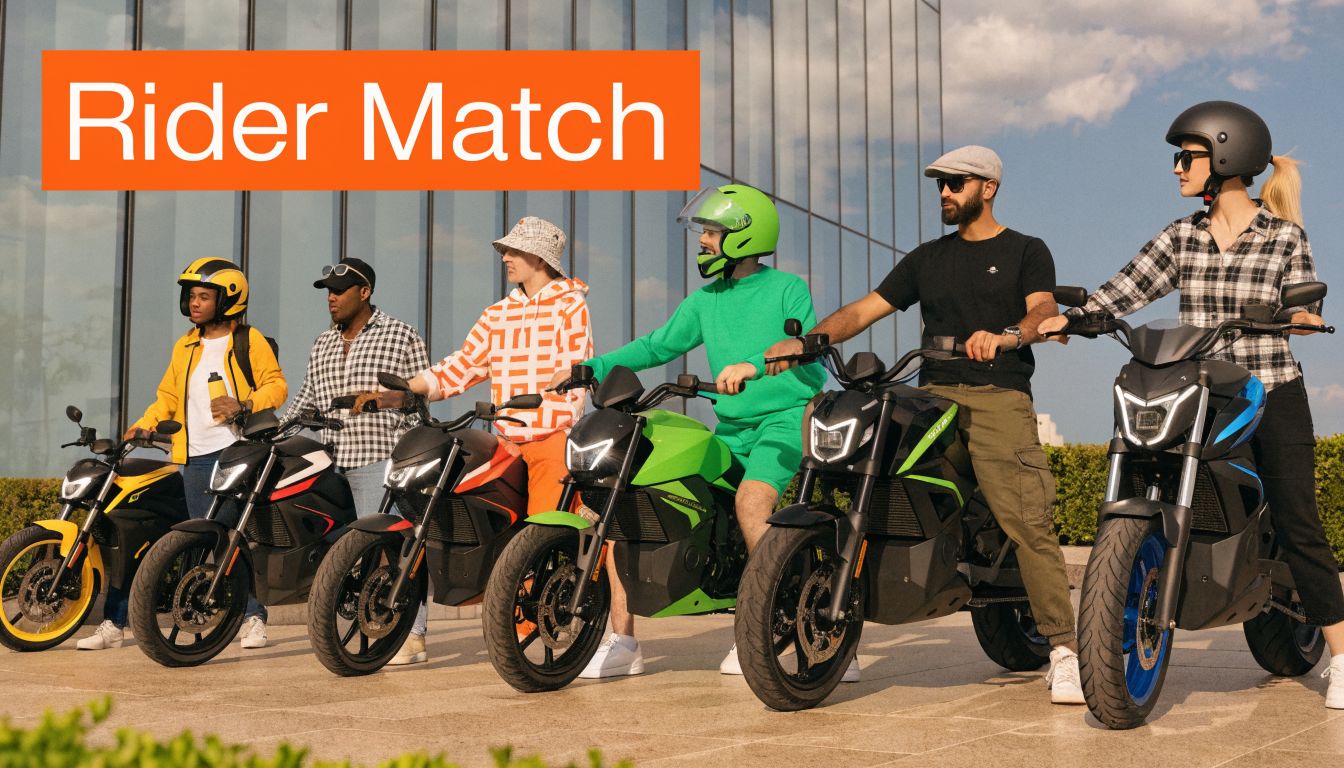
A rider doing a wet 12-mile commute into town needs a very different bike from someone covering back-to-back delivery shifts or buying a first off-road machine for a child. That is where plenty of first purchases go wrong. Buyers chase headline specs, then realise the bike does not suit their actual week.
Urban commuters and first-time riders
For town use, simple usually wins. A lighter moped or 125cc-equivalent electric bike makes more sense than buying extra performance you will rarely use on UK urban roads.
Focus on the bits that affect daily life. Can you charge it easily at home or work? Is it light enough to push into position if parking is tight? Does the throttle feel calm in stop-start traffic? Can you flat-foot it confidently at junctions and in the rain?
New riders often assume top speed matters most. In practice, low-speed balance, visibility in traffic, and predictable response matter more. A bike that is easy to live with gets ridden. A bike that feels awkward to park, charge, or manoeuvre often ends up sitting still.
Delivery riders, business users, and enthusiasts
Delivery work is hard on any bike, so buy around your busiest day, not your best-case range figure. Cold weather, repeated stops, extra load, and evening use all change how a bike performs. A machine that seems fine on paper can become a problem halfway through a shift if charging access is poor or the battery routine does not fit the job.
Business users should judge bikes in the same practical way. Storage matters. Rider handover matters. Parts supply and servicing support matter. If the bike is earning money, downtime costs more than the monthly payment.
Enthusiast buyers have a different brief. They usually care more about acceleration, chassis feel, and how the bike responds on faster roads. That is a valid reason to spend more, but it comes with trade-offs. Hard riding drains battery faster, and performance-focused bikes tend to demand more thought about route planning and charging gaps.
Flex Electric lists new and pre-owned electric mopeds, scooters, motorbikes, off-road models, and kids MX bikes from brands including LiveWire, Vmoto, Super Soco, Segway, Horwin, and Naxeon. That makes side-by-side comparison easier if you are weighing up commuting, business use, and weekend riding in one shortlist.
Off-road riders and kids motocross buyers
Electric off-road bikes make strong sense in the UK, especially for private land, training, and family use. They cut noise, reduce routine maintenance, and remove the usual fuss of cold starts and fuel storage.
Parents tend to care about the same three things:
- Control: Smooth power delivery is easier for a young rider to manage.
- Maintenance: There is less mess and less routine workshop work than with a small petrol dirt bike.
- Practicality: Home charging is simpler than keeping fuel, tools, and hot engine parts around.
Adult off-road buyers should be just as realistic. Match the bike to the ground you ride, the length of your sessions, and how you transport it. A compact electric dirt bike can be excellent for short blasts and training use, but that does not automatically make it the right choice for longer, repeated riding days.
Your Next Steps to Riding Electric
The strongest reason to go electric isn't that it's fashionable. It's that, for the right rider, it works better. Commuters get simpler daily travel. Delivery riders can build around lower running hassle and cleaner urban use. First-time riders often get a smoother introduction to two wheels. Off-road families get less noise, less mess, and less maintenance.
The smart way to buy is to stay grounded. Judge range by UK reality. Match the bike to your licence. Think about charging before colour. Treat warranty and support as part of the bike, not an afterthought.
If you're comparing electric motorcycles for sale in uk, don't rush into the most dramatic spec sheet. The better move is to shortlist the bikes that fit your roads, your parking, your budget, and the way you ride.
If you'd like straight answers on which electric moped, motorbike, off-road model, or kids MX bike fits your use, take a look at Flex Electric and compare the available options before you buy.
Find us
You will find us at 74 Dalry Road, Edinburgh, EH11 2AY
Showroom Opening Times:
Monday: By Appointment
Tuesday to Friday: 11am - 5:00pm
Saturday: 10am - 5pm
Sunday: By Appointment
