
How Long Does a Lithium Battery Last?
Flex Electric
The UK's #1 Electric Moped and Electric Motorbike dealer.

You're probably reading this for a practical reason, not out of curiosity. Maybe your electric moped's range has started to feel tighter on a cold morning, or you're using an electric motorcycle for commuting or delivery work and wondering whether the battery will still make financial sense in a year or two.
That's the question behind how long does a lithium battery last. It isn't just about when the battery stops working. It's about when the range drops enough to change how you ride, how often you charge, and whether the bike still does the job you bought it for. On electric mopeds, electric motorcycles, off-road electric bikes, and kids motocross bikes, the battery isn't a background component. It's the part that decides convenience, running cost, and resale appeal.
For UK riders, the answer always depends on two things. First, the battery chemistry and how the pack was built. Second, how the bike is used in British conditions, with winter cold, damp storage, repeated short trips, and plenty of partial charging.
Table of Contents
- Your Electric Moped Battery Lifespan Questions Answered
- Years tell one story, cycles tell another
- Battery chemistry changes the ownership maths
- Cold and heat do different kinds of damage
- Charge level and charging speed matter more than most riders think
- Storage and inactivity age a battery without you noticing
Your Electric Moped Battery Lifespan Questions Answered
A rider finishes the evening rush, glances at the display, and notices the battery has fallen faster than expected. That moment tells you what most owners care about. Not chemistry diagrams. Not marketing claims. Just two straight questions. How much longer will this battery last on the road, and how many years will I get before replacement becomes an issue?
For electric mopeds and electric motorcycles, the honest answer is that battery life has two meanings. One is whether the pack still functions. The other is whether it still gives enough dependable range for your routine. Those are not the same thing. A battery can still be technically usable and still be a nuisance for a commuter or a delivery rider.
UK use makes this more obvious. Cold weather can temporarily reduce battery performance and range, while frequent rapid charging and repeated partial charges in everyday British riding conditions can affect long-term health, as noted in this guidance on lithium battery lifespan and cold-weather use. That's why a battery can feel tired in January even if it isn't near the end of its chemical life.
Workshop reality: Riders usually notice battery ageing first as inconvenience, not failure. The bike still works, but the safety margin in daily range starts disappearing.
This is also where a lot of general battery advice gets messy. If you've been comparing different electric two-wheelers and want a broader consumer-oriented explanation of battery wear, this Punk Ride ebike battery guide is useful background reading, even though the practical demands on electric mopeds and motorcycles are different from bicycles.
The questions worth asking are simple:
- How fast does usable range fall? That affects commuting confidence.
- How many charge cycles will your use pattern create? That matters more for delivery riders than occasional riders.
- What can you control? Charging habits, storage, and exposure to temperature all matter.
- When does replacement become economical? That's often the ultimate decision point.
Understanding Battery Lifespan Cycles Versus Years
A battery can be chemically alive and still be the wrong battery for your job.
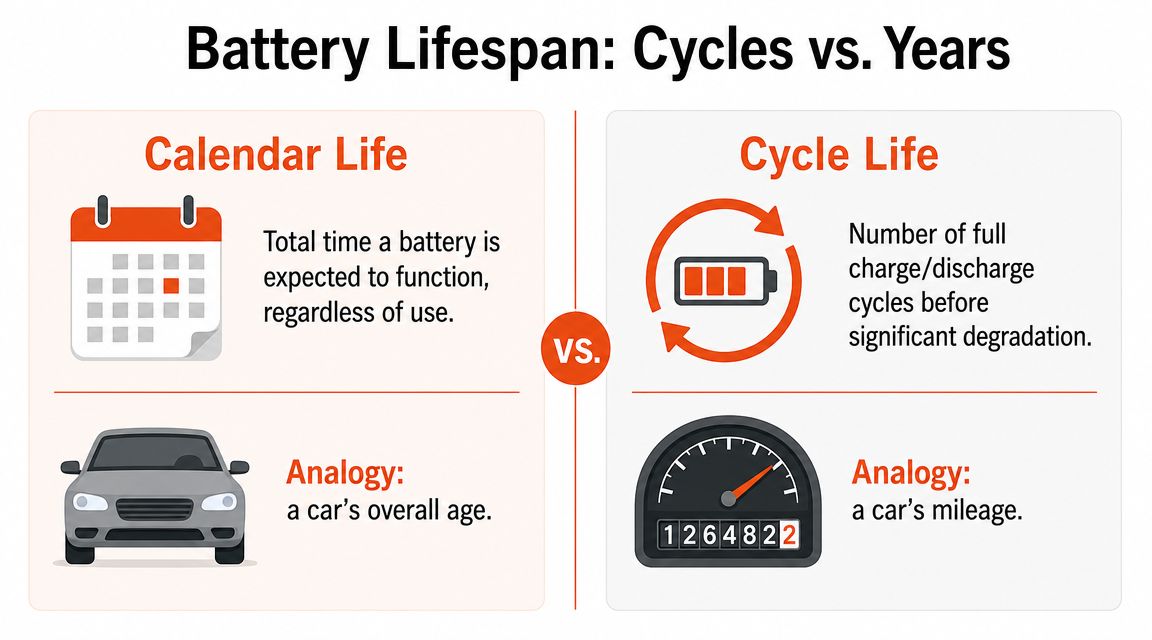
If a rider in Manchester uses an electric moped for a short fair-weather run twice a week, the pack may age mostly by time. If another rider in Birmingham is doing full commuting miles or delivery shifts through winter, charging every day and running the battery hard, the pack may reach the point of replacement much sooner in practical terms. That is the difference between calendar life and cycle life.
Years tell one story, cycles tell another
Calendar life is age-related wear. The battery degrades gradually even if the bike spends long periods parked. Cycle life is use-related wear. It comes from charging and discharging over real riding days.
For UK riders, cycle life often decides the battery's economic life before chemistry says the pack is finished. The bike still starts and runs, but the usable range drops far enough that the owner changes routines, charges more often, or loses confidence in getting home with a winter headwind, wet roads, and lights on. In the workshop, that is usually the point where the battery starts costing the rider time and convenience, even if it has not technically failed.
A common baseline for lithium-ion packs is 300 to 500 full charge cycles, often translating to roughly 3 to 6 years in lighter-duty use, according to Outbax's summary of lithium battery lifespan. A full cycle is cumulative, not just one empty-to-full event. Two half discharges with two recharges count about the same as one full cycle.
That is why two mopeds with the same registration year can have very different battery value. One may have spent most of its life indoors, ridden gently, and charged modestly. Another may have done repeated deep discharges, outdoor storage, and daily rapid turnaround for work. Same age. Different remaining life.
Battery chemistry changes the ownership maths
Chemistry affects how long a pack stays useful and whether replacement makes financial sense. Outbax notes that LiFePO4 batteries are usually rated for more charge cycles than NMC packs, while NMC is often chosen where lower weight and stronger energy density matter more.
For riders, the trade-off is straightforward. NMC can make more sense where range, packaging, and weight are priorities. LiFePO4 can make more sense where long service life and repeated cycling matter most. That does not automatically make one better. It depends on the bike and the job.
Battery measureWhat it means in practice for ridersCalendar lifeAge-related decline, even on a bike that is not used muchCycle lifeWear caused by repeated charging and dischargingNMC chemistryOften favoured where weight and energy density matterLiFePO4 chemistryOften favoured where long cycle life and durability matter more
For a UK commuter or delivery rider, the useful question is not just "How many years will this battery last?" It is "How long before reduced range starts affecting work, charging habits, and replacement costs?" That is the effective service life most owners end up paying for.
The Key Factors That Degrade Battery Health
A battery usually stops being useful before it stops working. For UK riders, that is the point that matters. If winter range drops far enough that the commute needs a midday charge, or a delivery shift starts feeling risky by the last few miles, the battery has already lost economic value even if it still powers the bike.
Cold and heat do different kinds of damage
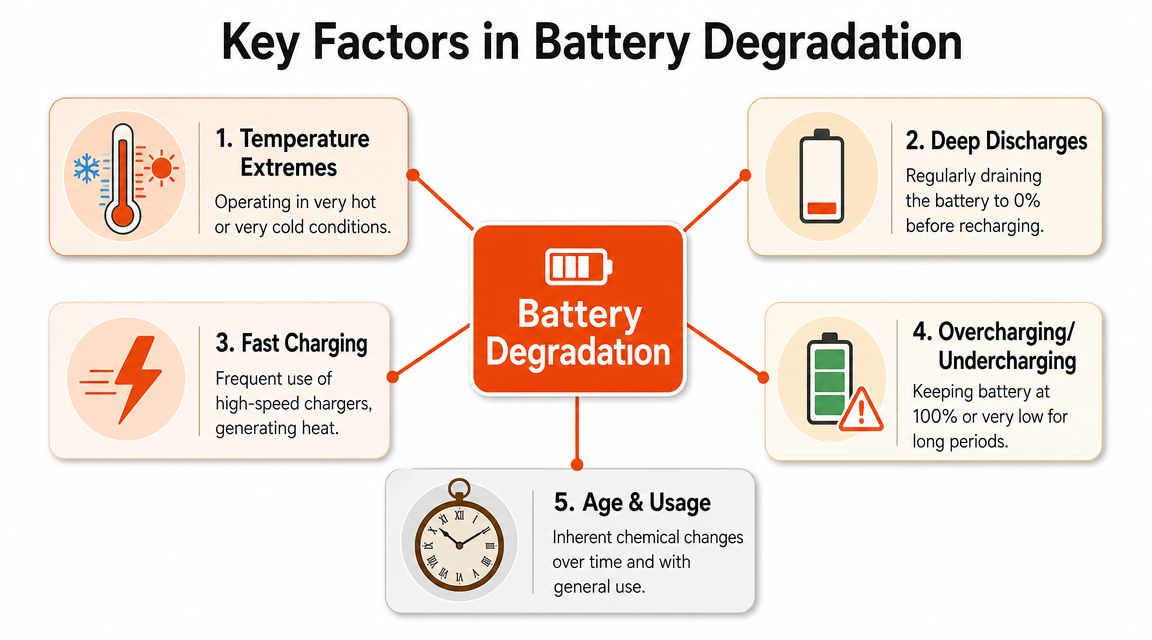
Cold weather mainly cuts available performance in the moment. Riders notice that first as weaker acceleration, less usable range, and a battery gauge that falls faster on short winter trips. That is common on UK bikes left outside overnight, especially for commuters who head out before sunrise.
Heat does the slower, more permanent damage. A hot battery ages faster, and heat often comes from use as much as climate. Repeated fast charging, steep stop-start delivery work, heavy loads, and charging a warm pack straight after a hard ride all add stress. The UK is not a hot country for most of the year, but batteries still get hot enough to wear faster when the bike is worked hard.
That difference matters in practice. Cold can make one January ride feel poor. Heat is what shortens the pack's working life over months and years.
Charge level and charging speed matter more than most riders think
This is one of the few areas riders can control day to day. Battery University's guide to prolonging lithium-based batteries shows the same basic pattern technicians see in service: keeping cells at the absolute top of charge increases stress, and deep discharges wear them faster. Their data also shows a trade-off between full-charge voltage, depth of discharge, and cycle life.
In workshop terms, the rule is simple. Maximum range and maximum longevity usually pull in opposite directions.
A rider doing 12 easy commuter miles each way does not need to charge to 100% every night unless there is no margin in the route. A delivery rider may need that full charge because lost range means lost income. That choice is reasonable, but it comes with a cost. More time at full charge, more frequent full cycles, and more rapid turnarounds usually bring replacement forward.
Fast charging fits the same pattern. It is useful, sometimes necessary, and hard on the pack if it becomes the daily routine. The benefit is uptime. The cost is extra heat and stress.
Practical rule: Charge to full for the jobs that need it. For lighter use, leaving some headroom is often kinder to the battery.
Storage and inactivity age a battery without you noticing
Storage catches riders out more often than heavy use. I see this with seasonal bikes, spare batteries, and mopeds that sit for weeks because plans changed, weather turned, or a rider switched jobs.
Leaving a pack parked at a very high state of charge for long periods is hard on it. Leaving it severely discharged is worse, because some batteries left flat for too long will come back weak or fail to recover properly. Riders often assume low use means low wear. With lithium batteries, time and storage condition still matter.
This matters in the UK because many bikes live outdoors or in unheated sheds. Damp air does not directly wear the cells the way charge level and temperature do, but outdoor storage often goes with bigger temperature swings, longer periods unused, and less consistent charging habits. Those are the actual problems.
A few warning signs usually show up before the battery becomes a budgeting issue:
- Charge drops faster than it used to on the same route
- Cold-weather range falls off sharply compared with previous winters
- Charging takes longer to balance or finishes less consistently
- The battery gauge and the range stop matching
Battery care is not mysterious. It is a set of habits, and those habits change what the bike costs to run over time. For a UK rider, especially one commuting daily or earning from the bike, battery life is not just chemistry. It is operating cost.
Real World Expectations For UK Electric Moped Riders
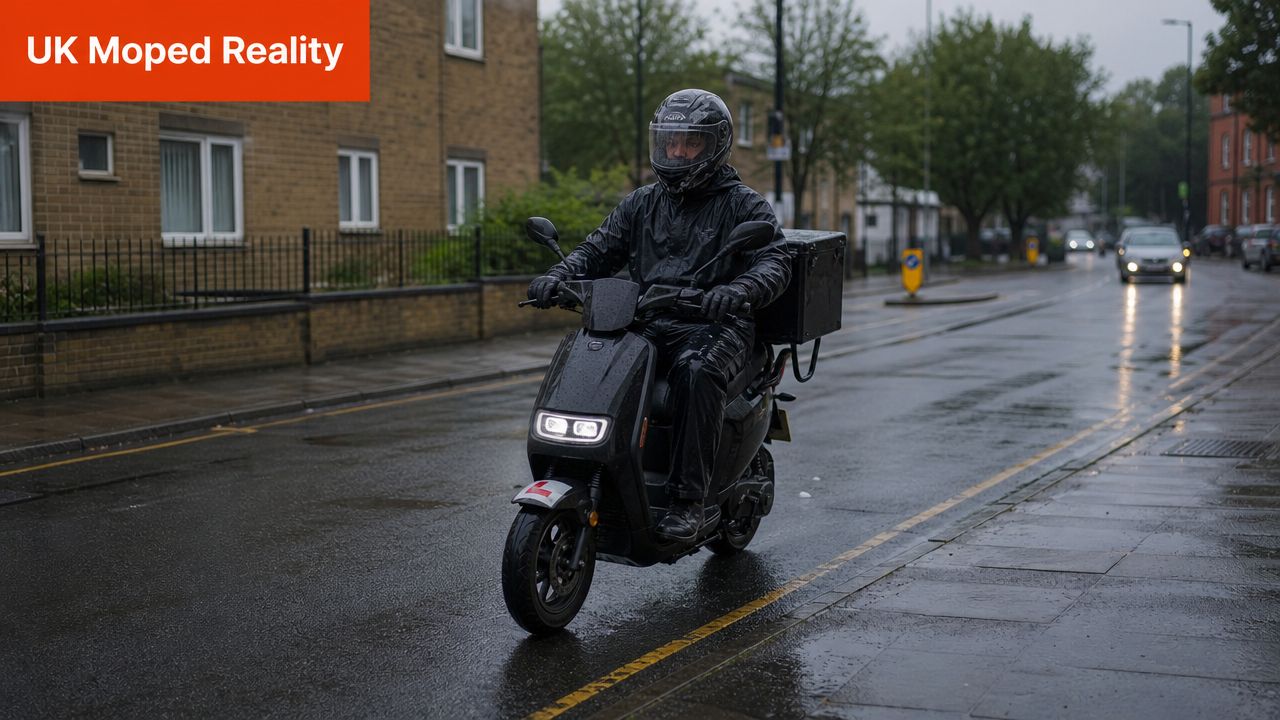
Specs on a product page are clean and tidy. UK riding isn't. A dry summer commute, a wet hill start in Glasgow, city traffic in London, and repeated short runs for takeaway delivery all ask different things from the same battery.
Large fleet analysis from Geotab found an average EV battery degradation rate of 2.3% per year, which would leave about 81.6% of original capacity after eight years, and on that basis Geotab estimates modern EV batteries can last around 13 years or more under typical use, according to Geotab's EV battery health analysis. They also note that battery life varies with charging power, climate, and usage.
The commuter view
For a commuter using an electric moped or electric motorcycle mainly for predictable daily travel, battery ageing usually shows up gradually. At first, nothing dramatic happens. The bike still feels normal, but the reserve at the end of the ride gets slimmer. A route that used to feel comfortable starts needing more thought in winter.
British weather adds another layer. Cold mornings reduce available performance and range, and riders who park outside will feel that more than riders who keep the bike in a garage. Add hills, heavy waterproofs, traffic lights, and stop-start urban roads, and real-world range can feel very different from brochure range even when the battery is still healthy.
A commuter usually cares about consistency more than absolute maximum range. If the bike still gets to work and back with margin, the battery is doing its job.
The delivery rider view
Delivery use is harsher because it compresses battery wear into a shorter calendar period. Lots of short runs, repeated charging, fast turnarounds, and frequent use in cold and wet conditions put more pressure on the pack. Even if the chemistry is good, the economic question arrives sooner because the rider depends on that range to earn.
Here's the practical difference between the two use cases:
Rider typeWhat battery ageing feels like firstCommuterLess reserve at the end of the dayDelivery riderMore charging interruptions and less earning flexibilityOff-road riderShorter ride sessions and less punch under loadKids MX useReduced play time between charges
In real use, a battery doesn't become a problem when it stops powering the bike. It becomes a problem when it stops fitting the rider's day.
That's why the same pack can be fine for one owner and frustrating for another. A battery with reduced capacity may still suit local commuting, training, light off-road use, or lower-demand riding. It just may no longer suit heavy commercial work.
How To Maximize Your Battery Lifespan Today
Battery care isn't complicated. Most of it comes down to avoiding habits that create extra stress for no benefit. If you ride daily, small routines make a bigger difference than one-off fixes.
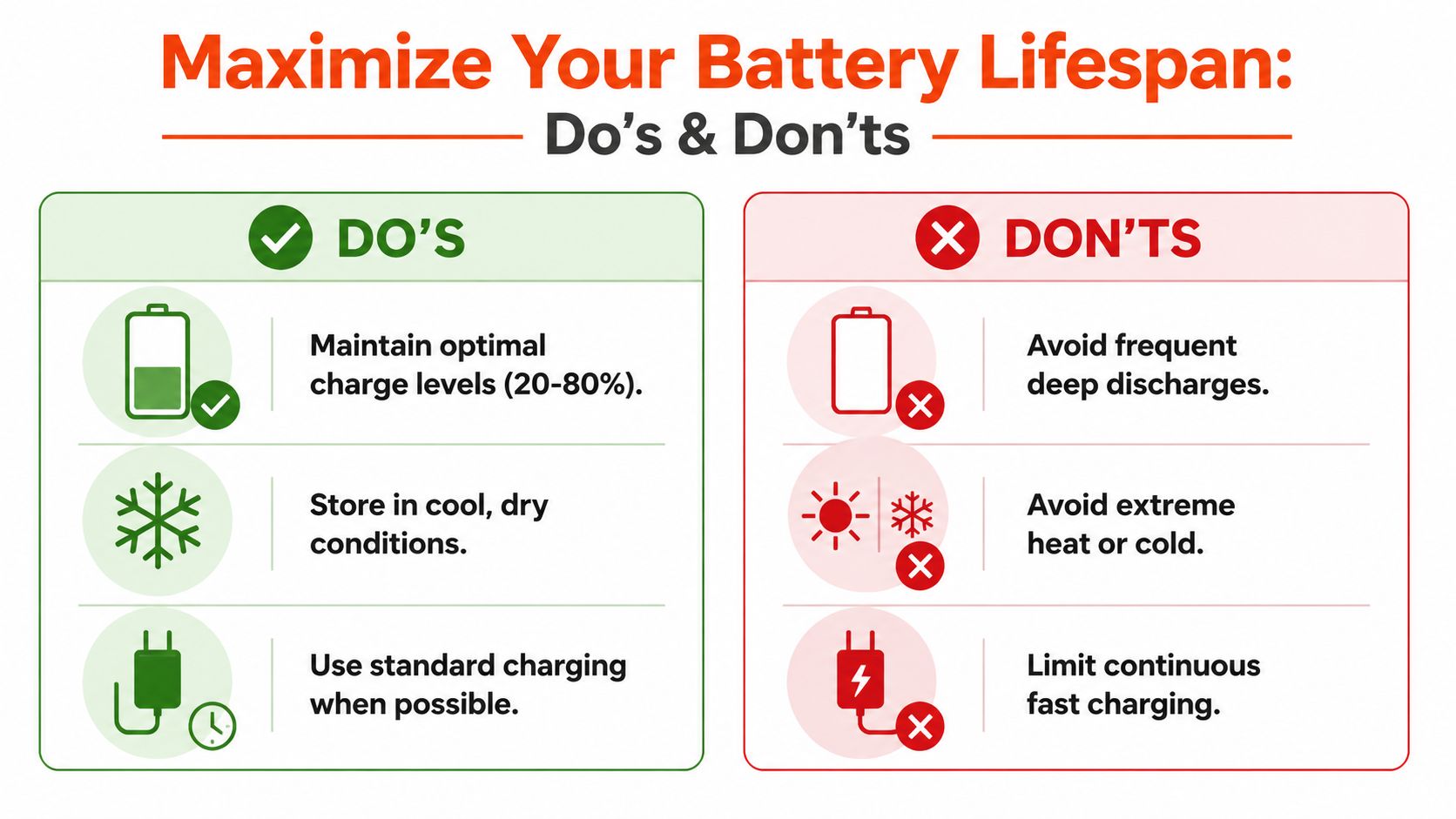
Daily habits that help
The most useful rule for most riders is simple. Don't chase maximum charge all the time unless you need maximum range that day. That lines up with the battery science already discussed and with what tends to work best in normal ownership.
Good habits look like this:
- Keep charge moderate when possible. Many riders aim to live in the middle of the battery rather than sitting at either extreme.
- Use standard charging when time allows. Slower charging is usually kinder to the pack than repeated rapid charging.
- Warm the bike into use in winter. Gentle early riding is better than demanding full performance from a freezing pack.
- Store the battery somewhere dry and temperate. Outdoor exposure and damp sheds aren't ideal.
- Plan full charges around long rides. Charge to the top for a reason, not by default.
For riders who like maintenance thinking from other electric vehicle categories, this golf cart battery maintenance resource is useful because the storage and charging discipline carries over well, even though the vehicles are different.
A short visual summary helps if you want the basics in one place:
Simple habits that shorten battery life
These are the behaviours I'd avoid if battery longevity matters:
- Frequent deep discharges
Riding until the pack is nearly empty every day usually creates more wear than topping up earlier. - Leaving it full for long periods
A battery parked at maximum charge for days or weeks is under more stress than one stored more moderately. - Treating fast charging as the default
It's useful when needed. It shouldn't become the only charging pattern if you want the pack to age more gently. - Ignoring storage during downtime
This catches owners of off-road bikes and kids electric motocross bikes all the time.
If you want the battery to last, don't optimise every day for convenience. Optimise for repeatability.
Smooth riding also helps. Hard acceleration, repeated heavy loads, and constant max-effort use don't just affect range in the moment. They increase heat and stress inside the system. You bought the bike to use it, of course, but there's a difference between enjoying the performance and needlessly punishing the battery every time you set off.
Understanding Warranties and Planning For Replacement
A battery warranty matters most when life gets messy, not when everything is going well. Riders often look at the bike price, the quoted range, and the monthly payment, then barely read the battery cover. That's backwards. On an electric moped or motorcycle, the battery is the component most likely to shape your long-term costs.
Why warranty wording matters
The first thing to understand is that a warranty doesn't mean the battery will never lose capacity. All lithium batteries degrade with time and use. What matters is what the warranty covers, what counts as abnormal decline, and whether high-mileage use changes how a claim is assessed.
For commercial riders, this matters even more. A delivery rider may put a battery through hard use quickly, while a commuter may spread that wear over a much longer period. The paper warranty may be the same, but the practical value to each rider can feel very different.
If you're budgeting for ownership, it helps to read broader cost context as well. This overview of EV battery maintenance expenditure UK is useful because it frames battery care and replacement as part of the total running-cost picture, not just a one-off problem.
Replace based on use, not sentiment
The key question isn't only chemical life. It's economic life. As noted in this discussion of lithium-ion battery lifespan, reuse, and repair, UK battery policy is placing more emphasis on reuse, repair, and second-life thinking. That's the right lens for riders as well.
Ask yourself:
- Does the current range still cover my real day without stress?
- Has charging become disruptive to work or commuting?
- Would this battery still be fine in a lower-demand role?
- What does my warranty say about performance decline versus outright failure?
A battery doesn't need to be dead to be due for replacement. If reduced range makes a delivery shift awkward, or turns a once-simple commute into a daily gamble, that battery may already be at the end of its economic life for you. It may still have value elsewhere. It just may no longer suit the original job.
Your Battery Health Is In Your Hands
The riders who get the best value from a lithium battery usually aren't doing anything fancy. They just avoid the obvious bad habits and stay realistic about trade-offs.
Three points matter most. First, battery life is about both years and charge cycles. Second, UK riding conditions change how the battery feels day to day, especially in winter. Third, the best battery care is boring but effective: avoid extremes, charge intelligently, and store the bike properly.
That applies whether you ride an electric moped to work, use an electric motorcycle for delivery, run an off-road electric bike at weekends, or keep a kids motocross bike ready for the next outing. The battery will still age. But the way it ages is heavily influenced by how you use it.
If you treat the battery as something you manage, not just something you drain and refill, you'll usually get better reliability, better value, and fewer nasty surprises.
If you're comparing electric mopeds, scooters, motorbikes, off-road models, or kids MX bikes and want straight answers on battery range, warranty cover, and what ownership really looks like in the UK, Flex Electric is a good place to start. Their team specialises in practical advice, not brochure talk, so you can choose a bike that fits your riding and your battery expectations from day one.
Find us
You will find us at 74 Dalry Road, Edinburgh, EH11 2AY
Showroom Opening Times:
Monday: By Appointment
Tuesday to Friday: 11am - 5:00pm
Saturday: 10am - 5pm
Sunday: By Appointment
