
How to Get a Moped Licence UK: Your 2026 Guide
Flex Electric
The UK's #1 Electric Moped and Electric Motorbike dealer.

The usual moment this starts is simple. You’re fed up with late buses, expensive rail fares, crowded car parks, or a car that feels ridiculous for short city hops. You want something that gets you to work, college, or delivery shifts without turning every trip into a chore.
That’s where a moped starts making sense, especially an electric one. A road-legal electric moped is quiet, easy to ride, and well suited to stop-start urban traffic. Machines like a Super Soco or Vmoto fit naturally into city life because they remove a lot of the friction that puts people off bigger bikes. Twist the throttle, filter through traffic where it’s safe and legal, park more easily, and get on with your day.
The confusing part isn’t choosing the bike. It’s the licence. People search how to get a moped licence uk, then get buried in mixed advice about CBT, theory tests, AM licences, car licence rules, and what counts for electric mopeds. The result is that many riders take the first path they hear about, not the one that suits how they’ll ride.
Escape the Grind and Embrace Electric Freedom
A lot of riders come to mopeds after trying to make something else work. The train looks fine until delays hit. The bus works until you need to be somewhere on time. A car helps until parking, congestion, and short-trip hassle start outweighing the convenience.
An electric moped solves a very specific problem. It’s not trying to replace every vehicle for every job. It’s there for city miles, regular commuting, errands, and delivery work where simplicity matters more than top-end performance. That’s why 50cc-equivalent electric mopeds appeal to first-time riders. They’re approachable, automatic, and far less intimidating than a geared petrol bike.
Why electric mopeds suit first-time riders
The biggest advantage for a beginner is how little there is to juggle. On an electric moped, you don’t have clutch control, gear changes, or engine stalls to think about. That matters when you’re learning road position, observation, junctions, and low-speed control all at once.
Riders looking at a Super Soco CU Mini, a Vmoto city moped, or a similar 50cc-equivalent machine usually want one of three things:
- A cleaner commute: easier urban travel without relying on public transport
- A practical work tool: something manageable for delivery runs and local business use
- An easier first step into two wheels: especially for younger riders starting at moped level
You don’t need a complicated machine to gain real freedom in a city. You need something legal, simple, and easy to live with.
The licence process is simpler than it looks
For most new riders, the route starts with a provisional licence, then a CBT. From there, you decide whether to stay as a learner rider or continue to a full AM licence. That choice matters more than most guides admit.
If you only want to get moving quickly, CBT often does the job. If you’ll ride every day, use the moped for work, or hate the idea of repeating training later, the full AM route can be the better long-term move.
The rest comes down to understanding the rules clearly and matching them to the way you will use the bike. That’s the difference between getting licensed once and feeling sorted, or ending up on the wrong path and fixing it later.
The Starting Line Provisional Licence and CBT
A lot of riders want the same thing at this stage. Get legal, get riding, and avoid wasting money on the wrong first step.
For a moped rider in the UK, the admin starts with a provisional licence and then a CBT. If either one is missing, the road ride does not happen.
Getting your provisional licence sorted
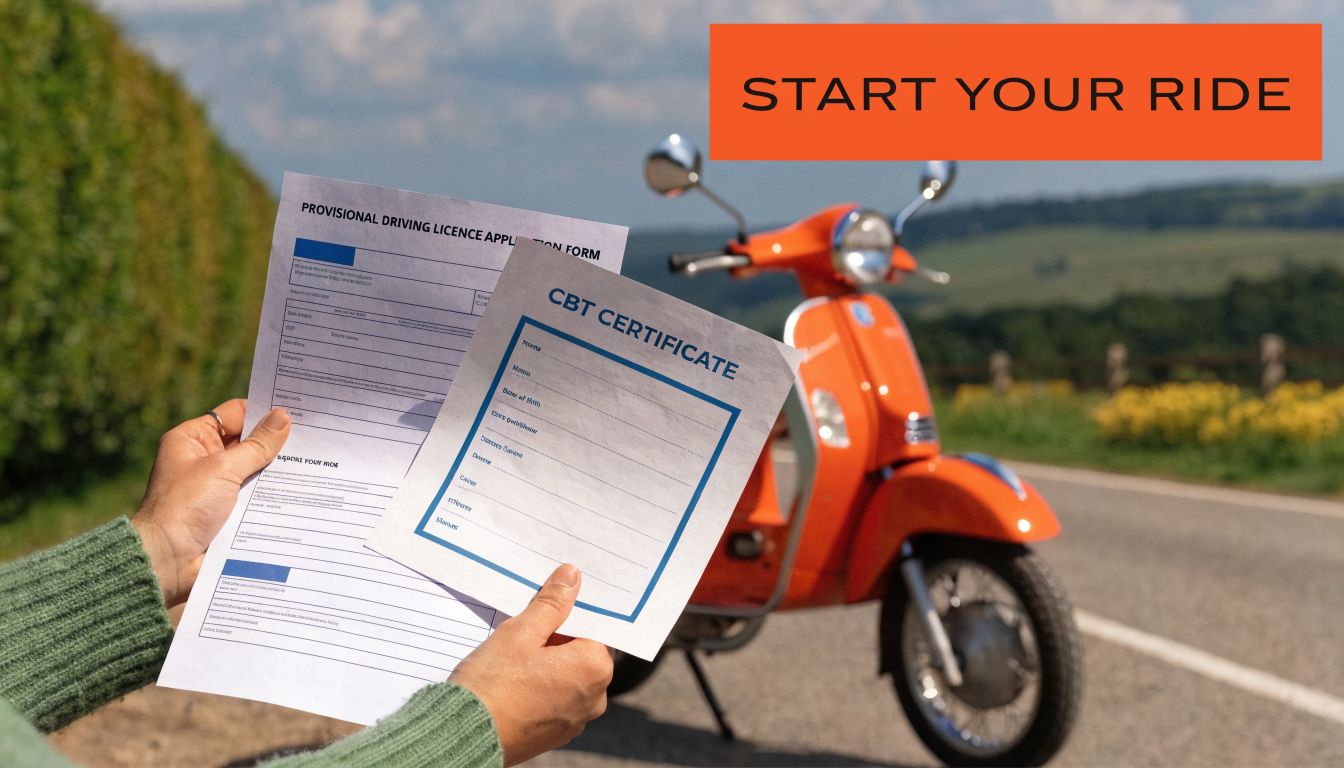
You can apply for a provisional licence before you are old enough to ride on the road, which is useful if you want to start promptly at 16 rather than lose a few weeks to paperwork. If you want a plain-English breakdown of the admin, this guide to provisional licence information for learners is a useful extra read.
The practical point is simple. Sort the licence first, check the details are correct, and do not leave it until the week you want to book training. Training schools will want to see the right documents, and a small paperwork problem can delay the whole plan.
For electric moped riders looking at a Super Soco or Vmoto, this part is no different from petrol. The bike is easier to live with. The legal process is the same.
What the CBT actually is
CBT means Compulsory Basic Training. Riders often talk about it like a pass or fail test, but on the day it works more like supervised training with a safety standard you must reach before going out as a learner.
The course follows a set structure. It covers basic checks, off-road control, and road riding with an instructor. You also get a certificate, called a DL196, which lasts for 2 years.
That two-year limit matters more than new riders expect. If you only need a moped for occasional local use, CBT may be enough for now. If you are planning daily commuting or delivery work on a 50cc-equivalent electric moped, the expiry date is one of the first trade-offs to keep in mind.
What happens on the day
Most CBT days build up in a sensible order. You start with checks and introductions, move into basic machine control in a training area, then go onto public roads once the instructor is satisfied you can do it safely.
In practice, riders usually struggle with observation, road position, and slow-speed confidence more than the machine itself. That is one reason electric mopeds suit beginners well. On a Super Soco or Vmoto-style automatic bike, there is no clutch to manage and no gear changes to distract you at a mini-roundabout or busy junction.
A simple machine does not make CBT automatic, though. Instructors still want to see safe decisions, shoulder checks at the right time, controlled braking, and steady road awareness.
Practical rule: treat CBT like training you want to learn from, not a box-ticking exercise.
What to bring and how to approach it
Turn up with the documents the school asked for, proper riding kit or suitable clothing, and anything you need for the eyesight check. If you normally wear glasses or contact lenses, bring them. If the weather looks rough, dress for it. Cold, wet riders make more mistakes.
A calm approach helps more than bravado. The riders who do well are usually the ones who listen, ask when they are unsure, and correct mistakes quickly.
For learner-legal electric mopeds, CBT is often the quickest route onto the road. That is why it appeals to younger riders and to people starting delivery work. The catch is that you are still a learner, with learner restrictions, even if the bike itself feels easy from day one.
A quick visual guide can help before you book:
Where riders get caught out
The usual mistake is assuming CBT settles the whole licence question.
It does not. It gets you riding as a learner. For some riders, that is a sensible short-term answer. For others, especially riders using an electric moped every day for commuting or delivery shifts, it can become a stopgap that needs repeating later.
That is why this stage matters. Getting the provisional and completing CBT is straightforward enough. Choosing whether that is all you need is the part that deserves more thought.
The Key Decision CBT Rider or Full AM Licence Holder
You pass CBT, get on a 50cc-equivalent electric moped, and within a week the bike is doing exactly what you hoped. It gets you to work cheaply, slips through traffic, and feels easy to live with. That is usually the moment the bigger licence question gets ignored.
For some riders, that is fine. For others, especially commuters and delivery riders, it is the point where a quick start turns into a poor long-term setup.
What each route actually gives you
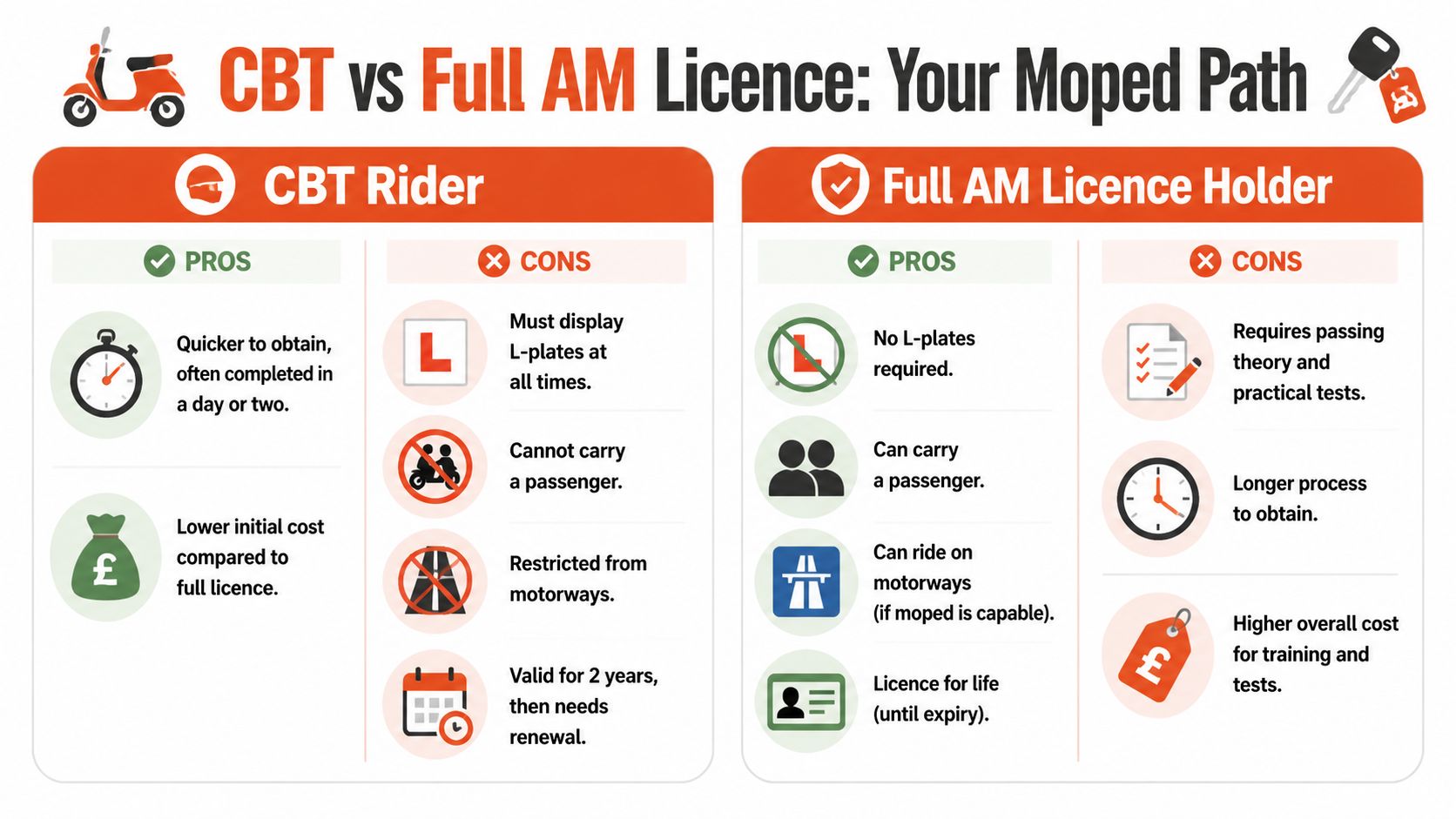
A CBT lets you ride as a learner on a suitable moped. It is the faster route onto the road, which is why so many riders start there. If you are using a learner-legal electric moped such as a Super Soco or Vmoto 50cc-equivalent model, the appeal is obvious. No gears, low running costs, and a simple first step into riding.
A full AM licence changes your status, not just your paperwork. From age 16, it gives permanent entitlement to ride a moped up to 50cc or 4kW with a top speed of 45 km/h (28 mph), without L-plates or CBT renewals, and it allows you to carry a passenger under the UK AM licence rules.
That difference matters more than many guides admit.
CBT Certificate vs. Full AM Licence A Head-to-Head Comparison
FeatureCBT Certificate (Learner)Full AM Licence (Qualified Rider)Minimum ageStarts at learner stage once eligible16What you can rideLearner-legal moped, including suitable electric mopedsMoped up to 50cc / 4kW and 45 km/h (28 mph)L-platesRequiredNot requiredPassengerNot allowedAllowedValidityTime-limitedPermanent entitlementTests neededCBT onlyCBT, theory, Mod 1, Mod 2Best forFast entry to ridingLong-term moped use
Riders who are usually fine starting and staying on CBT
CBT suits riders who need speed and flexibility more than permanence.
That often includes:
- Short-term riders: you need transport now and are not yet sure the moped will stay part of your routine
- First-time commuters testing the idea: you want to find out whether year-round two-wheel travel suits you
- Riders keeping costs and admin light at the start: one training day is easier to commit to than theory revision and practical test booking
For an electric moped, this route can work well. A Super Soco or Vmoto with automatic twist-and-go control removes one layer of complexity, so you can focus on road position, observation, and confidence rather than clutch control.
Riders who should look hard at the full AM route
AM makes more sense once the moped stops being an experiment and starts being part of everyday life.
That includes:
- Daily commuters: repeat CBT later is an inconvenience you can usually see coming
- Delivery riders: learner restrictions and renewal deadlines are a poor fit for a bike tied to income
- Younger riders with a clear plan: passing AM gives you a proper licence in the category instead of staying in learner status by default
I have seen plenty of riders leave this too late. The bike becomes reliable, the routine settles in, and the licence decision gets postponed until the CBT expiry becomes a problem.
The trade-off: speed now or permanence later
CBT wins on speed. You can get trained, buy or lease the bike, insure it, and start riding as a learner quickly.
AM wins on stability. Once you have passed the theory and practical tests, the moped becomes simpler to live with. No L-plates. No repeat CBT cycle. No need to keep one eye on an expiry date while using the bike for work or a daily commute.
Electric mopeds often push riders toward the full licence sooner than petrol mopeds did. They are quiet, easy to ride, and cheap to run, so they tend to become proper utility vehicles rather than occasional toys. If your Super Soco or Vmoto is carrying you to work five or six days a week, a permanent entitlement usually makes better sense than treating the bike like a temporary trial.
Common rider approaches
The sensible approach is to choose deliberately.
Some riders take CBT, start riding straight away, and use the next few months to decide whether the moped is earning its place in their life. That is a reasonable plan.
Others know from day one that the bike is for daily commuting or delivery work. In that case, it is usually smarter to treat CBT as the first step only, then book the theory and practical path before learner status starts dragging on.
The expensive choice is drifting into repeat CBTs through inertia. For a casual rider, that may be tolerable. For a rider using an electric moped every day, it usually means extra admin, lost time, and a licence path that never quite gets finished.
The Full Licence Path Theory and Practical Tests Explained
Once you decide the bike is staying in your life, the full AM route stops being theory and starts being admin, bookings, and test standard riding. The sequence is simple enough. Keep your CBT valid, pass the motorcycle theory test, then pass both practical modules on a moped that fits the AM category, as noted earlier.
For electric moped riders, this stage often feels less intimidating than expected. A Super Soco or Vmoto style twist-and-go bike removes gears and clutch work, so your attention can stay on observation, speed control, and road position. That helps, but only if the bike used for training and test is suitable for the AM category. Riders do get caught out by assuming any electric scooter-looking bike will do.
The theory test
The theory test is usually the first place people lose momentum.
Riders who have already passed a car theory test, or who use the roads every day, often underestimate the bike-specific side of it. The pass comes from proper revision, not familiarity. Hazard perception matters. So do road signs, junction judgement, stopping distances, and the kind of defensive thinking that matters more when you are on a small two-wheeler.
A practical point. Do not pass theory and then leave the rest hanging for ages. The theory pass has a shelf life, so if you drag your feet you can end up paying and revising again.
The practical test in two parts
The practical test has two modules, and they ask for different skills.
Mod 1 off-road control
Mod 1 checks machine control in a controlled area. The test judges balance, slow riding, braking, observation, and clean handling without normal traffic muddying things.
Expect exercises built around:
- Slow control
- Figure-of-eight and turning work
- U-turn style manoeuvring
- Controlled stop and braking
- Observation before and during each exercise
Electric mopeds can help here for a very practical reason. The rider is not dividing attention between clutch bite, gear selection, and steering input. New riders usually find it easier to stay tidy at low speed on an automatic bike, but only if they keep their head up and avoid fixating on the cones.
Mod 2 on-road riding
Mod 2 is the road ride. During this stage, the examiner checks whether you can ride safely in live traffic without prompting, not whether you can perform like an advanced rider.
They want to see a rider who is calm, repeatable, and switched on to what is happening around them. The common scoring areas are familiar:
- Junction observations
- Road position and lane discipline
- Appropriate speed
- Mirror checks and signals
- Decision-making in normal traffic
Smooth riding usually scores better than overconfident riding. Examiners are not looking for flair. They are looking for control, planning, and safe habits that hold up under pressure.
Where electric mopeds help, and where they do not
Electric mopeds do give beginners a real advantage on test day. Throttle response is easy to understand, low-speed riding often feels more intuitive, and there is less mechanical workload rattling around in your head.
That said, the bike does not hide weak observation. It does not fix poor mirror use. It does not rescue late signals, bad lane choice, or hesitation at roundabouts. I have seen riders feel very comfortable on a quiet electric moped, then lose marks because the basics were not consistent enough.
For delivery riders, this matters more than many guides admit. If the moped is earning money, test passes are not just about convenience. They reduce repeat training pressure and make the bike easier to live with long term.
Best approach for passing
The strongest approach is to keep the whole process tight. Ride on CBT long enough to build normal confidence, but do not let the full licence become a vague future plan.
A practical order looks like this:
- Use CBT riding to build real road awareness
- Book the theory while your training is still fresh
- Practise on an AM-suitable moped, ideally the type of bike you will ride
- Prepare for Mod 1 and Mod 2 as test exercises, not just everyday riding
- Aim for consistency, not speed or style
That last point matters. Riders who pass cleanly usually look a bit boring, in the best way. No drama, no rushed decisions, no last-second corrections.
If you are weighing up CBT-only against a full AM licence, this is the point where the difference becomes real. CBT keeps you riding. Passing theory and both practical modules gives you a licence that suits a daily electric moped much better, especially if the bike is part of your commute or your income.
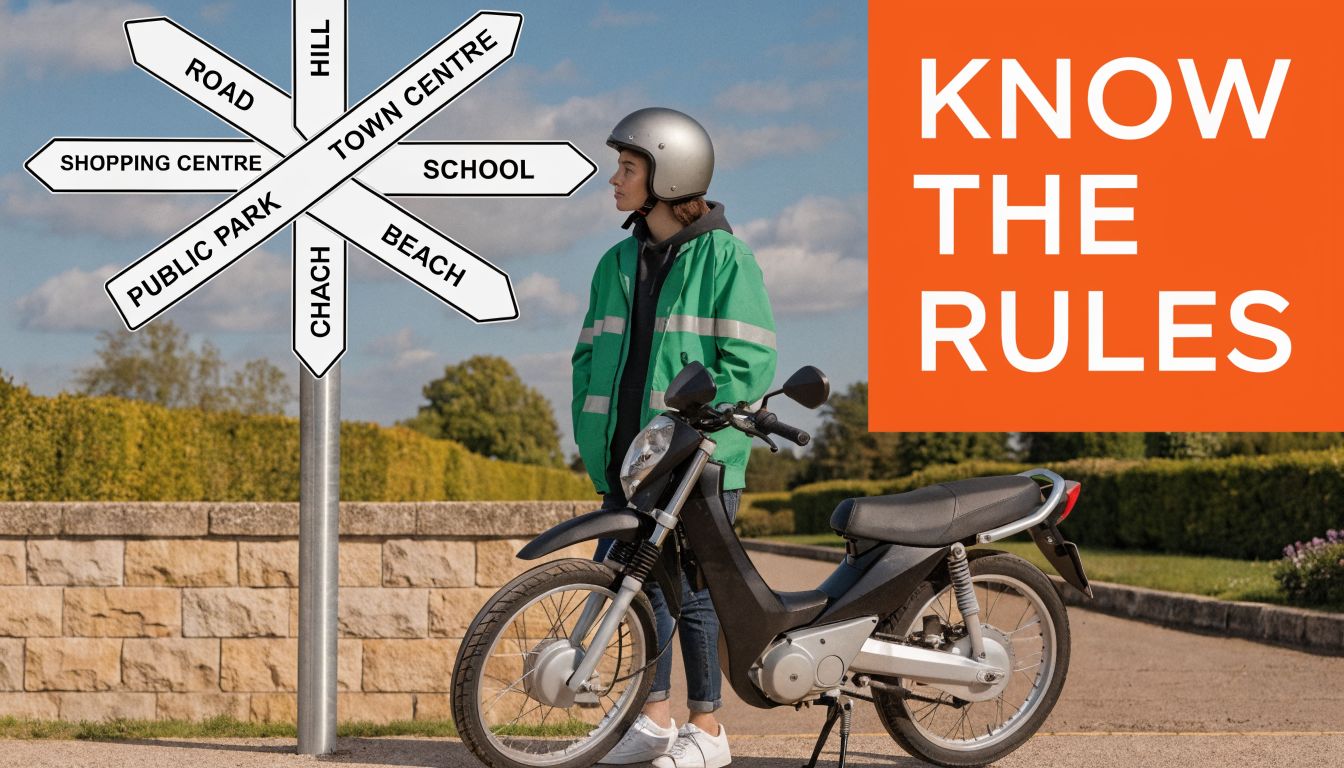
Navigating the Rules Car Licences and Special Cases
A lot of riders get stuck here. They are ready to buy an electric moped, often for commuting or delivery work, then realise the licence answer depends on what they already hold, when they got it, and whether the bike qualifies as a moped.
If you already have a car licence
Car licence holders often have a simpler route than new riders, but the date on the licence matters.
If you passed your full UK car test after 1 February 2001, you can usually ride a 50cc moped once you have completed CBT. In practice, that means a lot of adults can get onto a 50cc-equivalent electric moped without starting from scratch on the motorcycle side.
If you passed your full car test before 1 February 2001, you may already have moped entitlement without needing CBT or L-plates for that class. That catches out plenty of older riders who assume they need to follow the same learner route as everyone else.
The practical question is still the same. What are you trying to do with the bike?
If it is a short city commute on a correctly classified electric moped, a car licence plus CBT may be enough. If the bike is going to be used every day, in traffic, in bad weather, or for paid delivery work, that is where the choice between staying on CBT and getting a full AM licence becomes more serious.
Why this matters more for electric moped riders
Electric mopeds make the early riding experience feel easy. They are quiet, simple to operate, and many riders get comfortable on them quickly. A Super Soco or Vmoto 50cc-equivalent model can feel much less intimidating than a petrol scooter.
That comfort can hide a licensing mistake.
I see two common ones. The first is assuming any small electric two-wheeler counts as a moped. The second is assuming a car licence automatically covers whatever electric bike is in the showroom. Neither is safe to assume.
Electric mopeds and category fit
Buyers need to check the legal class, not the styling or the sales description. Some electric bikes look like mopeds but sit in a different category once you check the actual specification.
Check these points before you pay a deposit:
- Vehicle category on the paperwork
- Maximum speed and power rating
- Whether it is road legal for public-road use
- Whether it fits the entitlement you hold
This matters with electric models because the market is mixed. Some machines are true 50cc-equivalent mopeds. Some are closer to 125cc-equivalent bikes. Some are off-road products that should never be treated as road commuters.
For example, a rider may shop for a delivery bike and assume a larger-looking electric model is still fine on moped rules. If the category says otherwise, the licence position changes with it.
Car drivers choosing between CBT and a full AM licence
This is the part a lot of guides skip. Being allowed to ride after CBT is not the same as having the best setup for daily use.
For a car driver using an electric moped occasionally, CBT can be the sensible answer. It gets you on the road quickly and keeps the admin light.
For a rider who will use the bike constantly, especially for delivery, the full AM licence often makes more sense. It reduces dependence on repeating CBT, gives a cleaner long-term position, and usually suits anyone treating the moped as a proper transport tool rather than a trial run.
That trade-off is real. CBT is faster. Full AM is usually tidier if the bike will stay in your life.
Food delivery and work use
Delivery riders should be more careful here than casual commuters. If the moped is tied to your income, small paperwork mistakes become expensive fast.
A learner setup can work perfectly well on the right machine. But riders doing regular shifts should ask harder questions before stopping at CBT. Will repeating training later be a nuisance? Will learner restrictions become annoying? Is the bike a short-term stopgap, or part of the job for the next year or two?
Those are better questions than asking what is legally possible today.
Less standard cases
Some riders hold non-UK licences, older entitlements, or mixed licence history. In those cases, check your status directly with DVLA before buying the bike or booking training. Guessing wrong can leave you with the wrong machine for your licence.
The safest approach is simple. Start with the licence you already hold. Match that to the actual vehicle category. Then choose whether CBT-only or the full AM route fits your use, especially if the electric moped is going to be more than an occasional ride.
Your Licence and Beyond Next Steps and FAQs
A lot of riders reach this point and realise the licence question was only half the job. The next mistake is buying a bike that fits the idea of riding, not the reality of how it will be used on Monday morning.
For an electric moped rider, the smart next step is to match paperwork, bike, and daily routine before spending money. A Super Soco or Vmoto can be a very easy machine to live with, but only if it matches the licence route you have chosen and the kind of riding you will do.
Start with the checks that save hassle later:
- Confirm your licence status: know whether you are riding on provisional entitlement, CBT, full AM, or a separate car licence entitlement
- Check the bike category carefully: some electric models look similar but sit in different classes, especially once you compare true moped-style 50cc equivalents with faster machines
- Buy for the job: a college run, city commute, and delivery shift all need different things from battery range, storage, and rider comfort
- Sort the boring kit early: a decent helmet, lock, weather gear, and somewhere to carry chargers or essentials matter more than styling extras
If the bike is for work, be stricter. Delivery riders usually feel the pain first when they buy a machine that is technically rideable but awkward in real use. A removable battery may matter more than top speed if charging at home is your only practical option. A top box and solid lock setup may matter more than saving a little money on day one.
FAQs riders usually ask late
What documents do I need for my CBT
Your training school will tell you what they want to see on the day. In practice, bring your licence documents, any ID they have asked for, and your glasses or contact lenses if you use them for riding.
How much does the whole process cost
The fixed part is only part of the story. The provisional licence application has a set DVLA fee, but most of your spending usually comes from training, tests if you go beyond CBT, riding kit, insurance, and the bike itself. Get live quotes before you commit, especially if you are comparing a cheap learner route now against a cleaner full AM route later.
Can I ride a 125cc equivalent on a moped licence
No. A moped entitlement does not automatically put you onto a 125cc equivalent machine. This catches electric buyers out because some bikes look like mopeds but are licensed more like small motorcycles. Always check the actual vehicle class, not just the styling.
What happens if my CBT expires
You lose learner entitlement until you renew it. That matters a lot if you stayed on CBT because it was the quickest route onto the road. For occasional riders, repeating CBT may be fine. For riders who depend on the bike every week, it is one of the clearest reasons to consider going further and getting the full AM licence.
Are electric mopeds harder to pass on
Usually no. Many beginners find them easier because there is no clutch work or gear changing to distract from slow control, road position, and observation. That does not mean automatic success. You still need to ride accurately and show good judgement.
One point matters more than any FAQ. A quick licence decision can shape the next couple of years of riding.
If you only need a simple 50cc equivalent for local trips, CBT may do the job perfectly well. If the bike is going to carry you to work, through regular delivery shifts, or into daily year-round use, the full AM licence often gives a tidier long-term setup.
If you’re ready to move from research to riding, Flex Electric is a strong place to start. They specialise in electric mopeds, scooters, motorbikes, off-road electric motorcycles, and kids MX bikes, with practical guidance on which models fit learner, AM, and higher-category riders. Whether you’re looking for a city-friendly Super Soco or Vmoto, a work-ready delivery setup, or accessories that make daily riding easier, their team can help you choose the right machine for the licence route you’re taking.
Find us
You will find us at 74 Dalry Road, Edinburgh, EH11 2AY
Showroom Opening Times:
Monday: By Appointment
Tuesday to Friday: 11am - 5:00pm
Saturday: 10am - 5pm
Sunday: By Appointment
