
How to Ride Electric Motorcycles & Mopeds: UK Beginner's Guide

Flex Electric
The UK's #1 Electric Moped and Electric Motorbike dealer.

Learning to ride an electric motorcycle or moped is all about getting a feel for your balance, the throttle, and the brakes. It really boils down to doing your pre-ride checks, getting comfortable with the controls in a safe, open space, and then building up to riding on UK roads.
Your First Ride on an Electric Moped or Motorcycle

Ready to feel that quiet surge of electric power? This guide is packed with practical advice to get you riding an electric moped or motorcycle safely on UK roads. We'll skip the fluff and get straight to what you need to know, from your first safety checks to handling the instant kick of an electric motor.
Making the switch to electric is surprisingly straightforward. The core skills of riding are exactly the same whether you're a seasoned rider or a total beginner. That said, there are a couple of key differences to get your head around.
Understanding Electric Power Delivery
Unlike a petrol engine that needs to rev up, an electric motor gives you its power instantly. A gentle twist of the throttle delivers a smooth, silent burst of acceleration. The first time it happens, it can catch you by surprise, but you’ll get the hang of it quickly. Models from brands like Super Soco or NIU are designed with a really smooth power curve, which makes them great for learning on.
The other big change is the silence. Without the rumble of an engine, you’ll find yourself much more aware of the world around you. You'll hear traffic, notice road surface changes, and just feel more connected to your surroundings. It's a massive safety benefit once you get used to it.
Key Takeaway: The two biggest things to adjust to are the instant torque and the near-silent operation of an electric motorcycle or moped. Start off slowly in a quiet, open area to build your confidence and get a real feel for the throttle response.
Preparing for Your First Journey
Before you even think about setting off, good preparation is key. This isn't just about the machine—it’s about getting your head in the right gear, too. Think of this as your essential pre-flight checklist. It's all about building confidence for a safe and enjoyable ride.
Here are a few things to sort out before you go anywhere:
- Safety First: Always, always wear an approved helmet, even if you’re just popping down the road. Gloves, a proper jacket, and sturdy shoes or boots are also non-negotiable for us.
- Get Legal: Make sure your electric moped or motorcycle is registered, taxed (if it needs to be), and insured for UK roads. You’ll also need the right licence and a current CBT certificate.
- Get Familiar: Spend a few minutes just sitting on the motorcycle or moped. Feel its weight, find its balance point, and practise finding the indicators, horn, and light switches without having to look down.
Getting this prep done builds a solid foundation for every ride. You'll quickly see what makes electric vehicles so popular for city commuters and delivery riders. Whether you're riding for fun or for work, this guide will help you get started safely.
Right, let's get you comfortable with the controls of your new electric motorcycle. Before you even think about zipping off into the sunset, you need to find a safe, open space to get properly acquainted with your machine. Think of a deserted car park or a quiet industrial estate on a Sunday morning – they make the perfect practice ground.
The first thing you do shouldn't be grabbing a fistful of throttle. Instead, it’s all about taking a moment to run through a few simple checks. Getting these habits locked in from day one is what separates a smart rider from a nervous one, especially on the UK's unpredictable roads.
Pre-Ride Checks and Getting Comfortable
A quick once-over before every ride literally takes a minute, but it gives you priceless peace of mind. I can't stress this enough.
- Tyres: Are they properly inflated? Give them a squeeze. The right pressure is everything for good grip and handling.
- Brakes: Pull both the front and rear brake levers. They should feel firm, not soft or spongy. As you pull them, try to push the machine forward – it shouldn't budge.
- Lights & Horn: Flick the power on. Check your indicators, headlight (both main and dipped beam), and give the horn a quick toot. You need to be seen and heard.
With the checks done, just sit on the machine and get a feel for it. Swing your leg over, plant both feet flat on the ground, and just sit there. Gently rock it from side to side. Feel its weight, find that sweet spot where it feels balanced. This is all about building muscle memory before you even start moving.
Look, confidence isn't about speed; it's about control. Running through a quick pre-ride check isn't a sign of a beginner. It's the hallmark of a rider who's in charge of their machine and ready for the road.
Getting to Grips with the Handlebar Controls
Okay, with the power still off, let's look at what's at your fingertips. The goal is to know where everything is without having to look down while you're riding. It needs to become second nature.
Your right hand manages the throttle and the front brake lever. The throttle on an electric motorcycle is instant – there's no clutch or engine lag. A tiny, smooth twist is all you need. Your front brake, also on the right, provides the lion's share of your stopping power, about 70% of it, so treat it with respect.
Over on the left handlebar, you've got the rear brake lever, along with your indicators, horn, and headlight switches. Spend a moment just playing with the indicator switch. Feel how it clicks on and, just as importantly, how to cancel it. Leaving an indicator flashing is a classic rookie mistake.
Your First Smooth Start and Stop
Ready to roll? Power on, side stand up, and both feet planted firmly on the ground.
Now, gently and smoothly roll on the throttle. I mean gently. Don't snatch at it. Imagine you're trying to squeeze just a tiny bit of toothpaste out of the tube without it all spurting out. That’s the kind of finesse we're after.
The machine will start to creep forward. Let it roll for just a few feet. Then, smoothly roll off the throttle and gently squeeze both brake levers to bring yourself to a clean, controlled stop. It’s that simple.
Many electric motorcycles, like the ones from Vmoto or Horwin, also have regenerative braking. You'll feel the vehicle start to slow down on its own the moment you roll off the throttle, and it even puts a little bit of charge back into the battery. Get used to this feeling; it makes for incredibly smooth riding.
Now, do it again. And again. Keep practising that simple start-and-stop until it feels completely natural and boring. That’s when you know you've got it.
Taking Your Skills to the UK Streets
So, you’ve got the hang of the basics in a quiet car park. Now for the real test: taking your electric motorcycle out onto UK roads. This is where you move beyond just starting and stopping and really learn to feel what the vehicle is doing underneath you.
One of the first things you'll notice with an electric motorcycle is that instant torque. It's fantastic for pulling away from the lights, but it demands a smooth hand. If you’re snatchy with the throttle, you can easily unsettle the machine, which isn't a good look when you're merging into traffic. The goal is to feather the power on, becoming a predictable part of the traffic flow, not a surprise.
Before any of that, though, comes the most important habit you’ll ever form: the quick pre-ride check. It takes seconds but makes all the difference.

Getting a Feel for Your Brakes
Confident braking is probably the single most important skill you'll need out there. On UK roads, you have to be ready for anything, from a sudden downpour to a driver who hasn’t seen you. It's all about using both your front and rear brakes together for a controlled stop.
Your front brake does the heavy lifting, providing about 70% of your stopping power. But just grabbing a handful of front brake, especially on a wet or greasy road, is a recipe for disaster.
To stop smoothly and safely, you need to blend both brakes:
- Front Brake (Right Lever): Squeeze it smoothly, don't grab it. You’ll feel the vehicle's weight transfer forward onto the front tyre.
- Rear Brake (Left Lever): Apply gentle, steady pressure. This helps keep the machine stable and stops the back end from getting squirrely.
- Your Body: Keep your arms relaxed but firm, and always keep your head up. Look where you want to end up, not down at your front wheel.
Electric motorcycles give you a helping hand here with regenerative braking. The moment you roll off the throttle, the motor starts to slow the machine down, almost like gentle engine braking on a petrol motorcycle. It’s a great feature that helps you scrub off speed smoothly before you even touch the brake levers.
Cornering with Confidence
Good cornering isn't about being the fastest; it's about being the smoothest. A clean, stable line through a bend feels incredible, and it all boils down to a simple rhythm: slow down, look where you're going, and lean the machine.
First, do all your braking before you enter the turn, while the machine is still upright. Get to a speed that feels comfortable for the corner ahead.
Next, and this is the magic trick, turn your head and look right through the corner to where you want to exit. It sounds too simple, but your motorcycle will instinctively follow your gaze. If you stare at the kerb, that's where you'll end up.
Finally, gently push on the inside handlebar to initiate the lean—push right to go right, push left to go left. Lean your body with the vehicle, staying balanced and allowing the tyres to grip. As you see your exit, smoothly roll the throttle on to lift the machine up and power out of the turn.
What to Do in an Emergency Stop
Sometimes, you have no choice but to stop right now. A car pulls out, a pheasant makes a run for it—it happens. An emergency stop is just an amplified version of your normal braking, but the key is to apply maximum pressure without locking a wheel.
Squeeze both brake levers hard and fast, but progressively. Don't just snatch at them. Brace yourself by gripping the motorcycle with your knees and keep a slight bend in your arms to absorb the immense force.
You have to be looking far ahead to spot these hazards early. A good rule of thumb is to scan at least 12 seconds down the road. This gives you time to react. It's no surprise that government trials have shown how crucial rider education is. In fact, over 10 million miles ridden in UK e-scooter trials by 2023, there were zero fatalities, largely thanks to speed caps and rider training.
This mindset is even more critical for delivery riders. Data from those same trials showed that maintaining a good riding posture—bent knees, relaxed grip—can slash crash risk by a staggering 40%. If you’re interested in what UK riders think about safety and e-scooters, the survey results from Swifty Scooters are a fascinating read.
Getting to Grips with Traffic and UK Road Rules
Knowing how to handle your electric motorcycle in a quiet car park is one thing. Taking it out onto busy UK roads is a completely different ball game. This is where the real learning begins, combining your new skills with road awareness, defensive riding, and a solid grasp of the law.
And it's a great time to be learning. The shift to electric two-wheelers is happening fast. You only have to look at the numbers: the UK electric scooter market hit £601 million in 2022 and jumped to £677.5 million in 2023. It’s expected to surge past £1.5 billion by 2030, according to data from Grand View Research.
For riders, especially those in the delivery world, this isn't just a trend—it's a financial game-changer. If you’re a delivery rider for a service like Deliveroo or Uber Eats using a rental from a company like Flex Electric, switching to a popular model from Super Soco or NIU can slash your fuel costs by up to 90% compared to a petrol motorcycle. With real-world ranges of 50-100 miles, they’re more than capable of handling a full day's work.
Your Position in Traffic is Your Best Defence
Out on the road, your main priority is to be seen. You need to create a protective bubble of space around you, and that starts with where you place your moped or motorcycle in the lane. Forget about hugging the kerb—that’s just an open invitation for cars to try and squeeze past you, which is incredibly dangerous.
Instead, you want to take what we call a "commanding" position. This usually means riding in the centre of the lane, or just off to the right in the tyre track of a car. From here, you’re far more visible in drivers' mirrors and you physically block them from attempting a risky overtake in the same lane.
Your positioning is even more crucial when you're dealing with junctions and roundabouts.
- Approaching a Junction: As you get near, move to the centre of your lane. It makes you a bigger presence. Try to make eye contact with drivers who are waiting to pull out—it confirms they’ve seen you.
- Taking a Roundabout: Be confident and decisive. Pick your lane early, signal your intention clearly, and hold your line. Don't let bigger vehicles bully you out of your space.
My best piece of advice? Ride as if you’re invisible. If you have that thought in your head, you'll naturally start riding more proactively. You'll scan for hazards constantly and always put yourself in the best possible position to be seen. It's the absolute foundation of defensive riding.
Making Yourself Heard (and Seen) with Lights and Signals
Your indicators and lights are your only way of communicating with other drivers, so use them properly. Signal your intentions early—long before you actually make your move. This gives everyone around you time to react.
Just as important, remember to cancel your signal once you've completed the manoeuvre. A forgotten indicator is a recipe for confusion and can cause other drivers to do something unexpected.
When you’re filtering through slow or stopped traffic, dial everything back. Your speed should be minimal, and you need to be ready to hit the brakes in an instant. This is one of the riskiest situations you'll face, so stay hyper-alert.
The Legal Stuff: Staying on the Right Side of the Law
Riding in the UK isn't just about skill; you have to tick all the legal boxes too. The rules depend on the power of your electric machine, which are generally classified as being equivalent to a 50cc or 125cc petrol moped or motorcycle.
To make things clear, here’s a summary of the main legal requirements for riding an electric moped or motorcycle on UK roads.
UK Electric Moped & Motorcycle Legal Requirements
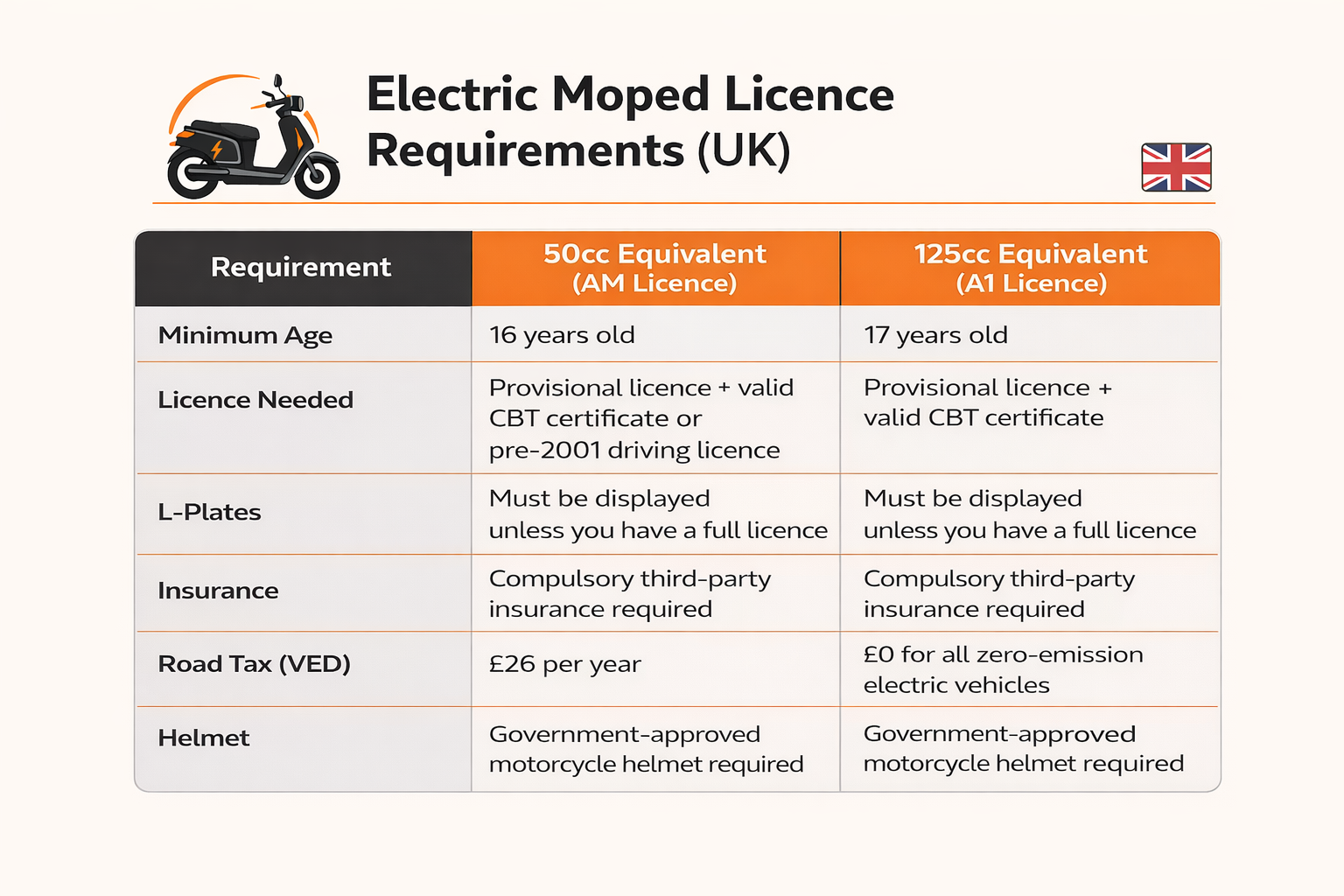
As you can see, a few key documents and rules apply to almost everyone starting out.
The cornerstone for nearly every new rider is the Compulsory Basic Training (CBT). It’s not a test, but a one-day course designed to teach you the essential skills for riding safely. Once you get your CBT certificate, it’s valid for two years. Before it expires, you'll need to either pass your full motorcycle test or retake the CBT to keep riding on the road.
Pro Tips for Commuters and Delivery Riders

When your electric moped isn't just for fun but is your daily workhorse, you start thinking differently. It’s no longer just about getting from A to B; it's about maximising your earnings, cutting down your costs, and making every shift as smooth as possible.
These are the strategies I've learned from years on the road, perfect for anyone who relies on their electric vehicle day in, day out.
Squeeze Every Mile From Your Battery
For a professional rider, battery life is everything. Running out of juice mid-shift simply isn’t an option. The good news is that how you ride has a massive impact on your range.
Think smooth. Every time you snap the throttle open, you’re gulping down battery power. Instead, focus on rolling the power on gently and maintaining a steady, consistent speed. This alone can save you up to 25% on battery usage over a single charge.
You also have a secret weapon: regenerative braking. Whenever you slow down or head downhill, just rolling off the throttle lets the motor work in reverse, feeding precious energy back into the battery. On a route with lots of hills, like you'd find in Edinburgh, you can realistically recover 10-15% of your charge this way.
It's a change in mindset. You learn to read the road ahead, anticipating stops to avoid harsh braking and using the machine's momentum. That extra bit of range means one more delivery or getting home without having to stop for a top-up.
This push for efficiency is a big reason the UK electric scooter market, valued at USD 601 million in 2022, is projected to soar to USD 1,521.4 million by 2030. Smart riding pays.
Gear Up for the Daily Grind
For delivery riders, the right accessories aren't luxuries; they're essential tools of the trade. Investing in good kit from the start will save you a lot of headaches down the line.
- A Solid Phone Mount: Your phone is your navigation and your order hub. A cheap, wobbly mount is a false economy. Get a sturdy, vibration-dampening model that clamps your phone like a vice.
- The Right Top Box: A large, lockable top box is non-negotiable for keeping orders safe, secure, and dry. Find one that’s easy to operate with your gloves on—you’ll be thankful for it on a busy night.
- Heated Grips: On a damp, chilly British morning, heated grips feel like pure magic. They keep your hands warm and nimble, which is crucial for maintaining control and fighting off fatigue on long shifts.
Plan Your Route like a Pro
Winging it just doesn't cut it when time is money. Smart route planning can drastically cut down your travel time and stretch your battery further.
A well-planned route avoids steep climbs, bypasses notorious traffic jams, and minimises stop-start riding. All of this gets you to your drop-off faster while using less energy. If you really want to get into the details, spending some time understanding route optimization can seriously level up your daily game.
Whether you're a solo rider looking to boost your income or a business building an electric fleet, these practical tips will help you get the absolute most out of your machine.
Your Electric Motorcycle Questions, Answered
Thinking about making the switch to an electric two-wheeler? It's a big step, and you’ve probably got a few questions swirling around. I get it. Learning to ride is one thing, but understanding what it’s actually like to own one is what really builds confidence. Here are the answers to the queries I hear most often from new riders.
What Licence Do I Need for an Electric Motorcycle in the UK?
This is a big one, and it all comes down to the vehicle's power.
For an electric moped that’s equivalent to a petrol 50cc (with a top speed of 28 mph), you'll need to be at least 16 years old. You’ll also need a provisional licence and to have completed your Compulsory Basic Training (CBT).
If you’ve got your eye on something with a bit more poke, like a 125cc equivalent, the minimum age is 17, and you'll still need that CBT. Your CBT certificate is good for two years. After that, you either need to retake it or pass your full motorcycle test to keep riding. There's a small exception: if you got your full car licence before 1st February 2001, you might be able to ride a 50cc equivalent without L-plates or a CBT.
Are Electric Motorcycles Cheaper to Run Than Petrol Bikes?
In a word: yes. The savings are huge, and they go way beyond just fuel.
A full charge on a typical electric moped will set you back somewhere between 50p and £1 on your electricity bill. That small cost can give you a range of 40-60 miles. Putting enough petrol in a conventional motorcycle to cover that same distance would easily cost you over £5.
But the real win is in the maintenance. Electric motorcycles and mopeds don't have oil to change, spark plugs to replace, filters to clean, or complex exhaust systems. This slashes your annual running costs. On top of that, almost all zero-emission electric vehicles are completely exempt from road tax.
How Do I Charge My Electric Moped's Battery?
This is where things get really convenient, especially for city riders. Most electric mopeds are built with removable batteries. You just unlock the compartment, lift the battery out—it weighs about as much as a case of drinks—and carry it inside. You can plug it into any standard 3-pin UK socket at home or at the office.
A full charge usually takes between 4-8 hours, depending on the size of the battery.
This flexibility is a game-changer for urban riders who might not have a garage or an outdoor power point. For larger, high-performance electric motorcycles, the battery is often integrated into the frame and requires a direct connection to a dedicated charger.
To get the most out of your battery for years to come, it's worth learning a few good habits. You can learn more about things like trickle charging for battery longevity.
What Are the Most Important Pre-Ride Safety Checks?
Make this a non-negotiable habit. Before every single ride, run through a quick 'POWDER' check. It takes less than a minute and is the single best thing you can do to spot a problem before it happens on the road.
- Power: Do you have enough charge for the journey you've got planned?
- Oil: Not engine oil, but check for any brake fluid leaks around the calipers and levers.
- Water: After a heavy downpour, check for any water getting into places it shouldn't.
- Damage: Give the vehicle a quick once-over. Are there any loose parts or new dings?
- Electrics: Flick your lights, indicators, and give the horn a quick toot to make sure they all work.
- Rubber: Check your tyre pressures and glance over the tread for any nails, glass, or unusual wear.
Ready to experience the silent thrill and low running costs of an electric motorcycle for yourself? At Flex Electric, we offer a curated selection of leading brands to suit every rider. Explore our range and find your perfect ride today.
Find us
You will find us at 74 Dalry Road, Edinburgh, EH11 2AY
Showroom Opening Times:
Monday: By Appointment
Tuesday to Friday: 11am - 5:00pm
Saturday: 10am - 5pm
Sunday: By Appointment
