
Insurance Moped 125cc: Your 2026 UK Guide

Flex Electric
The UK's #1 Electric Moped and Electric Motorbike dealer.

You’re probably here because you’ve found a 125cc moped or electric 125cc-equivalent bike that makes sense for real life. Cheaper to run, easier to park, quick through town, and practical for commuting or delivery work. Then insurance shows up and turns a simple decision into a mess of jargon, exclusions, and wildly different quotes.
Here’s the straight answer. Insurance moped 125cc cover in the UK is mandatory if you’re riding on the road, and the cheapest policy is often the one that costs you most when something goes wrong. If you ride an electric model, the picture gets better, but only if you understand what insurers are pricing and what they’ll refuse to pay for.
This guide cuts through that. No waffle. Just what matters if you ride a 125cc petrol moped, an electric 125cc-equivalent motorbike, or you use one for commuting, delivery work, or business.
Your Legal Duties and Insurance Cover Options
If your 125cc moped or electric equivalent goes on UK roads, you need insurance. That’s the baseline. No debate, no loophole worth gambling on.
For most riders, the actual mistake isn’t forgetting that insurance is required. It’s buying the wrong type of cover because the wording looks similar and the cheapest quote feels “good enough”. It often isn’t.
What third party actually means
Use this simple analogy. If you hit someone else’s car, bike, fence, or injure another person, third party insurance pays for their loss, not yours. That’s what “third party” means. It protects other people from you.
It does not mean your own moped is protected.
That matters because plenty of first-time riders assume “insured” means their own machine is covered for theft, fire, or crash damage. With basic cover, that’s often false.
The three policy levels that matter
Here’s the clean comparison.
| UK 125cc Moped Insurance Cover Compared | Third Party Only (TPO) | Third Party, Fire & Theft (TPFT) | Comprehensive |
|---|---|---|---|
| Damage or injury you cause to others | Yes | Yes | Yes |
| Damage to your own moped after an accident | No | No | Usually yes |
| Theft of your moped | No | Yes | Usually yes |
| Fire damage to your moped | No | Yes | Usually yes |
| Best suited to | Riders protecting only legal minimum | Riders wanting theft and fire protection | Riders who want broadest protection |
| Biggest weakness | Your own bike isn’t covered | Crash damage to your own bike isn’t covered | Higher upfront premium, but broader value |
My recommendation for most riders
If you’ve bought a decent 125cc machine, skip TPO unless you fully accept that your own bike could be a total personal loss.
TPFT can make sense if your main worry is theft and your budget is tight. That’s a common choice for older scooters or riders who just need a legal, workable middle ground.
For most riders, especially if the bike is newer, financed, used daily, or electric, a policy offering broad protection is the sensible choice. It usually gives you the widest protection and avoids the false economy of a bare-bones policy.
Practical rule: If losing the bike would create a financial problem, don’t insure it like it’s disposable.
Why comprehensive usually wins
People fixate on the premium and ignore the claim. That’s backwards.
A 125cc moped is exposed to theft risk, parking knocks, weather, and driver error from everyone around you. If you commute in traffic or leave it in public places, basic cover can leave huge holes. Also, 15% of 125cc claims involve legal disputes, so legal expenses cover matters more than riders think. Extensive policies often include legal expenses cover, typically up to £50,000, which can be a serious help if liability gets argued after a collision, as noted by Confused.com’s guide to 125cc motorbike insurance.
What to check before you buy any policy
Don’t just compare the headline price. Check the ugly bits.
- Excess amount. A cheap premium paired with a painful excess can be poor value.
- Storage terms. If the policy assumes a locked garage and you park on the street, that mismatch can hurt you.
- Use class. Social, domestic and pleasure isn’t the same as commuting, and neither is the same as business use.
- Accessory cover. If you’ve added practical kit, ask whether it’s included or excluded.
- Named rider limits. If more than one person will use the bike, get that right at the start.
Buy insurance based on the claim you’d dread most, not the quote you’d like most.
What Determines Your 125cc Insurance Premium
Insurers aren’t pulling numbers out of thin air. They’re pricing risk. Your quote is basically their answer to one question. How likely are you to make a claim, and how expensive could that claim be?
That’s why two riders with similar 125cc bikes can get very different prices.
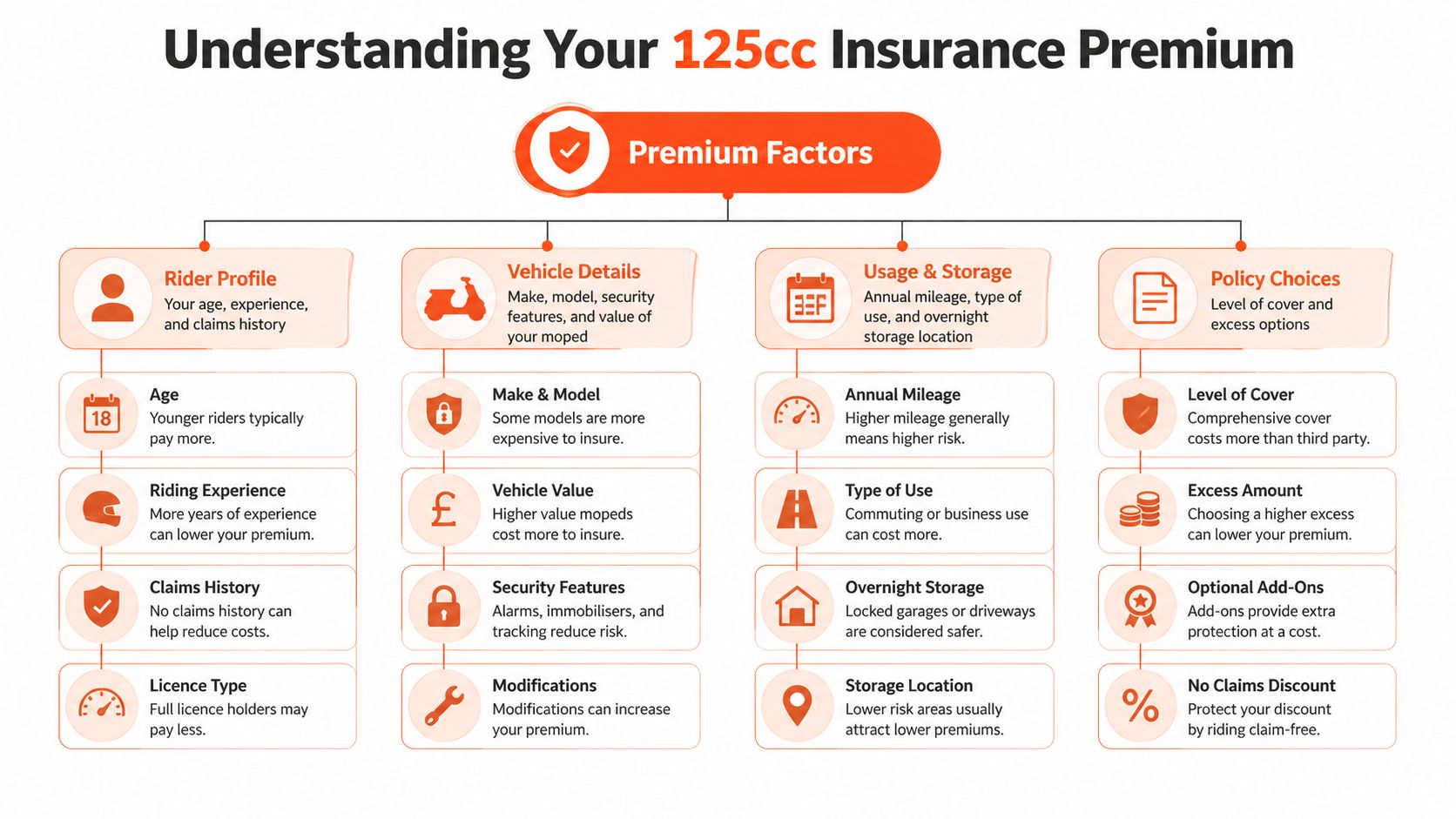
The rider
You are the biggest part of the quote. Not the bike.
Insurers look at your age, your riding experience, your claims history, your licence status, and often your occupation. A rider with a clean history and stable usage pattern usually looks safer to insure than someone with recent claims or unclear use.
The point isn’t whether you think you’re careful. The point is whether your profile fits the insurer’s risk model.
The bike
Not all 125cc machines are treated the same. The insurer looks at what the bike is, what it’s worth, how attractive it is to thieves, and how easy it is to repair or replace.
Security also feeds directly into pricing. If your moped has better security and is stored properly, insurers usually see lower theft risk. If it’s parked outside overnight with minimal protection, expect the premium to reflect that.
A useful way to think about it is this:
- Higher value bike usually means more potential payout
- Popular urban commuter model can mean higher theft attention
- Added security can improve the risk picture
- Declared accessories can change both value and claim cost
Your location and storage
Your postcode matters. A lot.
If you live in a city centre, you’re usually dealing with higher theft risk, denser traffic, and more chance of accidental damage while parked. A rider in a village with secure private storage doesn’t present the same exposure.
One example is London. Over 10,000 motorbike thefts are reported annually in London according to the Metropolitan Police, which is one reason urban riders often face higher premiums than rural riders, as referenced in SoFi’s scooter and moped insurance overview.
Your postcode doesn’t say whether you’re a good rider. It tells the insurer what can happen to your bike while you’re not even on it.
How you use the bike
Usage changes everything. A weekend rider, a daily commuter, and a food delivery rider do not present the same risk.
Insurers normally want to know:
- How many miles you expect to ride
- Whether you commute
- Whether you use the bike for business
- Where it’s kept overnight
If your declared use doesn’t match reality, the policy can become a problem when you claim. That’s especially important for riders doing any kind of paid work.
Policy choices that move the price
The final premium isn’t just about you and the bike. It’s also shaped by the policy you choose.
A few obvious levers:
- Level of cover. Full cover often costs more upfront, but not always by as much as riders expect.
- Excess. A higher voluntary excess can lower the premium, but only choose what you could realistically pay after an accident.
- Add-ons. Legal expenses, breakdown, accessory cover, and similar extras affect cost.
- Named riders. Adding or changing riders can alter the risk profile.
If you want a better quote, don’t guess. Change one variable at a time and compare the impact.
Insuring Your Electric 125cc Equivalent Motorbike
You buy an electric 125cc equivalent for the school run, the commute, or a full day of city deliveries. Then the quote arrives and the insurer treats it like a generic scooter. That is where riders get caught out.
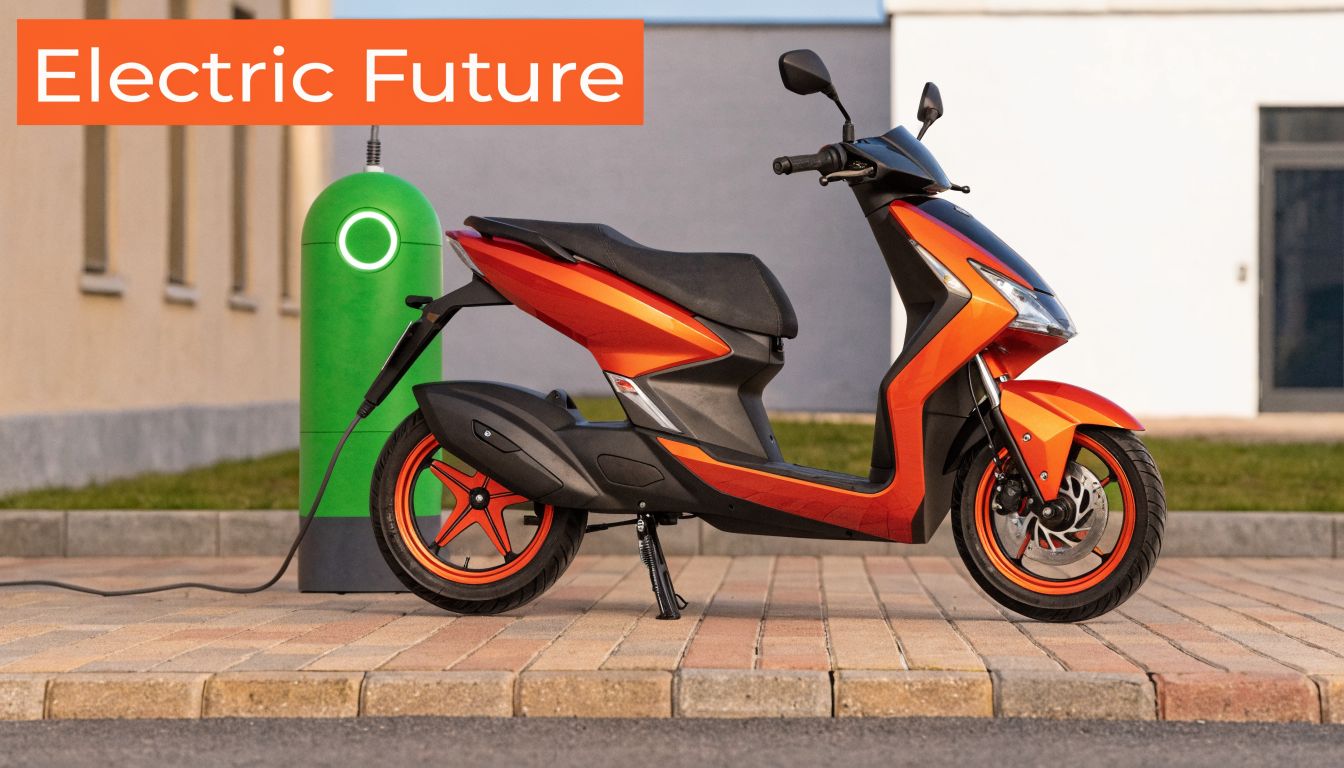
Electric 125cc-equivalent bikes need more careful insurance checks than petrol models. The battery, charging equipment, software diagnostics, and model-specific parts all affect how a claim is handled. Many comparison sites gloss over that. You should not.
Why electric cover needs a closer look
A modern electric moped or motorbike is often used differently from a petrol 125. It is more likely to be doing repeat urban miles, short commutes, stop-start traffic, and regular overnight charging at home or at business premises. That matters because insurers price risk around use, storage, and repair costs.
The bike itself also changes the conversation. On an electric model, the battery is a major part of the bike’s value. If the policy wording is vague on battery damage, theft, fire, or water ingress, you have a problem before you even start.
What to check before you buy the policy
Do not settle for a quote that only looks cheap. Verify what the insurer will cover.
Ask these questions clearly:
- Is the battery covered as part of the bike, including theft and accidental damage?
- Are charging cables or charging units covered, if they are damaged in an insured event?
- Are fitted accessories declared properly, such as a top box, rack, hand guards, phone mount, or security devices?
- Will the insurer authorise repairs through a workshop that understands electric bikes, not just petrol scooters?
- Is the settlement based on a realistic value for your exact model and trim?
If the call handler cannot answer those points, get another quote.
Electric claims can go wrong for simple reasons
The usual mistake is assuming all bike policies treat electric models the same way. They do not.
A damaged fairing is straightforward. A battery housing issue, a charging fault after an impact, or diagnostic checks after a minor collision are more specialised. If your insurer has no clear process for electric repairs, the claim can drag on and the payout can become a fight.
That matters for riders on Super Soco, Vmoto, Horwin, Naxeon, and other electric 125cc-equivalent machines. It matters even more if the bike is your daily transport and downtime costs you money.
A quick look at electric riding in practice helps here:
The right level of cover for most electric riders
For a financed or newer electric bike, third party only is usually a false economy. You save money upfront, then carry far more risk on a bike with expensive parts and specialist repairs.
Go for cover that protects your own bike as well as your liability to others, especially if you rely on it for commuting across town every day. Then read the exclusions. Cover level means very little if the battery, accessories, or repair method are left unclear.
Flex Electric riders should also check the ownership and specification details on the proposal form carefully. Insurers often ask about declared modifications, battery setup, security, and where the bike is kept overnight. Get those details right first time and claims tend to be much less painful later.
Insurance for Food Delivery Riders and Business Fleets
If you deliver food using a 125cc moped, standard personal insurance is not enough. That’s the blunt truth.
A lot of riders learn this too late. They assume that because they’re insured to ride the bike generally, they’re covered while carrying orders. They aren’t unless the policy allows the correct business use. If you’re doing platform work, you need the right commercial cover, often described as hire and reward.
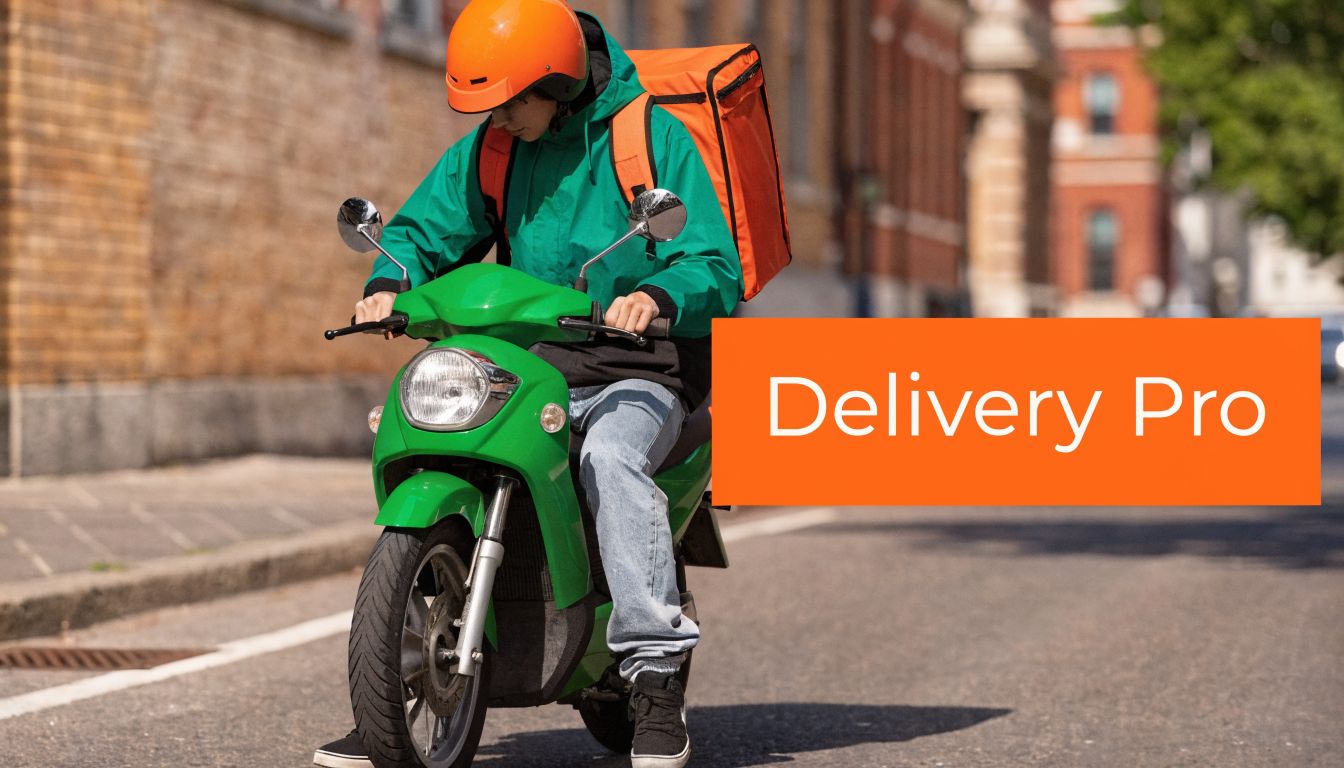
The expensive mistake riders keep making
Say you insure your moped for personal riding and commuting, then start doing evening deliveries for extra money. You get hit at a junction while carrying an order. You tell the insurer the truth. They check the policy use class and find out you were working.
Now you’ve got a mess. The insurer may refuse the claim because the bike was being used outside the agreed terms. That can leave you dealing with damage, lost income, and possible liability issues with very little support.
That’s not a technicality. It’s the entire basis of the contract.
If the bike earns money, the insurance has to reflect that. Personal cover and delivery work are not interchangeable.
Why delivery riders need stronger protection than most
Delivery work means more time on the road, more urban traffic, more stop-start riding, and more exposure to other people’s bad driving. It also means downtime hurts more. If your bike is off the road, your income usually is too.
That’s why I’d push delivery riders toward broader protection, not thinner cover. The wrong saving at quote stage can cost you far more once you miss shifts or can’t complete jobs.
One add-on stands out. An estimated 65% of UK moped claims involve an uninsured rider, which makes Uninsured or Underinsured Motorist cover particularly important for riders and fleets that can’t absorb the cost of a non-fault accident easily, as noted by BikeBound’s scooter insurance guide.
What business fleets should do differently
If you run multiple bikes for a takeaway, restaurant, venue, or local delivery operation, individual personal-style policies become clumsy fast. A proper fleet arrangement is usually cleaner.
The benefits are practical:
- Simpler administration because one policy structure is easier to manage than separate rider-by-rider arrangements
- More suitable use classes for actual business activity
- Better consistency when riders or bikes change
- Stronger control over declared accessories and operating conditions
Fleet operators also need to think beyond the minimum legal requirement. If one bike goes down after a non-fault collision, the problem isn’t just the repair bill. It’s the missed service, the unhappy customer, and the staff reshuffle that follows.
My recommendation for earning riders
If you ride for Deliveroo, Uber Eats, Stuart, or any similar platform, get a quote that explicitly matches your work. Don’t assume a standard policy “probably covers it”. Get it written correctly from the start.
For business owners, treat insurance as an operating tool, not paperwork. A cleaner policy setup usually saves hassle, arguments, and wasted time when something goes wrong.
Proven Ways to Reduce Your Moped Insurance Premiums
You finish a late shift, park your 125cc equivalent outside the flat, and wake up to a renewal quote that has jumped again. That usually happens for clear reasons. Insurers price the risk they see on paper. If you want a lower premium, give them a lower-risk picture that is true and provable.
Start with the changes that insurers care about.
Use security that genuinely lowers theft risk
Theft risk drives a lot of 125cc and electric 125cc-equivalent premiums, especially in London and other big UK cities. Urban commuters often focus on the headline price of the policy and ignore the part that moves the quote most. Where the bike lives overnight.
The practical fixes are straightforward:
- Keep it in locked overnight storage if you can. A garage or secure private space usually helps more than street parking.
- Use a proper chain and lock, not a lightweight deterrent that disappears in seconds.
- Fit an alarm or immobiliser if the insurer recognises it.
- Park with discipline during the day in busy areas, because daytime theft still counts against the risk.
Be accurate on the quote form. If the bike is parked on the road, say so. A cheaper quote built on the wrong storage details is a false saving.
Set your mileage honestly
Mileage is one of the easiest parts of a quote to get wrong. Riders often guess high out of caution or guess low to shave the price. Both are bad moves.
If you ride a Flex Electric 125cc equivalent for short city commutes, local errands, or occasional weekend use, insure it that way. Don’t pay for a heavy-use pattern you do not have. If you use the bike daily across long distances, declare that properly and move on. Accuracy matters more than optimism.
Mileage-based or telematics policies are worth checking for riders with predictable, limited use. They can work well for part-time commuters, newer riders, and people who mainly ride in town. Get quotes both ways and compare the actual annual cost, not just the monthly figure.
Raise your excess only if you can afford it
A higher voluntary excess can reduce the premium. Fine. But set it at a number you could pay without stress if the bike was stolen or written off next month.
That is the only test that matters.
If the excess would force you onto a credit card, it is too high. Pick a realistic figure and keep some cash aside for it.
Keep the bike standard and your profile boring
Insurers like predictable bikes and predictable riders. That usually means fewer mods, fewer surprises, and fewer arguments if you need to claim.
For 125cc mopeds and electric equivalents, that means:
- Avoid unnecessary modifications that make the bike harder to value or repair
- Declare any accessories or changes properly
- Build your no-claims history by keeping claims for genuine losses, not every minor scuff
- Take extra training if it is recognised by insurers and helps your riding record
“Boring” works in your favour here. A standard bike used sensibly by a rider with a clean history is usually cheaper to insure than a heavily altered one with vague paperwork.
Quote for how you actually ride
This catches out a lot of riders. Especially people using electric 125cc-equivalent bikes in different ways across the week.
A commuter who rides to the office, a courier doing food delivery, and a small business running several bikes do not present the same risk. Their cheapest valid policy will not look the same either. Trying to squeeze your real-world use into the wrong category is how riders end up with bad cover or claim trouble.
My advice is simple. Review your policy details once a year like an adult, not in a rush on your phone at midnight. Check storage, mileage, riders, accessories, and use class. Then shop around with those details fixed and consistent.
That is how you cut cost without cutting the cover you need.
Your Insurance Questions Answered for Flex Electric Riders
Electric 125cc-equivalent ownership throws up a few insurance questions that generic comparison pages rarely answer properly. These are the questions riders usually ask once they’ve chosen the bike and started thinking beyond the quote.
Does my finance agreement affect the insurance I need
Yes. If the bike is on finance, you need to insure it in a way that matches the ownership and value properly.
The insurer usually needs to know that the bike is financed and who the legal owner or interested party is. If you leave that out, you’re making the policy less reliable than it should be. It doesn’t always mean the quote changes dramatically, but it absolutely needs to be correct.
My advice is simple. Tell the insurer the bike is financed, confirm how they want that recorded, and keep the paperwork.
Do I need to tell the insurer about accessories
Yes. Tell them.
This is one of the most common claim mistakes. Riders fit practical extras and assume they’re too minor to matter. Then a theft or accident happens and the insurer treats those items as undeclared additions.
Declaring modifications is critical. Undeclared changes such as a performance exhaust can invalidate a policy, and the same principle applies to practical accessories like top boxes or phone mounts, as explained in the earlier-linked Confused.com guidance. If it wasn’t on the bike as standard and you added it, ask the insurer whether it needs declaring.
What counts as a modification on an electric moped
Anything that changes the bike from standard specification can matter.
That can include cosmetic parts, storage add-ons, security additions that are permanently fitted, upgraded screens, delivery racks, or changes that affect performance or value. Some insurers distinguish between modifications and accessories. Some don’t. Your job isn’t to guess their internal definition.
Your job is to disclose the item and get a clear answer back.
Will my battery be covered automatically
Don’t assume that it will be handled exactly the way you expect. Ask specifically.
For electric riders, the battery is too important and too valuable to leave buried in vague wording. Ask whether the battery is included as part of the insured vehicle, whether theft cover applies clearly, and how accidental damage is treated.
If the battery is removable, also ask whether there are any storage or charging conditions attached to cover.
What if I use my electric 125cc for commuting and occasional delivery work
You must insure it for the highest-risk use you carry out. If you commute most days but also do delivery work sometimes, the delivery element still matters.
Insurers don’t care that your paid riding is “only part time” if the claim happened while you were doing it. If the bike is ever used to earn money, say so.
Is third party cover ever enough for an electric 125cc-equivalent bike
Legally, it may satisfy the minimum requirement. Practically, I think it’s often too thin.
Electric bikes have specialised components and can represent a meaningful upfront investment. If theft or crash damage would leave you stuck, broad cover makes more sense. For many riders, extensive protection isn’t a luxury. It’s the policy that matches the financial reality of ownership.
Can I switch insurers after I buy the bike
Of course. You’re not locked in for life just because the first quote was convenient.
But don’t switch casually without checking cancellation terms, proof of no-claims position, start dates, and whether the new insurer has all the same declared details. A gap, overlap, or missing declaration creates needless admin and can create bigger issues if there’s a claim in the middle.
What should first-time riders get right from day one
The basics matter most:
- Choose the correct use class
- Declare where the bike is really kept
- List all accessories
- Set an excess you can afford
- Avoid buying on premium alone
First-time riders often over-focus on price comparison websites and under-focus on claim quality. That’s backwards. A policy is only as good as its response when something goes wrong.
Do warranties replace the need for good insurance
No. Warranty and insurance do different jobs.
A warranty generally deals with faults or failures covered by its terms. Insurance deals with events like theft, accidental damage, fire, and third-party liability. Riders sometimes blur the two and assume one fills the gap left by the other. It doesn’t.
If your bike comes with manufacturer or retailer support, that’s useful. It does not replace proper road insurance.
Are phone mounts, racks, and top boxes really worth declaring
Yes, because they change claim value and sometimes theft appeal.
A delivery rider’s setup can include practical extras that cost real money to replace. If they’re on the bike and not declared where required, you may end up arguing over whether they’re covered at all. That’s a silly argument to have after a theft.
The insurer can only price what you tell them about. If you leave things out, don’t expect perfect sympathy later.
What’s the best way to compare insurance quotes properly
Use a short checklist and compare like with like. Otherwise, one quote looks cheaper because it covers less.
Check these against each quote:
- Cover level. TPO, TPFT, or full coverage.
- Excess total. Include compulsory and voluntary excess.
- Use class. Social, commuting, business, or hire and reward.
- Accessory treatment. Especially for practical add-ons.
- Electric-specific clarity. Battery and specialist component wording.
- Claims support. What happens after theft, damage, or recovery.
If one quote is much cheaper, assume there’s a reason. Find it before you buy.
What’s my bottom-line advice
If you ride an electric 125cc-equivalent moped or motorbike in the UK, keep the insurance simple and honest.
Get the use class right. Declare what’s fitted to the bike. Don’t skimp on cover if losing the bike would hurt. If you earn money with it, insure it as a working vehicle. If you’re buying electric, ask better battery questions than the average comparison site ever will.
That approach isn’t glamorous, but it’s the one that prevents ugly surprises.
If you’re choosing an electric moped, scooter, motorbike, off-road electric motorcycle, or kids MX bike and want practical guidance before you insure it, speak to Flex Electric. We can help you understand the bike setup, common accessories riders declare, and the ownership details insurers usually ask for, so you can arrange cover that suits how you ride.
Find us
You will find us at 74 Dalry Road, Edinburgh, EH11 2AY
Showroom Opening Times:
Monday: By Appointment
Tuesday to Friday: 11am - 5:00pm
Saturday: 10am - 5pm
Sunday: By Appointment
