
L Plates for Moped: UK Rules Every Learner Should Know
Flex Electric
The UK's #1 Electric Moped and Electric Motorbike dealer.

You've just completed your CBT, the certificate is signed, and your new moped is waiting outside the training centre. Before you ride into traffic, there's one small detail that must be right: the L plates for your moped need to be clearly visible at the front and rear. They aren't decoration, and they aren't optional equipment. They show other road users and enforcement officers that you're riding on learner entitlement.
That same responsibility applies whether you're commuting on a small petrol moped, using an electric moped for deliveries, or borrowing a shared fleet vehicle. The rider's licence status determines whether L plates are needed, but the plates must be fitted to the machine being ridden. Here's how to keep that arrangement legal in everyday use.
Why L Plates Matter on a Moped
An L plate gives other road users useful information before they have to interpret your riding. A driver approaching from behind can see that you're a learner and may allow more space. A police officer can identify the bike as being ridden under provisional entitlement and check whether the rest of the learner requirements are in place.
For a new rider, the practical sequence is simple:
- Hold the correct provisional entitlement.
- Complete CBT and keep the certificate valid.
- Fit a readable L plate at the front and another at the rear.
- Check both plates before joining a public road.
The plate is part of the visible evidence that the ride is taking place within learner conditions. GOV.UK's CBT guidance confirms that learner riders must display L plates on both the front and rear of a moped after completing CBT. The same guidance says the CBT certificate lasts two years, after which the rider must retake CBT or stop riding as a learner.
Practical rule: Treat the front and rear plates as part of your pre-ride safety check, just like your lights, tyres and brakes.
A missing plate can also create confusion in a delivery setting. One worker may hold a full entitlement while another uses CBT, yet both may ride the same machine during a shift. The bike needs to reflect the status of the person riding it. Official guidance says L plates should be displayed when the machine is being ridden by a learner and removed when it isn't being ridden by one.
The point isn't to label someone negatively. It's to make the rider's legal position visible. A correctly fitted plate helps set expectations, supports lawful road use and prevents a minor preparation mistake from undermining an otherwise valid licence and CBT certificate.
The Legal Basis for L Plates After CBT
A delivery moped can change hands several times during one shift. One rider may hold full entitlement, while another is riding under provisional entitlement after CBT. The legal question follows the person riding, so the machine must show the correct learner status whenever a learner uses it.
The legal chain begins with the licence. A rider needs a provisional licence with the relevant motorcycle entitlement, and CBT is normally required before riding a moped or motorcycle on public roads as a learner. L plates must stay fitted until the rider gains full entitlement or the CBT period expires, as explained in the government's guidance on riding a motorcycle or moped with a car driving licence.
For the moped route, the relevant class is a machine up to 50cc and below 4kW. The AM category also covers a moped with a maximum design speed of 45 km/h, or 28 mph. The Highway Code sets the learner moped age at 16. These limits work like a boundary on the licence: a faster or more powerful vehicle may require a motorcycle category with different rules.
CategoryEngine / SpeedLicenceCBTL Plates RequiredAM learner mopedUp to 50cc and maximum design speed of 45 km/h, or 28 mphProvisional licence with the relevant entitlementNormally requiredYes, front and rearA1 learner motorcycleUp to 125cc and 11kWProvisional motorcycle entitlementRequired for learner ridingYes, front and rear
Since 19 January 2013, provisional moped entitlement has been limited to two years of CBT validity. After that period, a learner must renew CBT before continuing to ride under learner conditions. GOV.UK's motorcycle categories and licence requirements sets out the relevant categories, age limits and licence requirements.
A car licence can change the position. Someone who passed a car test in the correct sequence may gain full moped entitlement without taking the moped test, while some older car licence holders have separate moped rights. Check the licence record rather than relying on age, engine size or what a previous owner said. In a fleet, make that check for each rider, not just for the vehicle.
Size, Colour and Placement on a Moped
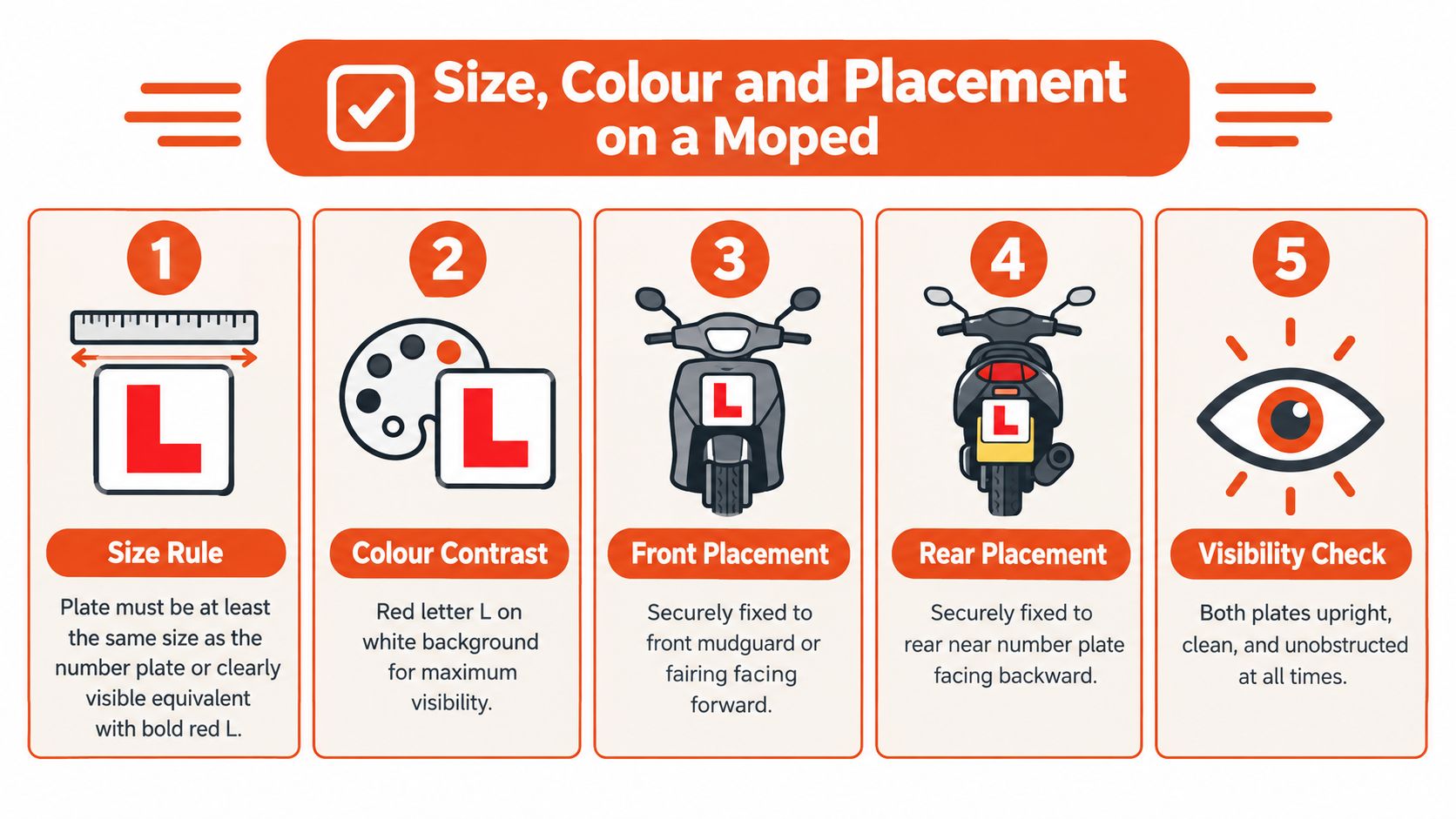
The front plate must face traffic coming towards you. The rear plate must face traffic following behind. Both need to be upright, secure and easy to read, with a size at least equivalent to the number plate or a clearly visible equivalent.
The familiar compliant format is a black L on a white background, using reflective material where suitable. The letter needs to remain readable in normal road conditions. A plate that has faded, cracked, folded or become heavily soiled no longer performs the job properly.
A good front position might be the front mudguard area, front panel or fairing, provided the plate faces forward and doesn't interfere with steering or lights. At the back, mount it near the number plate or on suitable rear bodywork. A top box can be useful for storage, but it mustn't hide the plate.
Setups that fail a visibility check
- A plate fixed only to the side panel isn't a substitute for a forward-facing or rear-facing plate.
- A small sticker that can't be read clearly from the required direction isn't adequate.
- Cardboard or a handwritten letter taped to the bodywork doesn't provide a reliable plate.
- A rear plate hidden behind a delivery bag or top box is obstructed.
- A faded plate should be replaced rather than defended as “still recognisable”.
The same practical thinking applies when selecting a vehicle. The Vmoto VS2 Citi is a purpose-built electric moped designed for urban and commercial use, with a stated 50mph top speed and 66 mile range. Whatever moped you ride, its bodywork and luggage arrangement must still leave both learner plates clearly visible.
This video can help you visualise the basic placement checks before you ride.
Penalties for Riding a Moped Without L Plates
A delivery rider collects a shared moped for a short shift. The CBT is valid, insurance is arranged and the bike is roadworthy, but a rear L plate has fallen behind the delivery box. The short distance does not remove the requirement. The moped must display the required plates throughout the learner ride.
The clearest published penalty concerns CBT. As noted earlier, riding without a valid CBT certificate can lead to a fine of up to £1,000 and up to 6 penalty points. A rider who completed CBT, fitted plates and then continued after the certificate expired can therefore face a more serious problem than a simple equipment check.
A missing, unreadable or obstructed plate is a separate compliance concern. It fails to show the learner status that applies to the journey, even if the rider has completed CBT. For a fleet operator, the risk can move between riders: one damaged plate or delivery bag can affect every learner who takes that moped out until the problem is corrected.
IssueWhat it can meanRiding without a valid CBT certificateA fine of up to £1,000 and up to 6 penalty pointsRequired L plate missing or not clearly visibleThe rider may be stopped and checked for licence, insurance and vehicle complianceAnother learner breach at the same timeSeparate offences may be considered separately
Do not rely on an officer overlooking the problem because the journey is short. GOV.UK's guidance on motorcycles and mopeds used for the practical test confirms that a test machine must display L plates at both ends. It must also be insured, taxed and roadworthy, with a speedometer showing miles per hour. These checks illustrate the practical standard expected of a learner moped.
Insurance creates a second risk. A policy may require accurate information about the rider's licence and use of the machine. Delivery work, commuting and private riding can carry different conditions, so a fleet manager or individual rider should check the policy before paid work begins. After a collision, riding outside the declared use can make a claim harder to handle. A quick plate check before each handover is therefore useful, especially when several riders share one moped.
How to Get and Fit L Plates
A learner called Sam collects a moped from a retailer and buys the first plate set available at a general accessories shop. At home, Sam notices the front bodywork is narrow, the rear rack is occupied by a delivery box and the magnetic fixings don't sit flat. The right response isn't to improvise with tape. It's to choose a plate and fixing method that suits the vehicle while preserving clear visibility.
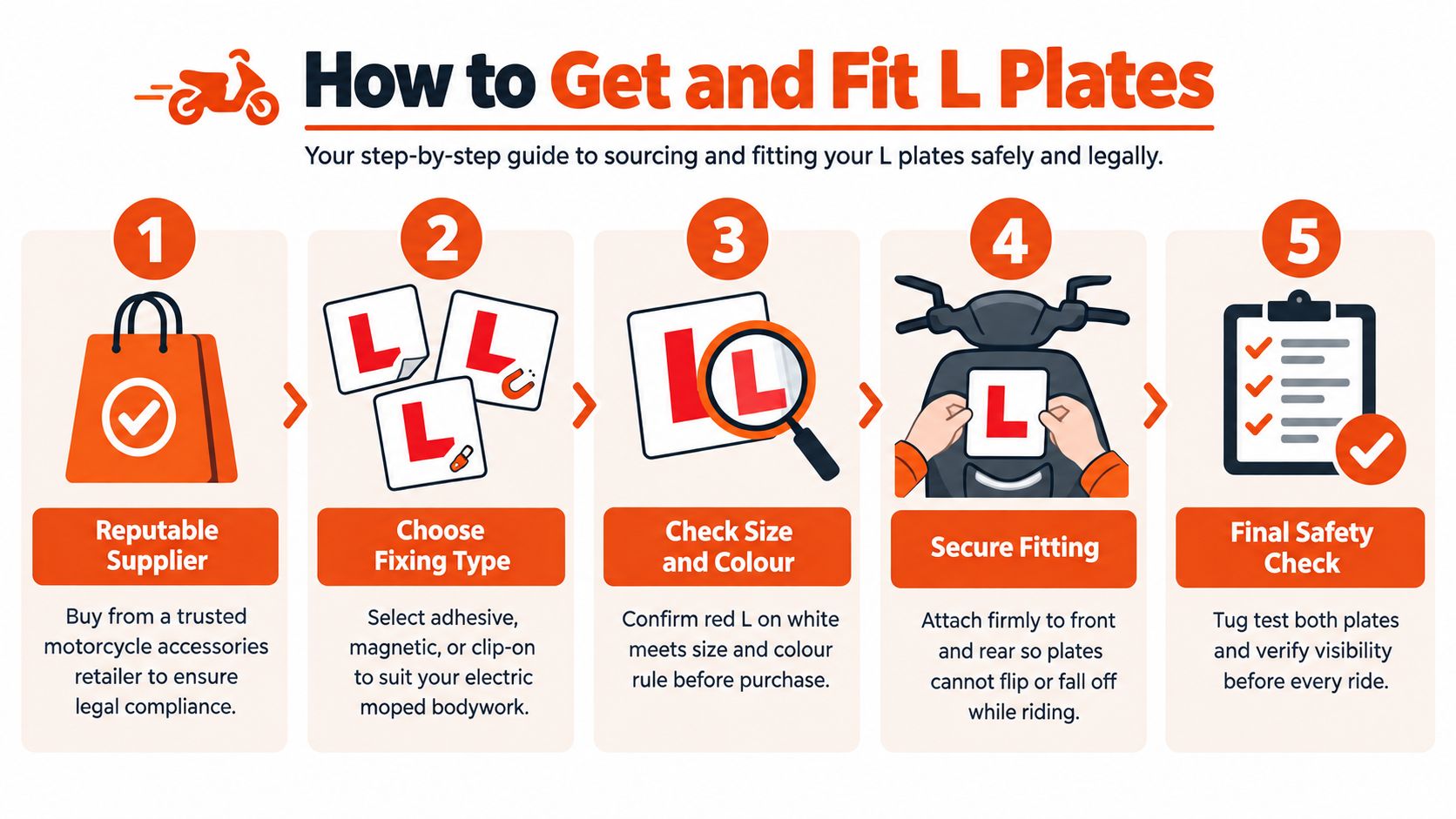
Start with a reputable motorcycle accessories supplier. Look for a conventional red-on-white plate with a suitable size and a fixing method that won't let it rotate, flap across the bodywork or fall away. Adhesive, magnetic and clip-on options can all be useful, but the mounting surface and the moped's daily use determine which one is sensible.
A workable fitting routine
- Buy for the vehicle: Check the plate's size before purchase, not after you discover that the fairing has nowhere suitable to hold it.
- Use the front bodywork: A front panel, mudguard or fairing can work if the plate faces forward and doesn't cover a lamp or control.
- Keep the rear high and clear: Position the rear plate near the number plate, but leave it visible when a top box, rack or delivery bag is attached.
- Test the fixing: Tug each plate gently, turn the handlebars and inspect the plate from the front and rear.
- Record shared-bike checks: A fleet manager can note the bike identifier, plate condition and date of replacement in a simple logbook.
For a shared fleet, keep spare plates with the vehicle or at the dispatch point, and assign responsibility for the final check to the person handing over the keys. If a full-licence rider takes the bike, the business should know whether the plates need to be removed for that journey. When a learner takes over, both plates need to be reinstated before the bike goes onto a public road.
Once you pass the full moped test and gain full entitlement, remove the L plates promptly. Leaving them on isn't the same compliance problem as removing them while still learning, but it can mislead other road users and create poor fleet discipline. Replace any plate that becomes torn, dirty, faded or loose.
L Plates and Other Learner Requirements
L plates are only one part of the legal arrangement. Before riding, you need a valid provisional licence with the relevant moped entitlement and a current CBT certificate. The vehicle must also be insured for the way you use it, taxed where applicable, roadworthy and equipped as required for the intended test or road use.
Your insurer should know that you're riding as a learner and that you hold CBT. This is particularly important for delivery work. A policy for social commuting may not cover food delivery, and a fleet policy may set rules for who can use a particular machine. Keep the certificate and policy details accessible so you can confirm your position quickly.
The two-year CBT period creates a deadline. You need to pass the relevant full test within that period or complete CBT again before continuing as a learner. It's easy to overlook this when the moped is used every day, especially in a business where responsibility is split between riders, supervisors and vehicle administrators.
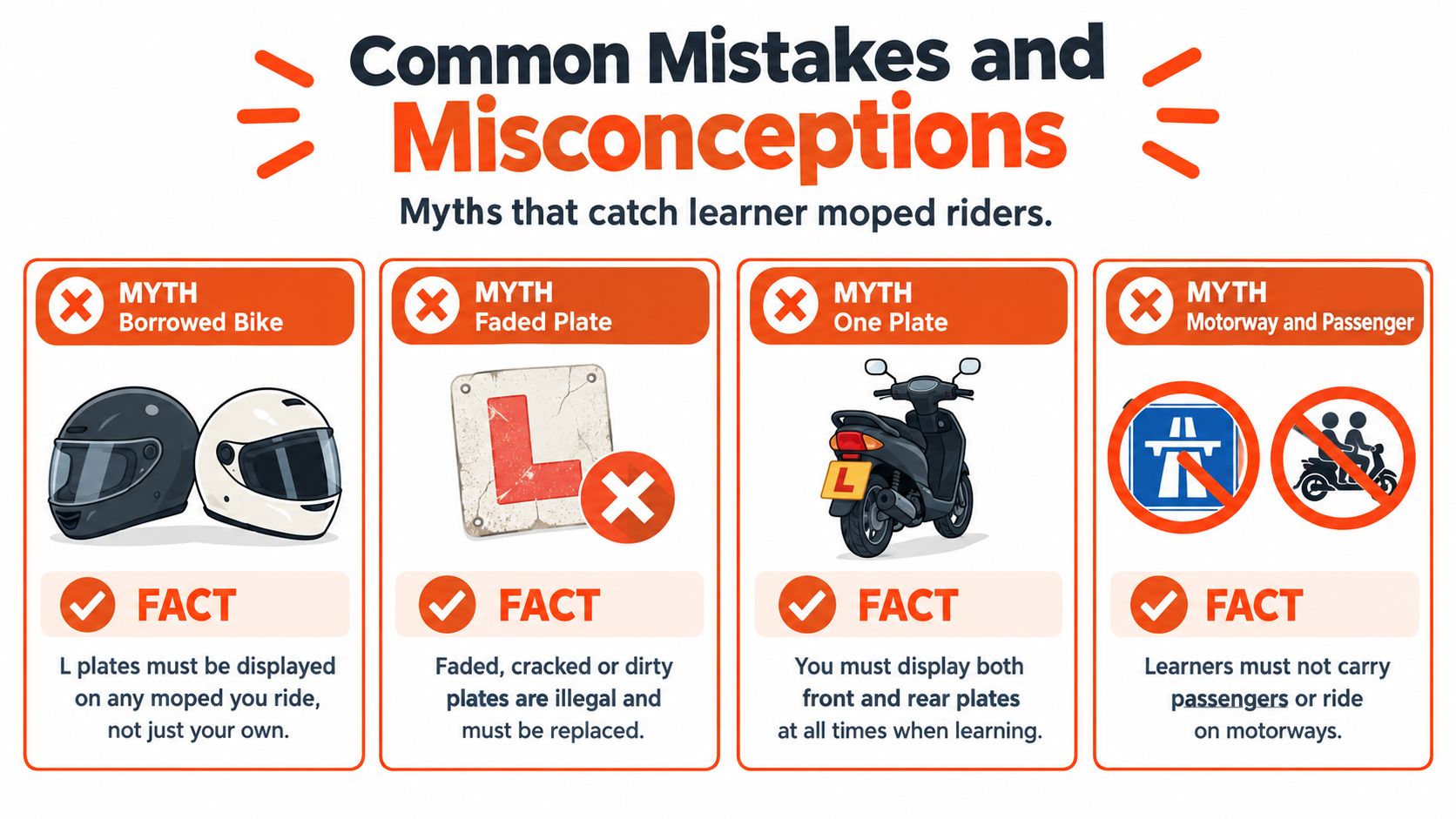
Learners also need to respect the restrictions attached to their entitlement. The supplied learner guidance identifies restrictions on carrying passengers and riding on motorways, and the visual reminder below treats both as prohibited learner activities. Turning 17 doesn't automatically convert a learner moped entitlement into unrestricted riding rights. The licence category and test result determine what you can ride.
A larger electric model may sit in a different category from a 50cc-equivalent learner moped. For example, the Vmoto TC Wanderer Pro is described as having a 5.2kW motor, an up to 60-mile range and a 58mph top speed, so a learner must confirm the appropriate entitlement rather than assume that every scooter-shaped vehicle follows AM rules.
Progression normally involves training, the relevant theory requirements and the full practical test. Once you gain full moped entitlement, the learner plate requirement ends for that category. Moving to A1, A2 or a full A category requires meeting the conditions for the next licence route.
Common Mistakes and Misconceptions
Many L-plate problems happen during ordinary handovers rather than deliberate attempts to break the rules. A rider borrows a colleague's moped, assumes the bike is already compliant, notices one plate has gone missing and rides away anyway. The practical correction is straightforward: check the machine before every ride, especially when the rider changes.
Another common mistake is treating the plate as a personal item. It isn't enough for the learner to own a pair of plates in a locker. The moped being ridden on public roads must display the required plates while that learner is using it. A shared bike needs a reliable handover process.
Four assumptions to remove
- “A moped under 50cc doesn't need L plates.” A learner riding within the moped class still needs the plates after CBT. The fact that the engine is small doesn't remove the learner requirement.
- “One rear plate is enough.” The legal setup requires clear visibility from the front and rear, so a rear-only arrangement leaves the ride incomplete.
- “A plate is fine if it's faded or dirty.” If the letter can't be read clearly, replace it. Weather, road spray and delivery use can quickly reduce visibility.
- “Booking CBT is the same as completing CBT.” It isn't. You need the completed certificate, the right licence and the correct plates before riding under learner entitlement.
The same caution applies to small stickers, angled plates and luggage. A plate taped to a side panel, folded around a corner or hidden by a delivery box may not be visible as required. The Highway Code's motorcycle licence requirements confirms the learner moped speed ceiling and age requirement, but it doesn't turn a poorly fitted plate into a compliant one.
Don't assume UK L plates will automatically satisfy another country's rules either. If you ride abroad, check the destination's requirements before travelling. Local rules may treat learner markings, passengers and vehicle categories differently.
The Vmoto TC Max 2026, Night Edition is described as a 125cc-equivalent electric motorcycle with 5kW peak power, a 60mph top speed and a 60-mile range. Those specifications illustrate why identifying the vehicle category matters before applying AM moped assumptions to an electric motorcycle.
Staying Legal as a Learner Moped Rider
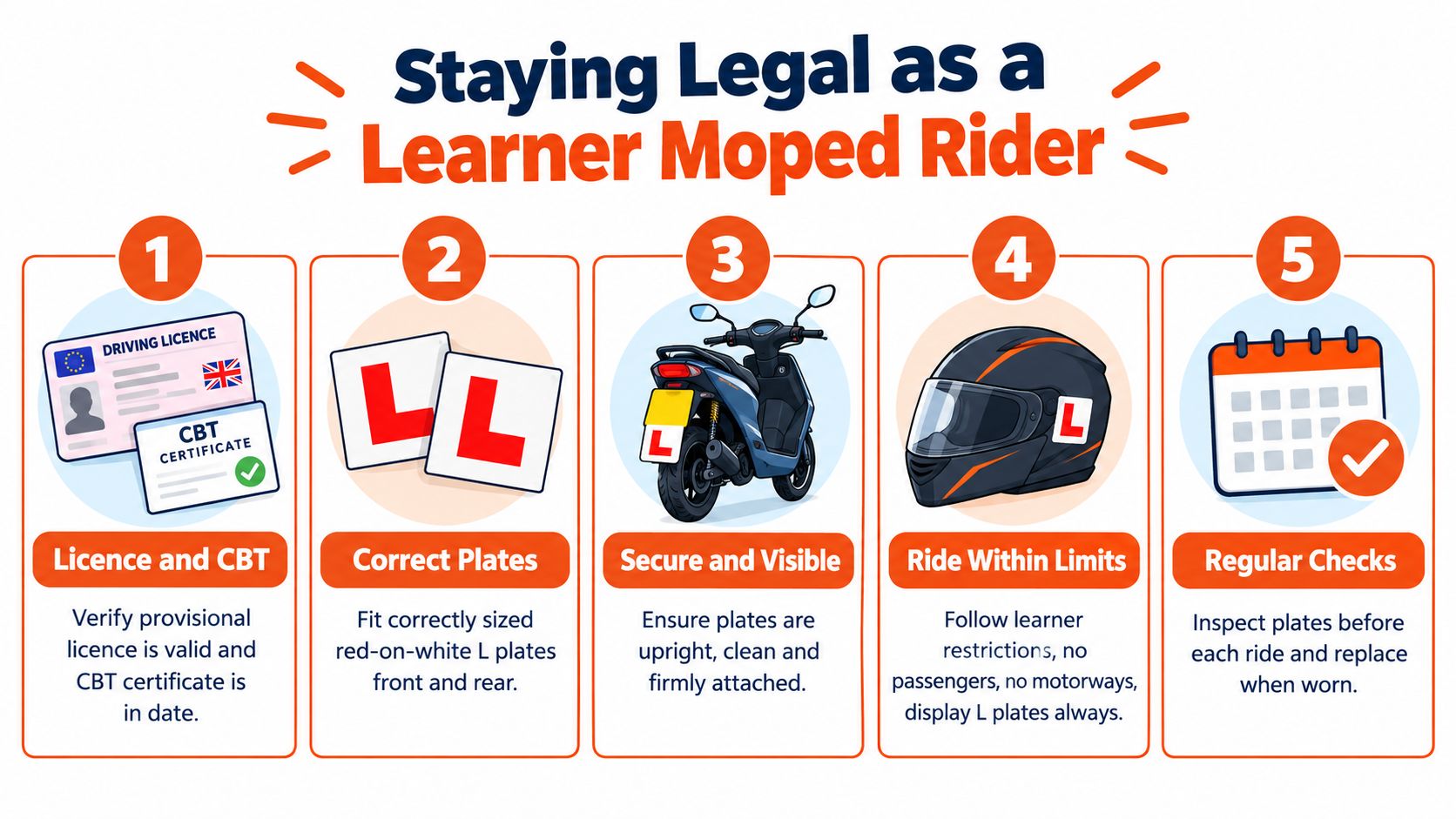
A delivery shift can expose a simple problem quickly. If another rider used the same moped before you, check the documents and both plates before taking the key. Compliance belongs to the journey, not just the person who completed CBT.
Use this order before riding:
- Confirm your licence: Check that your provisional licence includes the moped entitlement you need.
- Check CBT: Confirm that your CBT certificate remains valid. Learner entitlement generally lasts for two years, then CBT must be retaken for continued learner riding. Check the current requirements in GOV.UK's motorcycle CBT information.
- Inspect both plates: Ensure the red-on-white plates are correctly sized, upright, clean and firmly attached at the front and rear.
- Review the journey: Follow the restrictions attached to your entitlement, including the rules on passengers and motorways.
- Check the vehicle: Confirm insurance, tax where applicable, roadworthiness, lights, tyres, brakes and the required mph speedometer for a practical test machine.
For mopeds over three years old, check whether an MOT is required before use, and keep the records organised. Replace torn plates, tighten loose brackets and look behind top boxes or delivery racks, where a plate can become hidden. In a fleet, make this inspection part of every key handover. A plate that was visible on the previous shift may be missing, dirty or obstructed on the next one.
L plates show that you are riding under provisional conditions while gaining experience. Prepare for the full moped practical test when you are ready. Depending on your licence route and vehicle, progression may involve AM, A1, A2 or full A categories.
Flex Electric offers electric mopeds, scooters and motorbikes, plus accessories such as racks, top boxes and phone mounts that may affect plate visibility. Visit Flex Electric to compare vehicle specifications and get UK-focused support for learner, commuting or delivery use.
Find us
You will find us at 74 Dalry Road, Edinburgh, EH11 2AY
Showroom Opening Times:
Monday: By Appointment
Tuesday to Friday: 11am - 5:00pm
Saturday: 10am - 5pm
Sunday: By Appointment
