
Optimizing Last Mile Delivery Solutions for UK Businesses

Flex Electric
The UK's #1 Electric Moped and Electric Motorbike dealer.

In the UK, last-mile delivery accounts for about 50% of total logistics costs, which is why the vehicle you choose can change whether a delivery run makes money or leaks it away according to Statista's UK last-mile delivery overview. For a food delivery rider or a small local fleet, that cost pressure shows up every day in fuel, maintenance, missed drop-offs, congestion, parking hassle, and emissions rules that punish the wrong setup.
Most articles on last mile delivery solutions drift into warehouse software, drones, or enterprise fleet theory. That's not where most UK riders and small businesses win. In practice, the fastest gains usually come from simpler decisions: the right vehicle, the right charging routine, the right payload setup, and fewer failed drops. For dense urban work, electric mopeds and motorcycles solve more of the core problem than most businesses realise.
Table of Contents
- Why electric mopeds sit at the centre of the decision
- What counts as a good last-mile solution for UK food delivery
- What makes the UK final leg difficult
- The main solution types
- Why the vehicle choice decides the route economics
- Where petrol still works, and where it doesn't
- What the comparison looks like in practice
- What works best for dense urban delivery
- Common buying mistakes
- Start with the route, not the bike
- Sort the money and compliance early
- Build delivery discipline into rollout
- Can I charge an electric moped from a normal UK socket
- What happens to range in winter
- Are electric mopeds suitable for food delivery work
- Is business insurance different from personal cover
- How long do batteries last
- What's the biggest mistake new delivery riders make
What Are Last Mile Delivery Solutions?
UK last-mile costs rise fast when the vehicle is wrong. For a food rider or a small takeaway, one poor vehicle decision can mean higher fuel spend, more downtime, slower drops, and less profit on every shift.

Last mile delivery solutions are the tools, vehicles, and operating methods used to get an order from a restaurant, shop, dark kitchen, or local stock point to the customer's address. In food delivery, that usually means dispatch, rider communication, insulated storage, phone mounting, locks, routing, and, above all, the machine doing the work.
Generic articles often stretch this topic into warehouse systems, national carrier networks, lockers, or drones. That misses the day-to-day reality for UK food delivery riders and small local businesses. If your jobs are short urban runs with hot food on the back, the most practical last-mile solution is usually a well-set-up electric moped or electric motorcycle.
The reason is simple. Last mile performance is decided on the street. Can the rider park fast, cut through traffic legally, carry the order securely, and complete a full shift without burning margin on petrol and repairs? If the answer is no, better software will not fix the core problem.
Why electric mopeds sit at the centre of the decision
For this type of work, vehicle choice drives operating cost more than owners expect. A petrol scooter may look cheaper at the start, but frequent fuel stops, servicing, and wear from stop-start riding add up quickly. An electric moped changes that cost profile. Running costs can drop to pennies per mile, and riders spend less time dealing with refuelling, oil changes, exhaust issues, and engine-related faults.
I see the same pattern across local fleets. Businesses first look at apps and dispatch tools, then realise the main drag on profit is the vehicle itself. If most deliveries stay within town or city routes, electric two-wheelers usually give the best mix of low cost, easy parking, and fast turnarounds.
That makes them a practical business tool, not a branding exercise.
What counts as a good last-mile solution for UK food delivery
A setup works when it helps riders complete more paid drops with fewer interruptions. In practice, that usually means:
- Low cost per shift, especially for fuel or charging, servicing, and tyres
- Quick urban access for dense streets, restricted areas, and hard-to-park locations
- Reliable carrying capacity for insulated boxes, delivery bags, and rider essentials
- Simple daily use so a self-employed rider or small team can get moving without fuss
- Consistent uptime because a bike off the road earns nothing
For owners buying an existing delivery business, this matters as much as sales figures. A shop with strong order volume but weak delivery economics can drain cash fast. This a guide for FedEx business buyers is useful because it pushes buyers to check how delivery works day to day, not just what the revenue headline says.
Last mile delivery solutions, in this context, are not abstract logistics systems. They are the practical choices that help a UK rider or small food business deliver more orders, spend less per shift, and keep service steady during busy hours.
Understanding the UK's Last Mile Challenge
UK last-mile costs are high because the expensive part is usually not the kitchen or the order system. It is the final few miles, where traffic, parking, missed addresses, and repeat trips eat into every drop. For food delivery, those problems hit harder because the order is time-sensitive and the margin is already thin.
A takeaway owner sees it in small failures that stack up over a week. A rider circles for parking near a busy parade of shops. A flat block has no clear entry. A customer misses the call. One order turns into ten extra minutes, then the next order starts late, and the shift slips.
What makes the UK final leg difficult
The pressure comes from the street, the rulebook, and the vehicle itself.
- Urban congestion slows short trips that should be profitable. A route that looks easy on a map can turn into stop-start traffic, blocked loading bays, and long waits at lights.
- Parking and access are constant problems for larger vehicles. Many food drops need a quick stop outside terraces, flats, or town-centre units where van access is awkward or risky.
- Emissions rules and local charges put more cost on older petrol vehicles, especially in and around larger cities.
- Missed handovers waste time twice. The rider still travels there, then either waits, calls, or returns with the order.
- Short delivery windows leave little room for delay. Hot food loses value fast if the route goes wrong.
For a small business, this is an operating problem, not a theory problem. If each rider loses a handful of minutes on several orders per shift, the shop either delivers fewer orders or adds labour cost to keep up.
The main solution types
Different operators try to solve the last-mile problem in different ways, but the fit matters more than the trend.
| Solution type | What it helps with | Where it falls short |
|---|---|---|
| Delivery software | Dispatch, route order, customer updates | Does not reduce fuel bills or fix parking delays |
| Collection lockers or pickup points | Works for parcels and some scheduled collection models | Poor fit for hot food and fast local delivery |
| Outsourced couriers | Quick way to start without buying vehicles | Less control over service, rider standards, and margin |
| Vans | Useful for bigger loads and poor weather | Slower in dense streets, harder to park, higher running costs |
| Electric mopeds and motorcycles | Fast urban movement, low running cost, easier stopping and parking | Need charging discipline and a route area that suits two-wheel use |
For UK food delivery riders and small fleets, the shortlist is usually much narrower than generic logistics articles suggest. Drones are irrelevant. Lockers do not solve dinner deliveries. Large van-based systems make sense for multi-drop parcel rounds, not for carrying a few insulated orders across town during the evening rush.
Electric mopeds and motorcycles fit the job because the job is local, repetitive, and time-sensitive. They get through traffic better than vans, stop closer to the door, and cost less to run than petrol bikes in daily use.
Why the vehicle choice decides the route economics
Software can improve dispatch. It cannot make a bulky vehicle easy to park outside a row of flats, and it cannot cut petrol servicing intervals.
Vehicle choice shapes the whole shift. A rider on the right electric moped can usually spend more time completing paid drops and less time refuelling, queueing, or looking for a legal place to stop. That is the point many small operators miss. The route often fails at street level before it fails on planning.
Electric two-wheelers are not the answer for every operation. If the business carries large catering loads or covers long rural distances, a different setup may suit better. But for typical UK food delivery zones with short urban runs and modest order sizes, they solve more of the last-mile friction than any app upgrade or back-office tweak.
Electric Mopeds vs Traditional Delivery Methods
Most operators compare vehicles the wrong way. They focus on purchase price, then ignore what happens over months of delivery work. For last mile delivery solutions, total operating fit matters more: daily cost, maintenance downtime, emissions compliance, manoeuvrability, parking ease, and whether the vehicle matches the route.
The market direction is already clear. The UK segment sits within a European last-mile market projected to reach £15.22 billion by 2029, and 70% of UK shoppers favour eco-friendly options according to Fareye's last-mile delivery statistics roundup. The same source says electric vehicles are helping operators cut fuel costs by 20% to 45% and reduce delivery times by 30% to 40% with optimised routing.

Where petrol still works, and where it doesn't
Petrol mopeds still make sense for some riders who need instant refuelling and don't want to adapt their routine. They're familiar, widely understood, and easy to find used. But they bring regular fuel spend, more mechanical servicing, and less protection against tightening emissions rules.
Small electric vans solve a different problem. They're better when your payload is bulkier, fragile, or weather-sensitive. If you're carrying multiple orders, floral arrangements, boxed stock, or catering trays, van capacity matters. The trade-off is clear on urban routes: more congestion pain, more parking friction, and less agility on short-stop work.
Electric mopeds sit in the middle of the practical sweet spot for many UK local operators. They carry enough for common urban delivery tasks while staying nimble and comparatively cheap to run.
What the comparison looks like in practice
| Metric | Petrol Moped (125cc) | Electric Moped (125cc-equiv.) | Small Electric Van |
|---|---|---|---|
| Best use case | Solo rider, urban deliveries | Solo rider, urban and suburban deliveries | Higher-volume or bulkier local deliveries |
| Running cost | Higher due to petrol and servicing | Lower due to electricity and simpler maintenance | Lower than petrol van, but still higher overhead than a moped |
| City access | Can be affected by local emissions rules | Better fit for low-emission urban work | Better than petrol van for compliance, but less agile |
| Parking | Easier than a van | Easier than a van | Hardest of the three in dense streets |
| Payload | Good for food boxes and light goods | Good for food boxes and light goods | Strongest payload capacity |
| Downtime risk | More mechanical wear items | Fewer moving parts to service | More complex than a moped operationally |
This isn't a claim that electric mopeds beat every other tool. They don't. They beat the wrong tool for the wrong route.
What works best for dense urban delivery
For platform food riders and small businesses doing frequent drop-offs, electric mopeds usually outperform larger delivery formats because they save time in small moments all day long.
- Kerbside efficiency matters. A rider who can stop, lock, drop, and move without battling for a bay protects the whole route.
- Short-trip economics matter. Stop-start work punishes petrol spending.
- Simple maintenance matters. Fewer workshop interruptions mean more usable days on the road.
A vehicle that looks cheaper on day one often costs more by the end of the quarter.
Common buying mistakes
Some of the worst decisions come from choosing for edge cases.
- Oversizing for rare loads leads businesses into vans when most orders would fit a top box.
- Buying on speed alone ignores comfort, payload fit, and battery routine.
- Treating all delivery routes the same causes poor vehicle matching. A town-centre takeaway route is not the same as a florist doing longer suburban drops.
If your work is mostly local, frequent, and time-sensitive, electric mopeds are usually the most practical first move. If your jobs are bulky or multi-stop with larger volumes, a van may still belong in the mix. Good fleet decisions come from route reality, not from copying what a bigger operator uses.
The Business Case for Electrifying Your Fleet
Electrification only matters if it improves the working day. For riders, that means more take-home pay and less hassle. For local businesses, it means cleaner unit economics, fewer avoidable delays, and a delivery setup that doesn't keep draining cash through fuel and workshop bills.
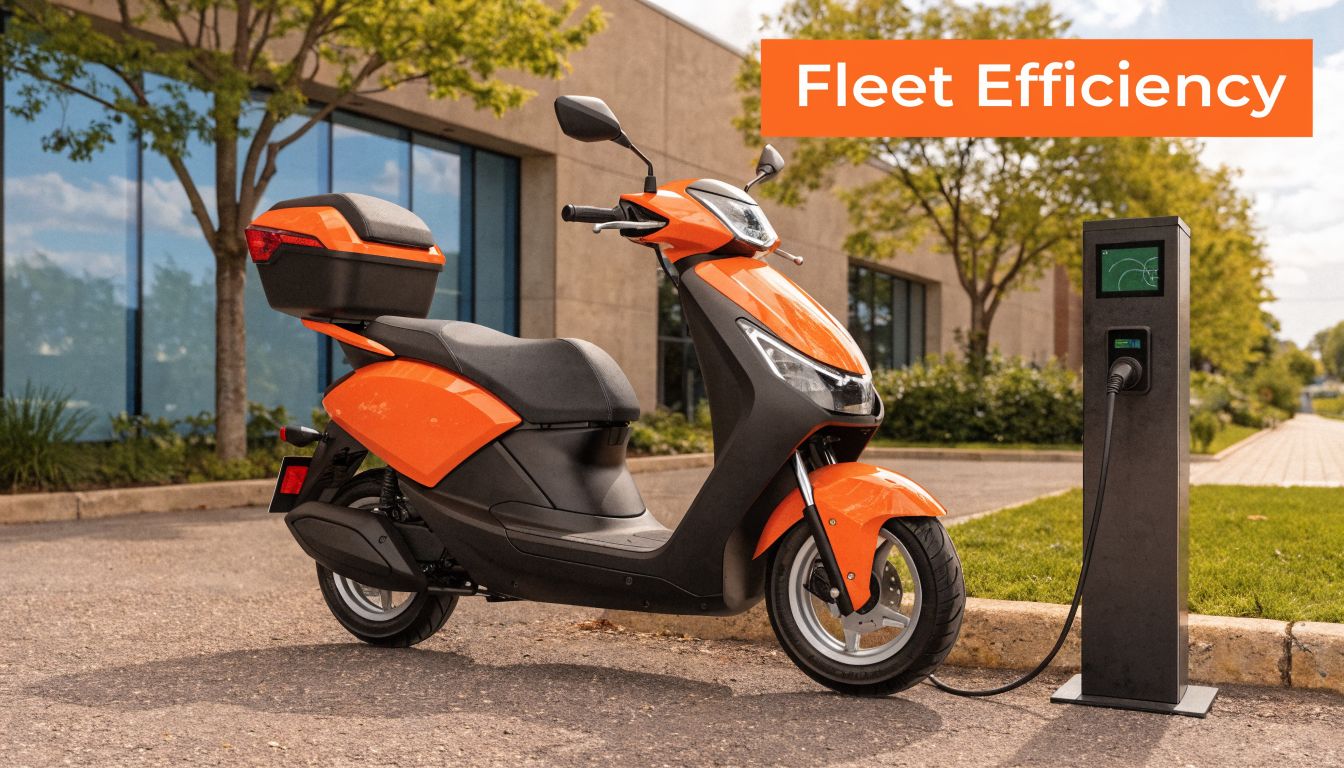
For the food delivery rider
A delivery rider usually doesn't need a theory lesson. The rider needs the bike to start, run cheaply, carry the box securely, and get through a full shift without turning every pound earned into fuel and repair spend.
That's where electric mopeds make the strongest case. Running costs are lower, routine maintenance is simpler, and the bike suits exactly the sort of stop-start, short-hop work that defines app-based food delivery. When the machine spends less time off the road, the rider gets more usable earning days.
There's also less mental drag. Petrol riders often budget every week around fuel stops, rising prices, and small mechanical annoyances becoming bigger ones. Electric riders still need discipline around charging and daily checks, but the operating routine is usually cleaner.
- Better margin per shift because less of the day's income disappears into petrol.
- Less workshop interruption because there are fewer service-heavy components than a petrol equivalent.
- Urban convenience because two-wheel EVs suit tight streets, quick stops, and dense zones.
For the small business fleet
A takeaway, florist, bakery, pharmacy, venue, or repair service sees the issue differently. The business owner isn't just watching one rider. They're watching whether delivery adds profit or keeps swallowing it.
Electric mopeds help most when deliveries are local and repeated throughout the day. They're visible, brand-friendly, easier to allocate across staff, and simpler to standardise than a mixed set of ageing petrol bikes. They also fit businesses that want direct control over customer experience instead of handing every order to a third-party courier.
A second benefit is finance flexibility. If you're comparing whether to buy vehicles outright or spread cost over time, this broader piece on comparing commercial truck financing and leasing is useful because the same logic applies to delivery assets. Cash flow, ownership horizon, maintenance responsibility, and fleet turnover all matter more than headline monthly price.
Here's the practical split:
| Business goal | What electric mopeds help with |
|---|---|
| Protecting margin | Lower fuel and maintenance burden |
| Faster local delivery | Better agility in dense areas |
| Cleaner brand image | Customers see the vehicle at the door |
| Simpler fleet planning | Standard charging, storage, and servicing routines |
| Easier city operation | Better fit for low-emission environments |
A short demonstration helps too.
What doesn't work
Electrification fails when businesses copy fleet decisions without checking route fit.
- A business with heavy, bulky, fragile loads may need vans for part of the operation.
- A rider with no realistic charging plan will struggle even on a good bike.
- A fleet owner who ignores rider training often blames the vehicle for preventable range and handling issues.
The strongest electric fleet is rarely the biggest one. It's the one matched properly to route length, payload, storage, and charging routine.
For the right delivery profile, electric mopeds don't just reduce cost. They make the operation calmer, more repeatable, and easier to grow.
Your Fleet Electrification Checklist
A good switch to electric starts with routine, not excitement. The businesses that get value quickly are the ones that map the work first, then choose the machine, charging setup, and rider process around it.
Start with the route, not the bike
Write down what a normal day looks like before you compare models.
- Trip pattern: Are your runs short and frequent, or longer with fewer drops?
- Payload reality: What do you carry most days? Food bags, flowers, small boxes, tools?
- Stop conditions: Are riders dealing with flats, city centre kerbside stops, suburban homes, or mixed areas?
This step avoids a common mistake. People buy for the hardest possible day, then overspec the whole fleet. For many local operators, the better answer is a practical moped setup that covers most work consistently.
Sort the money and compliance early
Don't leave procurement until after you've emotionally chosen a model.
Look at whether buying outright, hire purchase, or another finance route best suits your cash flow. Check what business-use insurance requires. Confirm whether your riders need CBT, what licence category fits the vehicle, and who's responsible for daily checks.
Then decide where charging happens. For some riders, a standard home routine is enough. For a business, on-site charging with clear parking bays is cleaner because it keeps fleet control in one place.
Build delivery discipline into rollout
Many operators leave money on the table in this area. A better bike won't fix poor delivery habits.
The delivery metric worth paying close attention to is First Attempt Delivery Success Rate. Spoke's guide to last-mile metrics notes that improving FADR by 10% can boost battery utilisation by 15% to 20% across a shift, because failed deliveries waste time and energy. For electric mopeds, that directly affects how far a rider gets from each charge and how much productive work fits into a day.
Use a rollout checklist like this:
- Set route windows based on real traffic patterns, not optimistic guesses.
- Train riders on address checking before departure, especially for flats, side entrances, and access notes.
- Standardise phone mounts and navigation use so riders aren't improvising mid-route.
- Plan daily battery routine with clear charging responsibility.
- Book preventive maintenance instead of waiting for faults.
Missed drops hurt twice. You lose time on the failed stop, then you lose efficiency on the reroute.
If you treat electrification as an operations project rather than just a vehicle purchase, the switch is much smoother.
Choosing Your Flex Electric Moped and Accessories
A good delivery bike is the one that fits the route, the rider, and the load. That means being honest about daily use. Some riders need a city-first machine that's easy to manage and quick to park. Others need more speed, stronger road presence, or enough capability to handle longer suburban runs comfortably.

Match the bike to the job
For city-centre delivery and learner-friendly use, 50cc and 125cc-equivalent electric mopeds are usually the practical starting point. They suit riders who need agility, simple controls, and enough carrying ability for hot food, light retail orders, or local service calls. This is the category many first-time delivery riders should examine first.
If your routes stretch further or include faster roads, look at higher-performance electric motorcycles and more powerful road-focused models. Bikes from brands such as Vmoto, Super Soco, Horwin, LiveWire, Segway, and Naxeon can suit riders who want stronger performance or businesses that need more capability than a basic moped can give.
There's also a specialist angle. Off-road electric motorcycles and kids motocross bikes belong to a different use case, but they still matter if you're buying from a specialist retailer and want after-sales support from one place. They're not last mile tools, but they are relevant for households, enthusiasts, and businesses that want a trusted electric motorcycle supplier rather than a generalist.
Choose accessories that help deliveries, not just looks
A delivery vehicle becomes useful when the accessories are right.
- Top boxes and racks matter first. They determine whether loads stay secure and organised.
- Phone mounts matter more than people think. Good navigation positioning reduces hesitation, missed turns, and unsafe glances.
- Locks and security gear are essential if the bike lives outside restaurants, flats, or busy kerbsides.
- Helmets and wet-weather kit affect rider comfort and consistency. A tired, soaked rider makes slower drops and more mistakes.
The mistake I see most often is spending too much attention on the bike and too little on the delivery setup around it. A well-matched moped with a proper box, secure mount, and decent lock is more useful than a more expensive machine fitted badly.
A simple buying filter works well:
| Need | Best fit |
|---|---|
| Short urban food runs | 50cc or 125cc-equivalent electric moped |
| Mixed city and suburban routes | Stronger 125cc-equivalent or road-focused electric motorcycle |
| Enthusiast road use outside delivery | High-performance electric motorcycle |
| Leisure off-road riding | Off-road electric motorcycle |
| Youth off-road riding | Kids electric motocross bike |
Choose the job first. Then choose the bike.
Frequently Asked Questions About Electric Delivery
Can I charge an electric moped from a normal UK socket
Many electric mopeds are designed around straightforward charging, and that simplicity is one reason they work well for riders and small businesses. The practical question isn't only whether you can charge from a standard socket. It's whether you have a reliable daily routine and a secure place to do it.
What happens to range in winter
Cold weather affects all battery-powered vehicles to some degree, so riders should expect real-world range to vary with temperature, stop-start use, load, speed, and terrain. The safest approach is to buy with margin. Don't choose a bike that only just covers your busiest shift on paper.
Are electric mopeds suitable for food delivery work
Yes, when the route profile fits the bike. They're especially strong on short and medium urban delivery runs where low running costs, quick parking, and simple handling matter more than maximum payload. They're less suitable if you regularly carry bulky, fragile, or unusually heavy loads.
Is business insurance different from personal cover
Yes, it usually is. Delivery work changes the risk profile, so personal commuting cover won't necessarily be enough for food delivery or commercial use. Always confirm that your policy explicitly covers the work you're doing.
How long do batteries last
Battery life depends on charging habits, storage conditions, riding style, and general care. A good supplier should be clear about what the battery warranty covers and what counts as misuse or normal wear.
What's the biggest mistake new delivery riders make
Choosing only on price. Cheap can become expensive fast if the bike doesn't match your route, can't carry your setup properly, or leaves you struggling with charging, storage, or reliability.
If you are prepared to reduce operational expenses and transition to a more functional delivery model, Flex Electric warrants serious consideration. They specialize in electric mopeds, scooters, motorbikes, off-road electric motorcycles, and kids MX bikes, providing direct advice, UK-wide delivery, finance options, and the specific accessories that ensure a delivery bike performs effectively in practical environments.
Find us
You will find us at 74 Dalry Road, Edinburgh, EH11 2AY
Showroom Opening Times:
Monday: By Appointment
Tuesday to Friday: 11am - 5:00pm
Saturday: 10am - 5pm
Sunday: By Appointment
