
Motor scooters UK: Laws, Costs & Best Models for 2026

Flex Electric
The UK's #1 Electric Moped and Electric Motorbike dealer.

Picture this: you're gliding silently through city traffic, leaving the queues at the petrol station and the worry of emission zone charges in your wake. For a growing number of UK riders, this isn't just a daydream—it's the reality of switching to an electric motor scooter, moped, or motorcycle. This shift isn't just about being a bit greener; it's about making a smarter, cheaper, and far more enjoyable choice for getting around town.
Why Electric Is Now the Smart Choice for UK Riders
The familiar roar of a petrol engine, once the soundtrack of every British city, is slowly fading. In its place, you'll hear the quiet, efficient hum of electric power. For anyone who regularly navigates our busy streets, the argument for going electric is becoming impossible to ignore. It’s a change driven by very real frustrations with the old way of doing things and the undeniable perks of the new.
Let's be honest, the daily commute can be a grind. Riders have had enough of unpredictable fuel prices carving a hole in their budgets, not to mention the ever-present threat of clean air zone fees. Electric motor scooters and motorcycles tackle this head-on, replacing costly trips to the pump with simple, affordable overnight charges at home.
A Clear Shift in the Market
You don't have to take our word for it—the market data tells the same story. While the wider UK motor scooter market took a serious hit in early 2026, electric models have shown remarkable strength. Figures from February revealed that overall registrations had plummeted by 40.3% year-to-date. But even in that downturn, electric models held their ground, proving they're much more than a passing trend. You can see the full breakdown in this recent report on the UK scooter market.
This data really highlights where things are heading. As the market settles, the advantages of electric alternatives—from agile little mopeds to powerful motorcycles—become crystal clear. They represent a sensible, forward-thinking investment in your personal transport.
For today's rider, an electric scooter isn't just an alternative to a petrol one; it's a genuine upgrade. You get a quieter, smoother ride, instant torque for surprisingly quick acceleration, and next to no maintenance. Forget oil changes, spark plugs, and exhaust systems.
More Than Just a Commute
And it’s not just individual commuters who are catching on. Businesses are quickly realising the financial and operational benefits, too.
Delivery riders and commercial fleets are making the switch in droves to slash running costs and boost their green credentials. For them, an electric scooter is a tool that directly improves their bottom line while also enhancing their brand image. It's this kind of practical, real-world application that shows why electric power is fast becoming the definitive answer for modern urban travel across the UK.
Getting Your Licence and Staying Legal in the UK
Getting to grips with the legal side of riding a moped or motorcycle in the UK might feel a bit intimidating at first. The good news is that it's much simpler than it looks. Unlike the private e-scooters you see around (which are mostly illegal on public roads), the electric mopeds and motorcycles we're talking about are fully road-legal. You just need the right paperwork.
The whole system is built around one core idea: making sure every rider has the basic skills to be safe on the road. For almost everyone, that journey starts with Compulsory Basic Training, or the CBT.
What Is A CBT and Who Needs It?
Think of Compulsory Basic Training (CBT) less as a test and more as a day-long training course. Its sole purpose is to ensure you can handle a bike safely before you ride on your own. If you're new to two wheels, you'll almost certainly need to complete a CBT.
The day covers the essentials, from how the bike works and daily safety checks to practical riding on the road with an instructor watching over you. Finish the day successfully, and you'll get a certificate that's valid for two years. This is your ticket to ride specific electric mopeds and motorcycles on public roads with L-plates.
A CBT isn't about passing or failing like a driving test. It's about showing you can ride safely and responsibly. The instructor will only sign you off when they're confident you aren't a danger to yourself or others.
For the vast majority of new riders, the CBT is the only hurdle to clear before you can start enjoying the freedom of an electric two-wheeler. It opens the door to a huge range of machines that are perfect for city commuting or delivery work.
Decoding Licence Categories for Electric Rides
When you look at petrol bikes, power is measured in cubic centimetres, or ‘cc’. With electric vehicles, it’s all about kilowatts (kW). UK law cleverly translates these kW power ratings into the licence categories riders are already familiar with.
Here’s a quick guide to what that means for learner riders:
- AM Licence Category (50cc Equivalent): This covers electric mopeds with a power output under 4kW (about 5.4 horsepower) and a top speed capped at 28 mph (45 km/h). You can ride these from age 16 with just a CBT. They're ideal for zipping around town.
- A1 Licence Category (125cc Equivalent): This category is for electric motorcycles with a power output up to 11kW (roughly 15 horsepower). You need to be at least 17 to ride one with a CBT. These bikes pack more of a punch and can easily keep up with urban traffic, making them great for longer commutes.
Once you know how kW figures line up with the old 'cc' equivalents, picking an electric scooter that fits your age and licence becomes a piece of cake.
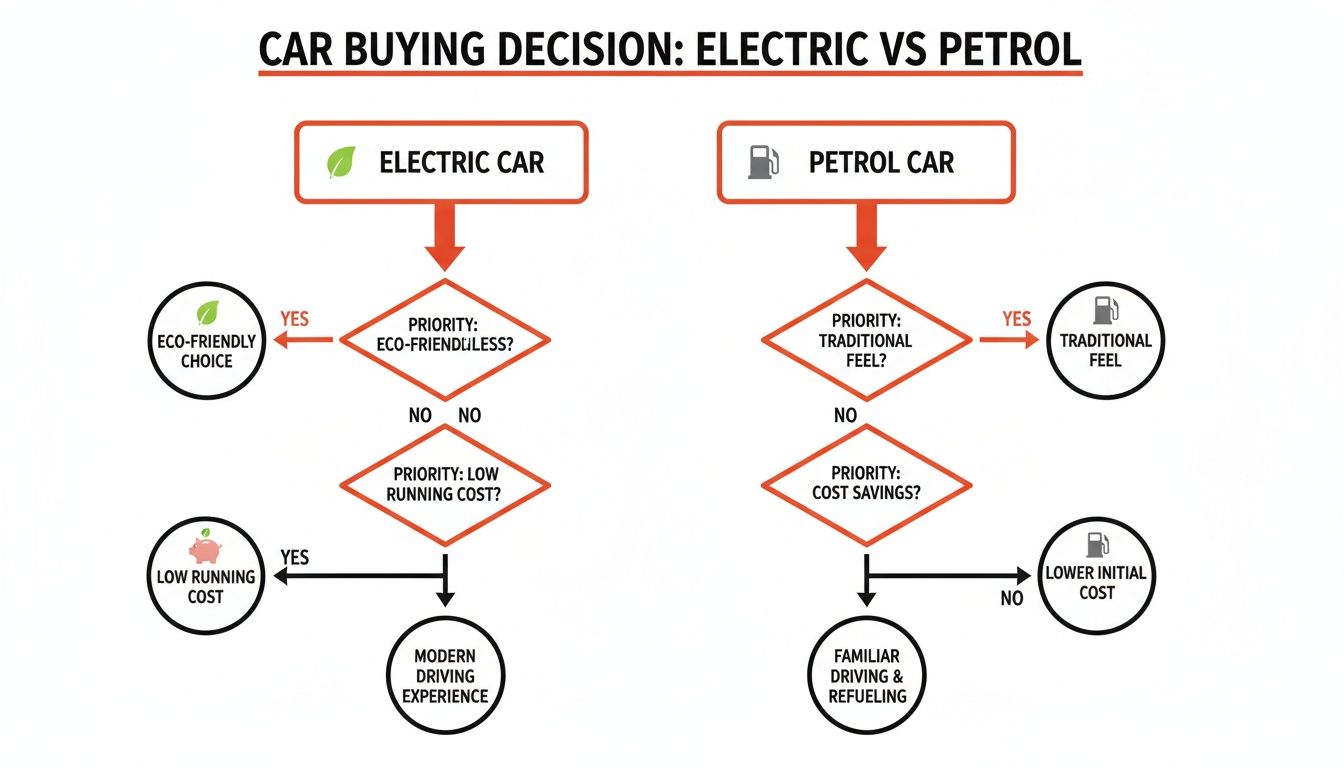
This flowchart neatly sums up the key considerations. As you can see, riders who value low running costs and a smaller carbon footprint are naturally drawn to electric, while those after a more traditional rumble might still lean towards petrol.
The Final Legal Checks: Insurance, Tax, and MOTs
With your CBT done and your perfect bike chosen, there are just three final boxes to tick. First up, you absolutely must have valid insurance. These are registered motor vehicles, and riding without cover is a major offence with serious consequences.
Next is vehicle tax. Here’s a brilliant perk for electric riders: the Vehicle Excise Duty (road tax) is £0 for all-electric models. You do still have to go through the process of 'taxing' it online, but your wallet won't feel a thing.
Finally, just like any other road vehicle, your electric bike will need a yearly MOT test to confirm it's still roadworthy. The first one is due on the third anniversary of its registration. With far fewer moving parts and no messy engine oil, getting an electric bike through its MOT is usually a much simpler affair than with a petrol equivalent.
How to Choose the Right Electric Ride for You
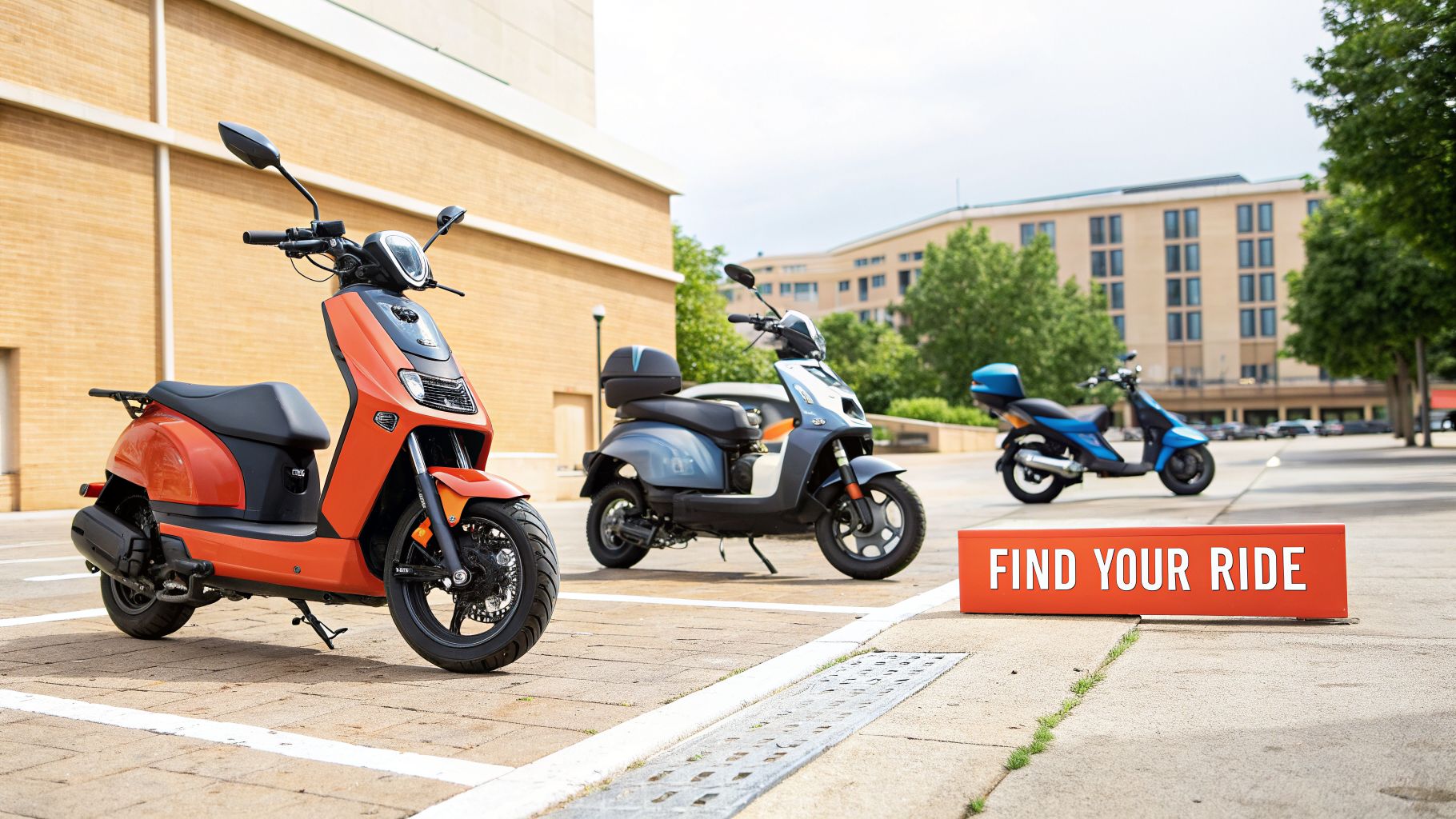
So, you’re thinking about going electric. Great choice. But with so many options, where do you even start? The secret to finding the perfect electric ride isn't about chasing the biggest motor or the longest range on paper. It's about answering one simple question: what do you really need it for?
Forget the spec sheets for a moment and think about your life. Are you darting across a city for your daily commute? Do you spend your days making deliveries? Or are you looking for something to put a smile on your face on a Sunday morning? Let's break down the main types of electric bikes and see which one fits your life, not the other way around.
Mopeds (50cc Equivalent) for Urban Living
If your world is the city, a 50cc equivalent electric moped is your new best friend. These machines are purpose-built for navigating the urban jungle. Capped at a top speed of 28 mph, they have all the punch you need for stop-start traffic where you'd rarely get above that speed anyway.
Their best feature is their sheer nimbleness. They're incredibly lightweight, making them a breeze to handle and, crucially, to park in tight spots. For short commutes, nipping to the shops, or zipping between local jobs, you honestly can't beat them.
- Best For: Short city trips, riders getting their first taste of the road (you can ride one from age 16), and anyone who values a simple, hop-on-and-go solution.
- Typical Range: You can realistically expect around 30-50 miles from a full charge. For most city dwellers, that’s easily enough juice for a few days of getting about.
- Charging: This is where they really shine. Most come with removable batteries. Just unclip it, take it inside, and plug it into any standard UK socket—just like you'd charge your laptop.
These mopeds are the default choice for anyone wanting maximum convenience and incredibly low running costs.
Scooters (125cc Equivalent) for the Everyday Commuter
Moving up to a 125cc equivalent electric scooter opens up a whole new level of freedom. This is where things get serious enough for the daily grind. With top speeds in the 50-60 mph range, they don't just survive in city traffic; they're perfectly comfortable holding their own on faster A-roads and dual carriageways.
This is the workhorse category. The extra performance gives you a more substantial, confident ride, often with better comfort and more storage for your gear. If your daily journey is a mix of urban streets and faster open roads, a 125 equivalent is almost certainly your sweet spot.
A 125cc equivalent electric scooter strikes the perfect balance. It has enough power to give you confidence on almost any road, yet it remains nimble and cheap to run, making it the ideal do-it-all machine for the majority of UK riders.
It's this blend of practicality and performance that has made them so popular. While the wider UK motorcycle market has seen ups and downs—registrations dipped by 4% to 73,343 units in the first nine months of 2025—the shift towards practical, green transport for commuting and last-mile delivery is undeniable. This isn't just a UK trend; it's happening across the continent, even as overall moped registrations contributed to a wider 16.4% European dip. You can dig into the numbers yourself in this detailed analysis of European market trends.
High-Performance Electric Motorcycles for the Enthusiast
For some riders, a bike is more than just transport. It's about the thrill. If you crave instant acceleration and the kind of performance that reshapes your idea of speed, a high-performance electric motorcycle is waiting for you. These are not commuter appliances; they are finely-honed machines built for pure exhilaration.
The experience is unique. The instant torque from a standstill delivers a powerful, silent shove that has to be felt to be believed, often leaving petrol-powered superbikes standing. These bikes are aimed squarely at experienced riders who want the absolute best in performance and are ready to ride the wave of the future.
Niche Rides for Specific Fun
The electric revolution isn't just about the road. It has also sparked a whole new world of specialised fun.
- Off-Road Electric Motorcycles: Imagine tearing up the trails in near silence. These off-roaders are light, powerful, and have no gears, letting you focus completely on your line. With no engine noise to disturb wildlife (or the neighbours), it's a completely fresh take on hitting the dirt.
- Kids' Motocross Bikes: Electric power is a game-changer for getting little ones started. These bikes are quiet, have adjustable power settings to match a child's confidence, and are incredibly low-maintenance. They offer a safe and thrilling introduction to motocross without the noise, heat, and fumes of a tiny petrol engine.
Calculating the True Cost of Going Electric
It’s easy to get fixated on the initial price tag, but that’s only the first page of a much bigger story. When you’re weighing up an electric scooter against a petrol one, the real question is about the total cost of ownership. What will it actually cost you to run, month after month, year after year?
For anyone considering a scooter for the long haul, taking a moment to look at the numbers shows one option is the clear financial winner. Switching to electric isn't just about being greener; it's a savvy financial move. The savings begin the moment you ride away and just keep adding up, making your scooter a smart investment that practically pays for itself.
Let's break down where your money stays right where it belongs: in your pocket.
Fuel vs Electricity: Your Biggest Saving
Right off the bat, the most significant saving comes from waving goodbye to the petrol station for good. We’ve all felt the pain of watching fuel prices creep up, draining your budget with every fill-up. An electric scooter swaps that unpredictable expense for a simple, cheap top-up from any standard wall socket.
Let’s put some real-world numbers on it. How does the cost-per-mile stack up?
- Petrol Scooter: A standard 125cc scooter might manage around 100 miles to the gallon. With petrol hovering around £1.50 per litre (that's about £6.82 a gallon), you’re looking at a cost of roughly 6.8 pence per mile.
- Electric Scooter: A similar electric model uses its battery far more efficiently. A full charge, costing you less than £1 on a typical home electricity tariff, could give you a 50-mile range. Do the maths, and that works out to just 2 pence per mile.
That tiny difference per mile might not sound like much, but it's huge over time. For a rider covering 50 miles a day, that’s £3.40 on petrol versus just £1.00 on electricity. Across a year of regular riding, those savings can easily climb past £1,000 on fuel alone.
For a delivery rider or a daily commuter, this isn't just pocket change. It's a massive reduction in your operating costs that directly boosts your earnings or frees up your personal budget. The fuel savings alone often justify the entire switch to electric.
Zero Tax and ULEZ Freedom
Another huge win for electric riders comes from avoiding government charges. All-electric vehicles, including scooters and motorcycles, are completely exempt from Vehicle Excise Duty (road tax). You still need to "tax" the vehicle online each year, but the cost is £0. That’s an instant saving.
Even better, as cities expand their Clean Air Zones (CAZ) and London’s Ultra Low Emission Zone (ULEZ), petrol riders are getting hit with daily fees just for entering the city centre. An electric scooter produces zero tailpipe emissions, which means you can ride straight through these zones without paying a penny. For anyone working or commuting in London, that’s a saving of £12.50 every single day.
Slashing Maintenance Bills
Let's be honest, internal combustion engines are complicated. They’re full of hundreds of moving parts—pistons, valves, clutches, and gears—that all need regular, and often costly, attention. Think oil changes, new filters, spark plugs... it all adds up in workshop bills and time off the road.
Electric scooters are a world apart. Their design is beautifully simple. There’s no engine oil to change, no exhaust system to rust, no clutch to wear out, and no gearbox to service. Maintenance is stripped back to the basics: checking your brakes, tyres, and bearings, which are the same checks you’d do on any two-wheeled vehicle.
Here’s a clear look at how those annual running costs really compare for a typical UK rider.
Annual Running Cost Comparison: Petrol vs Electric Scooter
The table below breaks down the estimated annual expenses for a commuter or delivery rider. It paints a very clear picture.
Cost ItemElectric Scooter (e.g., 125cc Equivalent)Petrol Scooter (125cc)Fuel/Electricity (5,000 miles/year)Approx. £100Approx. £340Road Tax (VED)£0Approx. £25ULEZ/CAZ (100 days/year)£0£1,250 (in London)Annual Service/MaintenanceApprox. £50 - £100Approx. £150 - £250Total Estimated Annual Cost£150 - £200£1,765 - £1,865
As you can see, it's not even close. The total cost of ownership for an electric scooter is dramatically lower. The sticker price is just one part of the puzzle; it’s the long-term running costs that truly show how much you can save by going electric.
Essential Gear and Business Fleet Solutions
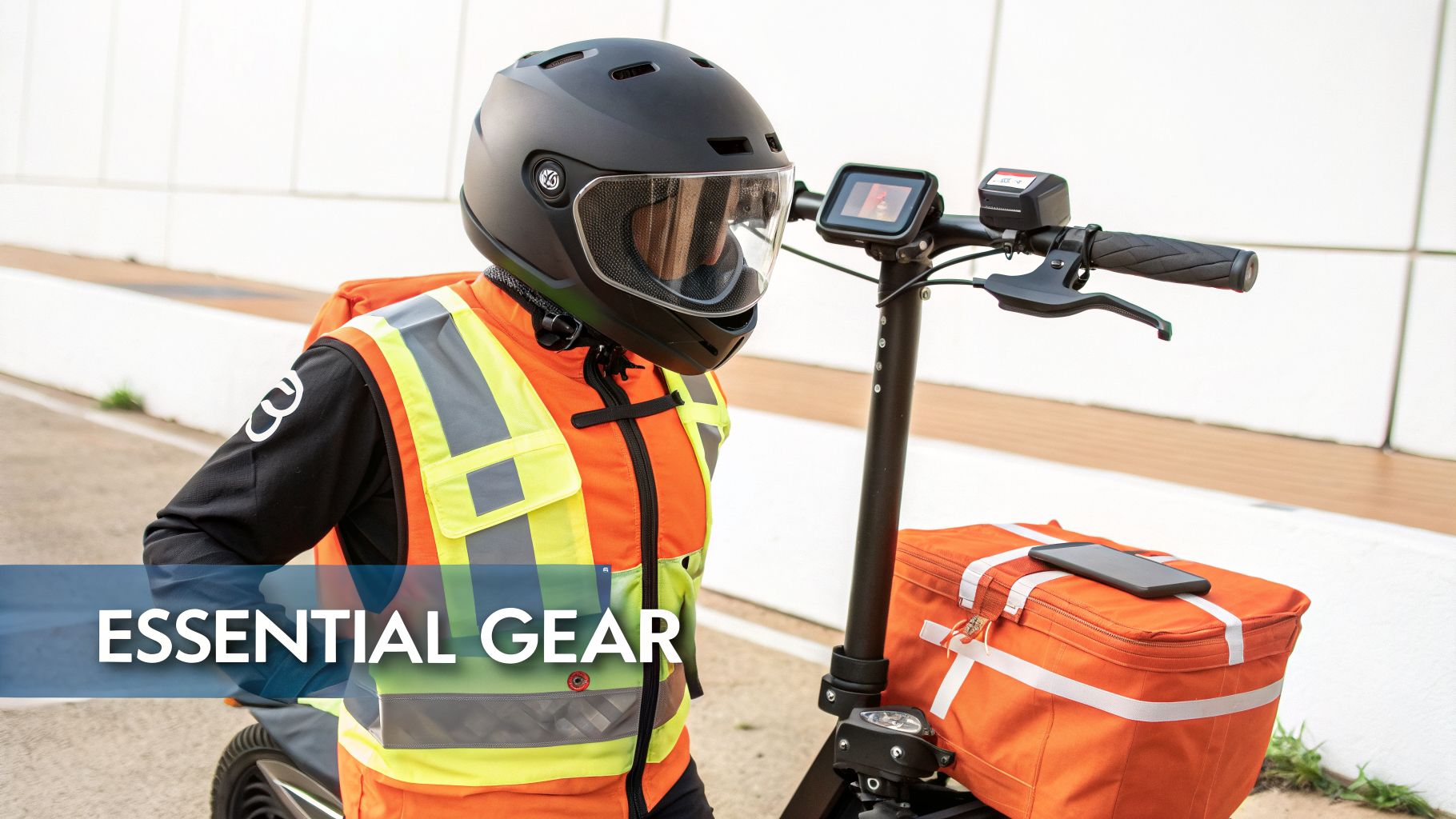
Choosing your electric scooter is a great first step, but the journey doesn't end there. To really get the best from your new ride, you need the right kit. Getting properly kitted out with safety gear and a few practical accessories is what turns a good ride into a great one.
Think of your scooter as the foundation. Whether you're a commuter, a delivery rider, or a business owner building a fleet, the right additions make all the difference. So, let's break down the gear every rider needs before looking at how whole businesses can benefit from going electric.
Must-Have Gear for Every Rider
First things first: safety. Before you even think about taking your scooter on the road, investing in good protective gear isn't just a suggestion—it’s the smartest money you'll spend.
Once you’re protected, the next step is protecting your machine. A couple of well-chosen bits of kit will guard your scooter against theft and add a dose of everyday practicality.
Here’s what we consider the absolute essentials:
- A Quality Helmet: This is, without a doubt, the most important piece of gear you will ever own. It's a legal must-have in the UK. Always buy a new, certified helmet that fits you snugly and correctly.
- A Robust Lock: Your scooter is a valuable asset, so don't skimp on security. A heavy-duty D-lock or chain, ideally with a "Sold Secure" rating, is a serious deterrent for would-be thieves.
- Phone Mount: If you're using your phone for navigation, a solid, waterproof mount is a game-changer. It keeps your route clearly in sight so you can keep your focus where it matters—on the road.
- Top Box or Rack: Need to carry more than what fits in a backpack? A rear rack or a lockable top box gives you secure, weatherproof storage for your work equipment, the weekly shop, or just a place to stash your helmet.
Investing in good gear isn't just an extra cost; it's part of owning a scooter. A proper helmet protects your head, a strong lock protects your wallet, and practical extras like a top box make your machine infinitely more useful.
Fleet Solutions for Forward-Thinking Businesses
The advantages of electric scooters aren't just for individuals. For any business that relies on transport, from local takeaways to major logistics firms, electrifying the fleet is a smart move with immediate payoffs.
The main draw is simple: your running costs will plummet. While the wider UK scooter market had a slow start to 2026, with registrations down 42.9% year-to-date, global demand for electric two-wheelers in logistics is booming. This is fuelled by the urban congestion and e-commerce growth that every UK delivery rider knows well.
Data from schemes supporting Deliveroo and Uber Eats riders shows an electric model's annual running costs average just £200, a huge saving compared to the £800+ for a typical petrol scooter. You can see a full analysis of how electrics are reshaping the market here.
For businesses, this shift brings three huge wins:
- Reduced Operating Costs: When you slash what you spend on fuel, tax, and maintenance, your profit margins get an instant, direct boost.
- Less Vehicle Downtime: Electric scooters have far fewer moving parts and no complex engines to service. That means your fleet spends more time on the road earning and less time in the workshop.
- A Stronger Green Brand Image: Showing you're committed to sustainability really connects with today's customers and improves your company's reputation.
By working with a specialist like Flex Electric, businesses of any size can get tailored fleet programmes. This kind of support makes it straightforward to switch to a cleaner, more reliable, and ultimately more profitable way of getting around.
So, How Do You Get Started?
You've done the reading, you get the benefits, and you've seen how the numbers stack up. The only thing left is to actually make the switch to electric. It’s genuinely much easier than you might think, and we're here to guide you from that first spark of interest right through to your first ride.
It all begins with finding the right scooter for you. Forget trying to decipher complicated spec sheets. When you browse a good selection of electric mopeds and motorcycles, you should see clear, real-world figures for speed and range. This makes it simple to compare models and pinpoint the one that’s a perfect match for your daily commute or weekend fun.
Your Simple Steps to Going Electric
Getting on the road is a straightforward process. We’ve broken it down to make sure you feel supported every step of the way.
- Get Honest Advice: Got a question? You deserve a clear answer from someone who actually knows these bikes inside and out—from a 50cc-equivalent runaround to a high-performance machine.
- Look at Your Finance Options: Getting a brand new electric ride is more affordable than ever. With flexible finance available, often at 0% APR with a small deposit, you can easily spread the cost to fit your budget.
- Arrange Nationwide Delivery: It doesn't matter where you are in the UK. Your new scooter or motorcycle can be delivered right to your door, fully prepped and ready to go.
Once you’re on the road, you’ll be looking for new places to explore. If you fancy a proper adventure, you might want to check out the best driving roads in Wales for a truly memorable trip.
Peace of Mind Comes as Standard
Buying a new vehicle is a big deal, and you should feel completely secure in your purchase. Knowing your investment is properly protected lets you get on with what really matters: enjoying the ride.
Our job isn't done when your bike is delivered. We’re here for the long haul with dedicated after-sales support for any questions or issues. That’s what turns a good purchase into a great ownership experience.
This commitment is backed by a 2-year parts warranty and a 3-year battery warranty, giving you solid proof of the quality and reliability built into every vehicle.
From that first bit of advice to long-term care, we make sure everything is handled. It's never been easier to join the growing community of electric riders. Your adventure starts here.
Your Electric Scooter Questions, Answered
Deciding to go electric is exciting, but it’s natural to have a few questions. We get asked all sorts of things by new and experienced riders alike, so we’ve put together some straight-talking answers to the most common queries. Think of this as clearing up those last few nagging doubts before you take the plunge.
What's the Real-World Range Actually Like?
This is the big one, and the honest answer is that it really comes down to the bike and how you ride it. For a typical electric moped built for zipping around town, you can realistically expect a range of 30 to 50 miles. If you step up to a more powerful 125cc-equivalent electric scooter or motorcycle, that figure often climbs to over 60 miles on a full charge.
Of course, your final mileage will be affected by things like your weight, whether you're tackling lots of hills, and how aggressively you ride. The best approach is to pick a model with a stated range that gives you plenty of breathing room for your daily commute.
Is Maintaining an Electric Motorcycle a Hassle?
It’s actually the complete opposite—and one of their biggest selling points. Unlike a petrol engine with its hundreds of moving parts, an electric motor is incredibly simple. There’s no oil to change, no spark plugs to swap out, no clutch cables to adjust, and no exhaust system to fail an MOT.
Your routine maintenance boils down to the same basic checks you’d do on any two-wheeled vehicle:
- Brakes: Checking the pads and discs for wear.
- Tyres: Keeping an eye on pressure and tread depth.
- Lights: A quick walk-around to ensure indicators and headlamps are working.
This simplicity translates directly into fewer workshop visits and much lower servicing costs over the vehicle's lifetime.
Can I Ride an Off-Road Electric Bike on the Road?
In most cases, no. The majority of electric dirt bikes and kids' motocross models you see are built purely for use on private land. They aren't "road-legal" because they don't have the essentials like lights, indicators, mirrors, or a place to mount a number plate.
If you need a bike for your commute, always confirm it's fully road-legal and can be registered with the DVLA before you buy.
Ready to feel the difference for yourself? At Flex Electric, we offer expert, no-nonsense advice and a hand-picked selection of the UK's best electric mopeds, scooters, and motorcycles. Explore our range and start your electric journey today!
Find us
You will find us at 74 Dalry Road, Edinburgh, EH11 2AY
Showroom Opening Times:
Monday: By Appointment
Tuesday to Friday: 11am - 5:00pm
Saturday: 10am - 5pm
Sunday: By Appointment
