
Oxford Bike Lock: Top Security Guide 2026

Flex Electric
The UK's #1 Electric Moped and Electric Motorbike dealer.

You’ve just parked your new electric moped outside a shop, stepped back, and had that split-second thought every rider has. It looks brilliant. It also looks very easy to steal if you rely on the steering lock and hope for the best.
That’s where a proper oxford bike lock setup stops being an accessory and starts being part of ownership. Electric mopeds and motorcycles bring their own security headaches. They’re quiet, valuable, often used in dense urban areas, and many spend long hours parked in exactly the places thieves like most. A delivery rider on a Vmoto doesn’t face the same risk pattern as someone storing an off-road bike in a locked shed. A Super Soco commuter parked outside a station needs a different answer again.
Your New Electric Moped Needs More Than Just a Key
You park outside a takeaway in Manchester for a two-minute pickup, or leave your Super Soco near the station before work. By the time you are through the door, your security setup is actively securing your vehicle. In UK cities, thieves look for the easy win. A steering lock and ignition key rarely change that.
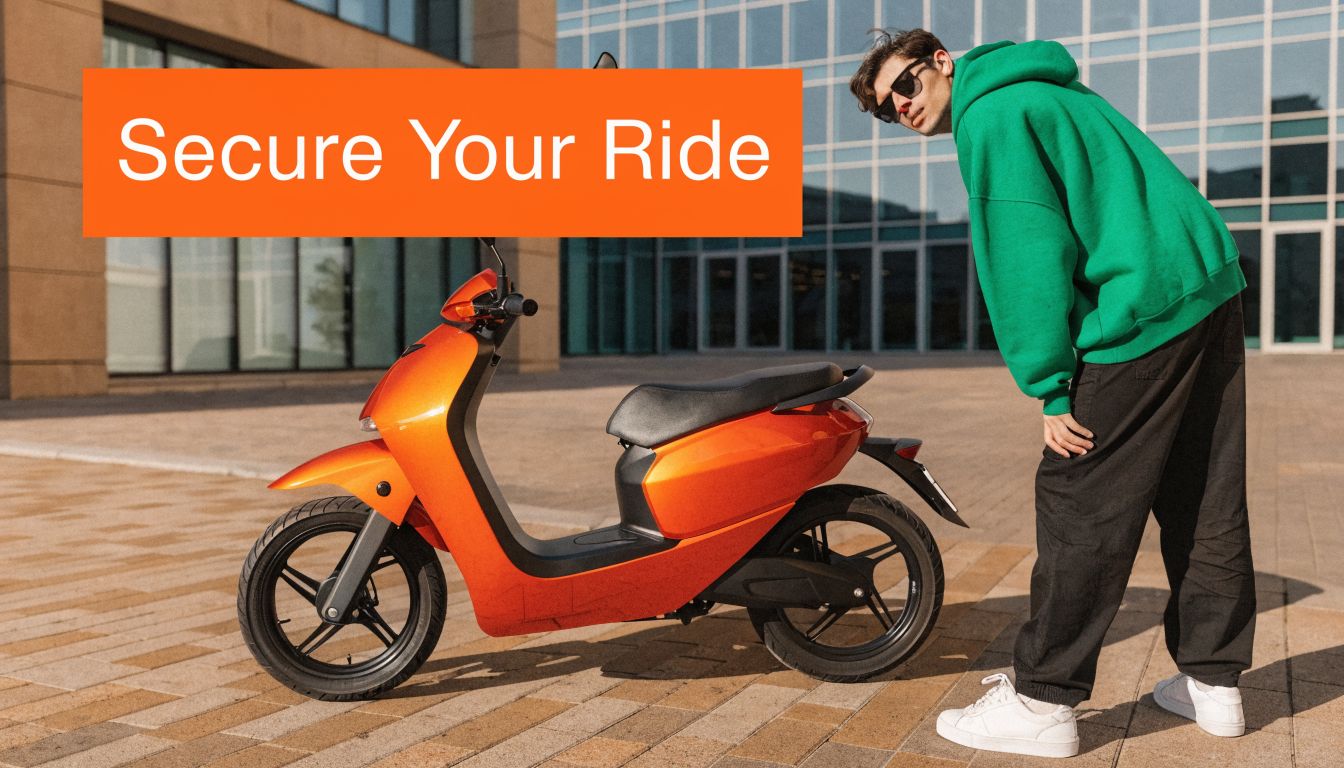
Electric mopeds and motorcycles need more than the factory hardware. Built-in locks and immobilisers can slow a thief down, but they do not stop a bike being rolled away, dragged to a van, or lifted by two people. I see new riders make the same mistake all the time. They treat the key as security, when it is really only one layer.
That matters even more with e-mopeds. A Vmoto used for delivery work may be left unattended again and again during a shift. A commuter Super Soco often spends hours parked in the same public spot every weekday. These patterns are predictable, and predictable bikes get watched.
Generic bicycle advice also misses some awkward realities. E-mopeds often have frame shapes that limit where a chain or D-lock can pass through. Some models leave bodywork, rear carriers, or smaller wheel spaces in the way. Quick-access storage, removable batteries, and delivery kit add more parts that can be tampered with if the bike is left with only basic built-in security.
The practical rule is simple. Secure the moped to something fixed, or accept that a thief may move it first and deal with the lock later.
Good protection starts with the lock, but it works best as part of a wider routine. Parking under lights, avoiding the same weak spot every day, locking through a strong part of the frame, and checking what can be removed quickly all reduce risk. That is the same logic used in strategic risk security management. Make the job slower, louder, and less predictable, and many thieves will move on to an easier target.
Decoding Oxford Security Ratings Sold Secure and ART
Security ratings matter because they cut through the sales language and answer a basic question. Has this lock been tested against real attack methods, or is it just cheap hardware in smart packaging?
For an electric moped in a UK city, that distinction matters quickly. A delivery rider on a Vmoto may lock up ten times in one shift. A Super Soco commuter might sit outside the same station or office all day. In both cases, the lock has to deal with repeat exposure, rushed parking, wet weather, and thieves who already know what a powered two-wheeler is worth.
What Sold Secure tells you
Sold Secure is the rating most UK riders will come across first. In plain terms, the higher the rating, the harder the product has been pushed in testing. That does not mean every Gold or Diamond lock suits every bike. It means you are starting with equipment that has cleared a recognised standard.
The practical reading looks like this:
- Bronze: Basic deterrent. Best kept for low-risk use and lower-value property.
- Silver: Better, but still a compromise if the bike is left in public for long periods.
- Gold: A sensible starting point for many e-moped riders parking in towns and cities.
- Diamond: Higher resistance, usually the right area to look at for riskier parking habits or more valuable machines.
Cheap, light locks often sit at the bottom of that range or have no rating at all. That is where new riders get caught out. A low-rated cable can be fine for a helmet or temporary accessory security. It is a weak choice for a parked electric moped that can be targeted, lifted, or worked on after dark. As noted earlier, even Oxford positions some of its cheapest options for low-crime use only.
Where ART fits
ART is another independent approval system you will see on motorcycle and scooter security products, especially chains and padlocks sold across Europe. UK riders may see it less often than Sold Secure, but it still carries weight with dealers, insurers, and experienced owners.
The useful point is not which logo looks better on the box. The useful point is that both standards give you an external check on the product. That matters in a market full of locks that look substantial in photos and disappoint badly in real use.
Ratings are only one part of the decision
I tell new Flex Electric riders to treat the rating as a filter, not the final answer.
A heavy chain with the right badge is no help if you stop using it after a week because it is miserable to carry. A compact lock with a strong rating can still be the wrong pick if it will only go through a wheel and not a proper frame or chassis point. Electric mopeds make this more awkward than many riders expect. Battery placement, body panels, under-seat plastics, rear racks, and tight wheel gaps all affect what fits.
Check four things before you buy:
- Can it pass through a secure point on your specific bike, not just the easiest wheel to reach?
- Can you carry or store it during daily use without leaving it at home?
- Does it match how you park, quick errands, delivery drops, station parking, or overnight street storage?
- Will you still use it properly in rain, darkness, and a hurry?
A lock that gets used every day beats a heavier one left in the garage.
Why approved locks help with insurance
Insurance is another practical reason to pay attention to ratings. Some policies set clear security conditions. Others are less specific but still ask what lock was used after a theft. If the answer is an unrated cable bought on price alone, that can become an awkward conversation very quickly.
Read the wording before you buy the lock, not after the claim.
The false economy of unrated locks
Unrated locks appeal for obvious reasons. They are cheaper, often lighter, and easy to add to an online basket. The trade-off is uncertainty. You do not know how well the shackle, chain, or cylinder holds up under attack, and you do not know whether the product has any business protecting a powered bike in a city centre.
Experienced riders usually judge locks by delay. How long will it hold up, how much noise will it force, and how awkward does it make the theft? That is the essential value of a tested lock. It buys time, creates hassle, and pushes your moped further down the list of easy targets.
The Oxford Armoury An E-Moped Owners Guide
A new e-moped owner in London often gets the lesson fast. The key goes off, the bike is left outside for ten minutes, and a thief is already checking what can be lifted, unbolted, or rolled. Electric mopeds and lightweight motorcycles are popular because they are practical. That same low weight and compact shape can also make them easier targets if the lock choice is lazy.

Riders searching for an oxford bike lock are usually trying to solve a specific problem. A Super Soco commuter needs something fast enough for station parking and café stops. A Vmoto used for delivery work needs something that still gets used on the twelfth stop of a wet shift. Those are different jobs, and Oxford’s range only makes sense once you match the lock to the bike, the parking style, and the parts a thief is most likely to attack.
D-locks for fast urban security
A D-lock is usually the cleanest option for daily city use. It is quicker to fit than a chain, easier to carry under the seat or in a top box, and more realistic for riders who park little and often.
For lighter electric mopeds, that matters. If a lock is awkward, riders stop carrying it. On machines with limited storage and modest payload, portability is part of security, not a side issue.
What a good D-lock does well:
- Fast deployment: Useful for work commutes, short errands, and repeated daytime stops.
- Compact carry: Better suited to smaller e-mopeds than a long, heavy chain.
- Strong resistance to simple attacks: A decent hardened shackle is a serious step up from cheap cables.
Where it falls short:
- Short reach: It can be hard to get around thick posts, railings, or awkward street furniture.
- Tight locking points: Some electric mopeds do not offer many easy places to pass a D-lock through frame and anchor together.
- Less useful for home anchoring: A garage setup usually benefits from more length and flexibility.
Chain locks for flexibility and tougher anchoring
Chains are heavier, slower, and often more annoying to live with. They are also the answer to plenty of real parking problems.
If your bike is left in different places across a week, a chain gives you options: wider posts, chunky stands, steel railings, or a ground anchor at home. That flexibility matters for electric mopeds because the wheel and frame layout can limit where a shorter lock will fit properly. Delivery riders run into this all the time. You pull up outside a takeaway, every proper stand is taken, and the only secure object nearby is too large for a D-lock.
The Oxford HD Chain Lock is a good example of the trade-off. It uses a 10mm hardened square-link chain and carries a Sold Secure Motor Scooter Silver rating. Oxford notes on its HD Chain Lock product page that the square-link design helps frustrate bolt croppers, and the practical benefit is: the attack becomes noisier, slower, and less attractive in public.
That is the point of a chain. It does not make theft impossible. It makes your bike a worse option than the one next to it.
Workshop view: Riders who park overnight on the street, in shared courtyards, or in underground residential bays usually outgrow a single portable lock quite quickly. A chain is rarely convenient, but it solves more real-world parking situations.
Disc locks for immobilisation
Disc locks have a place, especially on electric mopeds used for short stops all day. They are small, quick, and visible. A rider doing local delivery can keep one handy and fit it in seconds.
But they only immobilise the bike. They do not secure it to anything solid.
That limitation matters more with electric two-wheelers than many new owners realise. Lightweight models can be lifted into a van by two people if there is no anchor point involved. A disc lock may stop one thief rolling it away. It will not stop a team picking it up.
Ground anchors for home security
Home storage is where many thefts are either prevented or made easy. If your moped lives in a garage, side passage, gated yard, or basement car park, a ground anchor gives you a fixed point you can trust every night.
That setup suits electric motorcycles and higher-risk mopeds particularly well. It also helps riders with removable batteries, top boxes, or delivery kit that make the bike worth repeated attention. The lock is only part of the job. The anchor point is what stops the whole machine being moved to a quieter place for attack.
Oxford Lock Types for Electric Mopeds and Motorcycles
Lock TypeTypical Security RatingBest ForPortabilityD-lockSold Secure Gold to DiamondCommuting, quick urban stops, frame-to-stand lockingHighChain lockSold Secure Silver and above, some models also carry ART approvalStreet parking, awkward anchor points, home and work useMedium to lowDisc lockVaries by modelShort stops, visible deterrence, layered securityVery highGround anchorFixed security hardware rather than a carry itemHome, garage, compound, fleet yardNone once installed
What I’d match to different machines
For a lighter urban machine, a D-lock is often the best starting point because it is the one you will carry. That suits many Super Soco riders who mainly need reliable daytime security without dragging extra weight around.
For a larger electric motorcycle, or for any bike left outside for hours at a time, a chain setup usually makes more sense. Vmoto delivery riders also benefit from a layered approach because the theft pattern is different. Repeated stop-start parking, tired end-of-shift habits, and predictable routes all work in the thief’s favour.
At Flex Electric, the usual decision comes down to this: choose the lock you will use every single day, then add the heavier layer where your real risk sits. For some riders that means a D-lock for daily stops and a chain at home. For others, especially those parking in public for work, it means carrying both and accepting the extra weight as part of the job.
Choosing Your Perfect Oxford Lock for Your Ride and Use
There isn’t one correct setup for every rider. The right answer depends on where the bike lives, how long it sits unattended, and whether you’re doing ten stops a day or one long office park-up.
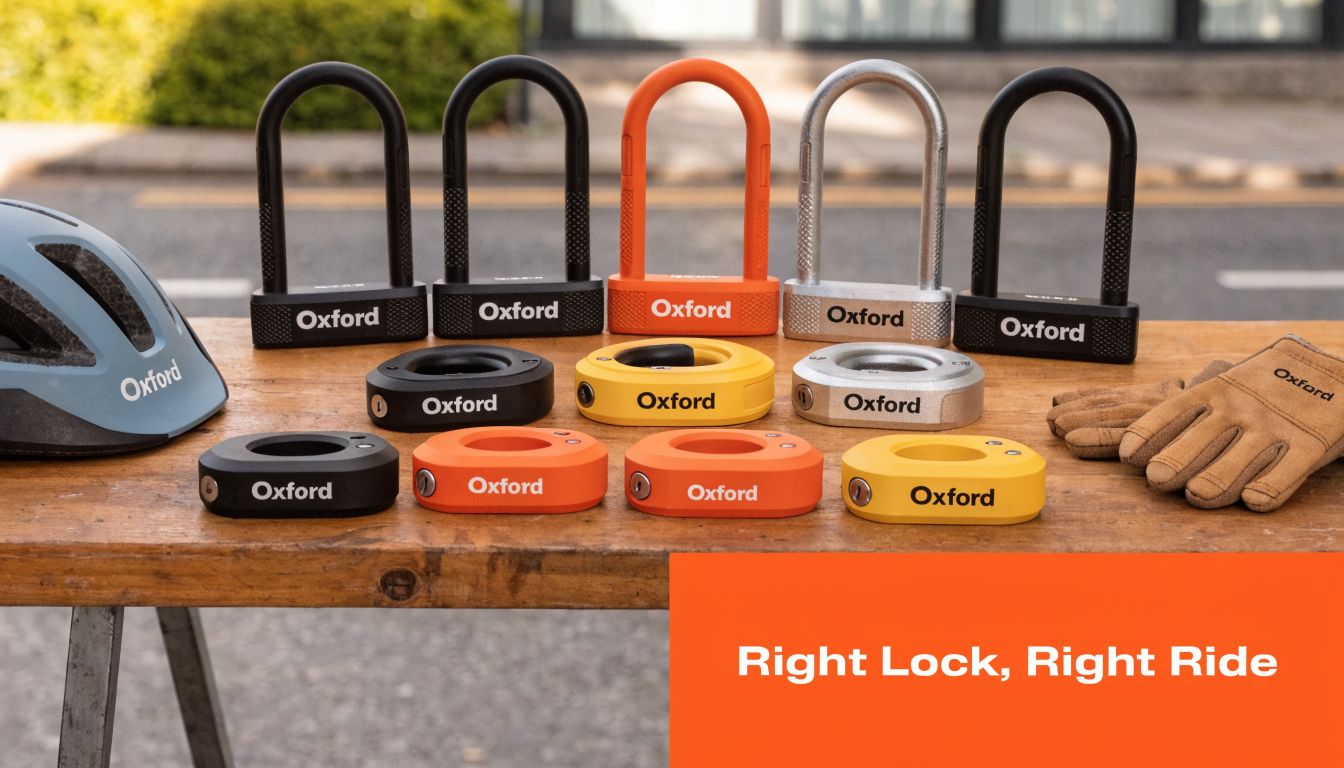
The risk is real for electric two-wheelers. UK police data from 2024-2025 shows electric two-wheelers now comprise 28% of stolen bikes in London, with 73% of these thefts occurring during delivery shifts for services like Deliveroo and Uber Eats, according to the source referenced in this video-based report. If you ride for work, especially on a lightweight machine with repeated stop-start parking, your security setup needs to reflect that.
If you commute on a Super Soco or similar
A commuter usually needs speed and consistency. You’re locking up outside work, at a station, or outside a gym. If the lock feels cumbersome, it gets left behind.
A Stronguard-style D-lock makes sense here because it’s quicker to deploy than a full chain and easier to carry daily. The best use is through a solid part of the frame or rear wheel area to a fixed stand. If your route includes mixed parking conditions, adding a cable for a second wheel gives you extra coverage without turning your daily ride into a weightlifting session.
Good fit for this rider:
- Primary lock: D-lock
- Use case: Daytime urban parking
- Why it works: Fast on and off, realistic for daily carry
If you ride delivery on a Vmoto or another workhorse moped
Delivery riders have a harsher routine. More stops. More rushed lockups. More time parked in visible urban locations. More temptation to say, “I’ll only be a minute.”
That’s exactly the pattern thieves exploit.
For this rider, I’d rather see a setup that balances speed with a stronger physical presence. A D-lock can still work, especially if the bike’s frame shape makes it easy to secure well, but many delivery riders are better served by a chain plus a quick secondary deterrent. A chain gives more freedom to reach awkward lamp posts, rails, or proper stands when the ideal parking point isn’t available.
The lock that suits delivery work is the one you can use properly at stop number nine, not just at stop number one.
If your bike stays outside overnight
When parking on the street overnight, riders need to stop chasing convenience. In such cases, heavier hardware earns its keep.
A chain with a proper anchor point is the sensible core. If you store at home, that means a ground anchor. If you park on-street, it means the stoutest legitimate fixed object you can use. Add a second lock of a different style if practical, because mixed lock types slow thieves down in different ways.
For this rider:
- Use a chain as the main lock
- Secure to a fixed anchor, not just through the wheel
- Add a second layer for immobilisation
- Keep the bike covered if possible, so the target is less visible
If you own a higher-value electric motorcycle
A high-value machine changes the equation. You’re not just protecting transport. You’re protecting a serious asset.
That usually means:
- Home: Ground anchor plus chain
- Away from home: Primary heavy lock plus secondary lock
- Routine: No lazy park-ups, even for short stops
This is also where you stop asking whether a lock feels expensive. The right question is whether replacing the bike, dealing with insurance, losing work time, and handling the disruption would feel cheap.
A straight recommendation by riding pattern
If you want the shortest version possible, use this:
Rider typePractical Oxford setupDaily commuterD-lock as primary, cable if needed for wheel coverageDelivery riderChain for flexibility, plus a fast secondary deterrentOvernight outdoor parkingHeavy chain to fixed object, ideally with second lockHome garage userGround anchor and chain, every time
The biggest mistake across all four is buying based on the product photo instead of the parking reality. A lock can be excellent on paper and still be wrong for your machine, your route, and your day-to-day habits.
Mastering the Art of Locking Your Electric Moped
A strong lock used badly can fail just as quickly as a weak lock. Technique matters. On electric mopeds and motorcycles, it matters a lot because thieves look for lazy lock-ups before they look for hard targets.
Lock the bike to the world, not to itself
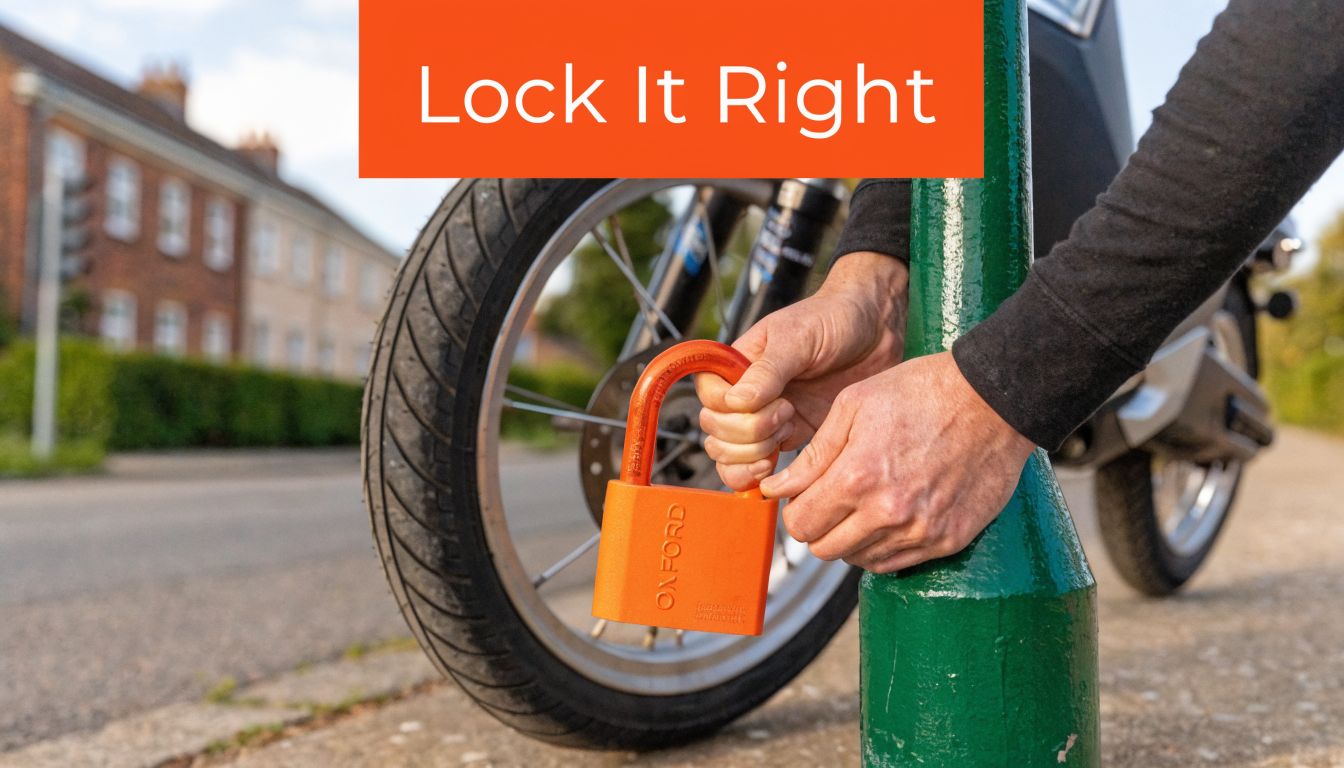
The first rule is simple. If possible, run the lock through a solid part of the bike and around an immovable object. A wheel on its own isn’t enough. Wheels can be removed. Even if they aren’t removed, a bike that isn’t anchored can still be lifted.
Look for:
- Steel stands and rails: Properly fixed into the ground
- Ground anchors: Ideal at home or in secure compounds
- Heavy street furniture: Only if it’s firmly secured and durable
Avoid:
- Thin railings: Easy to cut or break
- Wooden posts or fences: Bad choice
- Low signposts with removable tops: Common mistake
- Anything the chain can be lifted over
Secure the frame first. Everything else is secondary.
Keep the lock off the ground
One of the oldest mistakes is leaving the lock body or chain slack on the floor. That gives thieves a better working angle for tools and impact.
You want the lock positioned as high and tight as practical. Less slack means less room to manipulate the lock. Less ground contact means fewer easy opportunities to use brute force against it.
Use layers that do different jobs
A primary lock should stop removal. A secondary lock should add delay, noise, or complication. For many electric moped owners, that means a chain or D-lock as the core and a disc lock as a second barrier.
The point isn’t elegance. The point is forcing more work, more time, and more exposure.
The quick-stop method
For a short stop, do this every time:
- Choose the best anchor first. Don’t park first and then look around hopefully.
- Pass the lock through a main structural point. Aim for frame or a solid wheel-and-frame position if that’s the only viable geometry.
- Keep the lock tight. Don’t leave loops of slack.
- Check the keyway is protected and the lock is fully engaged.
- Add a disc lock if you use one.
This short demonstration gives a useful visual reference for secure locking technique:
Common mistakes that invite trouble
A lot of theft prevention comes down to avoiding basic errors.
- Only locking the front wheel: Fast way to lose the rest of the bike.
- Using the same weak parking spot daily: Predictable routine helps thieves.
- Leaving the lock at home for convenience: The strongest lock in your garage protects nothing on the street.
- Rushing the final check: If the shackle or padlock isn’t fully closed, the whole effort is wasted.
The method that works in practice
For most urban riders, the most reliable routine is boring and repetitive. That’s good. Park in the best-lit legitimate spot you can find. Lock the frame to something solid. Keep the lock off the ground. Add a second layer if the bike will be there longer than a quick stop.
That’s how you make your electric moped look like work. Thieves usually move on when another target looks easier.
Installation and Maintenance for Lasting Security
A lock isn’t a buy-once, ignore-forever item. UK weather will punish neglected hardware. Rain, grit, winter road salt, and daily use all wear on chains, shackles, and key barrels.
Keep the mechanism clean and usable
The fastest way to ruin a good lock is to let dirt and moisture build up in the keyway and then force the key when it starts feeling rough. If the barrel feels sticky, deal with it before it becomes a roadside problem.
Use a simple routine:
- Wipe the lock down regularly: Especially after wet rides.
- Clear visible grit from the key area: Dirt causes sticking and poor engagement.
- Lubricate the mechanism lightly: Enough to keep it smooth, not enough to attract a mess.
- Store it dry when possible: Don’t leave it sitting in pooled water or road muck.
Some Oxford locks include weather-focused details that help with this. On the chain side, features like protective sleeves and dust covers matter because corrosion is what turns a reliable lock into a daily irritation.
Install anchors properly or don’t bother
A ground anchor is only as good as the surface and fixings holding it in place. If you’re fitting one at home, use the correct base and install it exactly as intended. A badly fixed anchor gives a false sense of security, which is worse than admitting you don’t have one yet.
If you’re not confident about the surface or installation method, get advice before drilling. Concrete is not the same as brick, paving, or timber.
Good security fails at the weakest point, not the strongest one.
Make carrying the lock easy enough to be realistic
A lock that’s awkward to carry often gets skipped. That’s why brackets and mounting solutions matter on electric mopeds. If your D-lock includes a bracket, fit it properly and test it on your normal route. If you carry a chain, decide whether it lives under the seat, in a top box, or in another secure position that doesn’t upset the bike’s balance.
For riders using scooters and mopeds daily, consistency beats theory. The setup has to work in normal life, in the rain, when you’re tired, and when you’re in a hurry.
Conclusion Your Security Partnership with Flex Electric
A proper oxford bike lock setup does two jobs. It protects the machine, and it changes how you use it day to day. You stop relying on luck. You start parking with intent.
The strongest lesson is simple. Security isn’t one product. It’s the combination of a tested lock, the right lock type for your riding pattern, and disciplined use every single time. A D-lock suits many commuters. A chain suits riders who need more reach and more flexibility. A ground anchor earns its place if the bike stays at home overnight. A second layer makes sense when the risk goes up.
Electric mopeds and motorcycles need this level of thought because the theft risk is different from ordinary cycle advice. Work riders, city commuters, and owners of higher-value electric machines all need a setup that matches actual conditions, not just the product label.
If you want help matching the right Oxford security to your specific machine, ask before you buy. A few minutes of proper advice is a lot cheaper than learning security the hard way.
Frequently Asked Questions About Oxford Locks
Will an approved lock help with insurance?
Often, yes. The detail that matters is the wording in your policy. Some insurers ask for a specific standard, while others only expect an approved motorcycle lock. If you ride a Super Soco or Vmoto in London, Birmingham, or Manchester, check that wording before you buy. Getting this wrong can leave you arguing over cover after a theft.
Is one heavy lock better than two medium ones?
It depends on how and where the bike is parked.
One strong primary lock is better than two poor ones. Two decent locks of different types can still be the smarter setup for an electric moped, especially if the bike is left outside during delivery drops or regular commuter stops. A thief carrying one attack tool may get through a single lock faster than two different layers.
For portability, anchor reach, or overnight risk, the right answer depends on your main problem.
Are D-locks or chains better for electric mopeds?
Both have a place. D-locks are usually quicker to fit during short stops and easier to carry on smaller electric machines where storage is limited. Chains give you more reach around awkward street furniture and often make more sense at home, where weight matters less.
Electric mopeds add a practical wrinkle. Riders often park in tighter urban spaces, and some models have fewer obvious locking points than larger petrol motorcycles. That makes lock fit and locking angle more important than the label on the product.
What’s the Oxford replacement key service?
Some Oxford locks are supplied with spare keys and access to key replacement support, as noted earlier in the article. That matters more than many new riders expect. If you are opening and locking the bike repeatedly through a delivery shift, losing a key can stop work for the day.
Keep the key number recorded somewhere separate from the bike keys. Do not leave it under the seat or in the top box.
Can I use one lock for home and street parking?
You can, but many riders end up compromising in one direction. A lock that is manageable on a daily commute may not be the one you would choose for overnight parking outside a flat or on a shared street. A heavier home setup often gives better coverage for longer parking periods, while a lighter lock keeps daily use realistic.
That split is common with electric moped owners because the bike often serves two jobs. It handles short urban stops in the day, then sits outside for hours at night.
If you want straight advice on securing your Super Soco, Vmoto, LiveWire, Segway, Horwin, Naxeon, off-road electric motorcycle, or kids MX bike, speak to Flex Electric. We can help you choose a practical Oxford lock setup that matches how you ride and park.
Find us
You will find us at 74 Dalry Road, Edinburgh, EH11 2AY
Showroom Opening Times:
Monday: By Appointment
Tuesday to Friday: 11am - 5:00pm
Saturday: 10am - 5pm
Sunday: By Appointment
