
Third Party Bike Insurance in the UK: What It Really Covers
Flex Electric
The UK's #1 Electric Moped and Electric Motorbike dealer.

Most riders are sold the same lazy line, third party bike insurance is the cheapest, so it must be the sensible pick. That's only true if your bike doesn't matter much to your day-to-day life. If you rely on it to get to work, earn money, or keep a business moving, the question is simpler: how much can you afford to lose when your own bike is damaged, stolen, or written off?
That's the trade-off most UK guides skip. Third party bike insurance is the legal floor, not automatically the smart buy. For an urban commuter, a delivery rider, and a small fleet operator, the right answer can be completely different, because parking exposure, theft risk, and downtime hit each of them in different ways.
Why the Cheapest Premium Isn't Always the Smart Choice
A cheap premium feels like a win until the bike disappears from a pavement rack or gets knocked over outside a flat. Then the policy's limits matter more than the monthly saving. If the only thing your cover guarantees is compensation for other people, you're still left finding the cash for your own replacement, repairs, or transport.
Price is not the same as value
For motorcycles, the market already shows why bargain hunting can be misleading. GoCompare's 2025 motorbike data put the median annual cost of third party only cover at £493, compared with £222 for fully comprehensive and £421 for third party, fire and theft in the January to March period (GoCompare motorbike insurance data). That spread tells you two things. First, the legal minimum is often not the cheapest route in practice. Second, insurers price risk, not wishful thinking.
The wider bike-insurance market points the same way. Liability cover is a major part of the category, not a side issue. A recent market analysis estimated the global bicycle-insurance market's third-party liability segment at 19.2% market share in 2025, with a projected 11.8% CAGR from 2026 to 2034 (Market Intelo bicycle insurance report). That doesn't mean every rider needs more cover, but it does show that liability is only one piece of the protection problem.
Practical rule: if your bike is essential to your routine, judge insurance by the cost of being off the road, not by the size of the premium alone.
A courier whose bike is stolen off a pavement isn't just dealing with a claim, they're dealing with missed jobs and lost momentum. A commuter can absorb more risk if the bike is a convenience. A small fleet can't afford that thinking at all. The rest of the decision comes down to what your bike does for you, not what the policy brochure says.
What Third Party Bike Insurance Covers
Third party cover is straightforward. It pays when you cause injury to someone else or damage their property. It does not repair your own bike, replace your own gear, or keep your business moving if the bike is out of action.
The liability-only model
Take a simple crash. You pull out of a junction, clip a parked car, and damage the door. A third party policy responds to the other party's loss. In the UK, third party motorbike insurance is the legal minimum and only covers liability to other people or their property, it does not pay for damage to your own bike (Bajaj General third party two-wheeler insurance).
That liability-only logic is why the policy is often described as protection for others from you, not protection for you from the road. It also matters most on public roads. For motorcycles, scooters and mopeds used there, the rule is tied to road use, not whether the vehicle runs on petrol or electricity (Zurich Kotak two-wheeler insurance explainer).
Third party cover protects other people from your liability. It does not protect your machine from theft, vandalism, or your own mistake.
In practice, that means the policy may help with bodily injury claims, third party property damage, and sometimes legal costs, depending on the insurer. It will not pay to fix your own cracked fairing, bent bars, or bent frame after a spill. If you ride something like the Segway E300SE, with its 65mph top speed and 70 mile range, that gap matters in the same way it does for any other road-used machine, because the risk is about what happens after a collision, not how the bike is powered.
The point is simple. If you only want the cheapest legal cover, you are buying liability protection for other people. If your bike is part of your income, that can be a poor deal.
The UK Legal Requirement and How It Gets Enforced
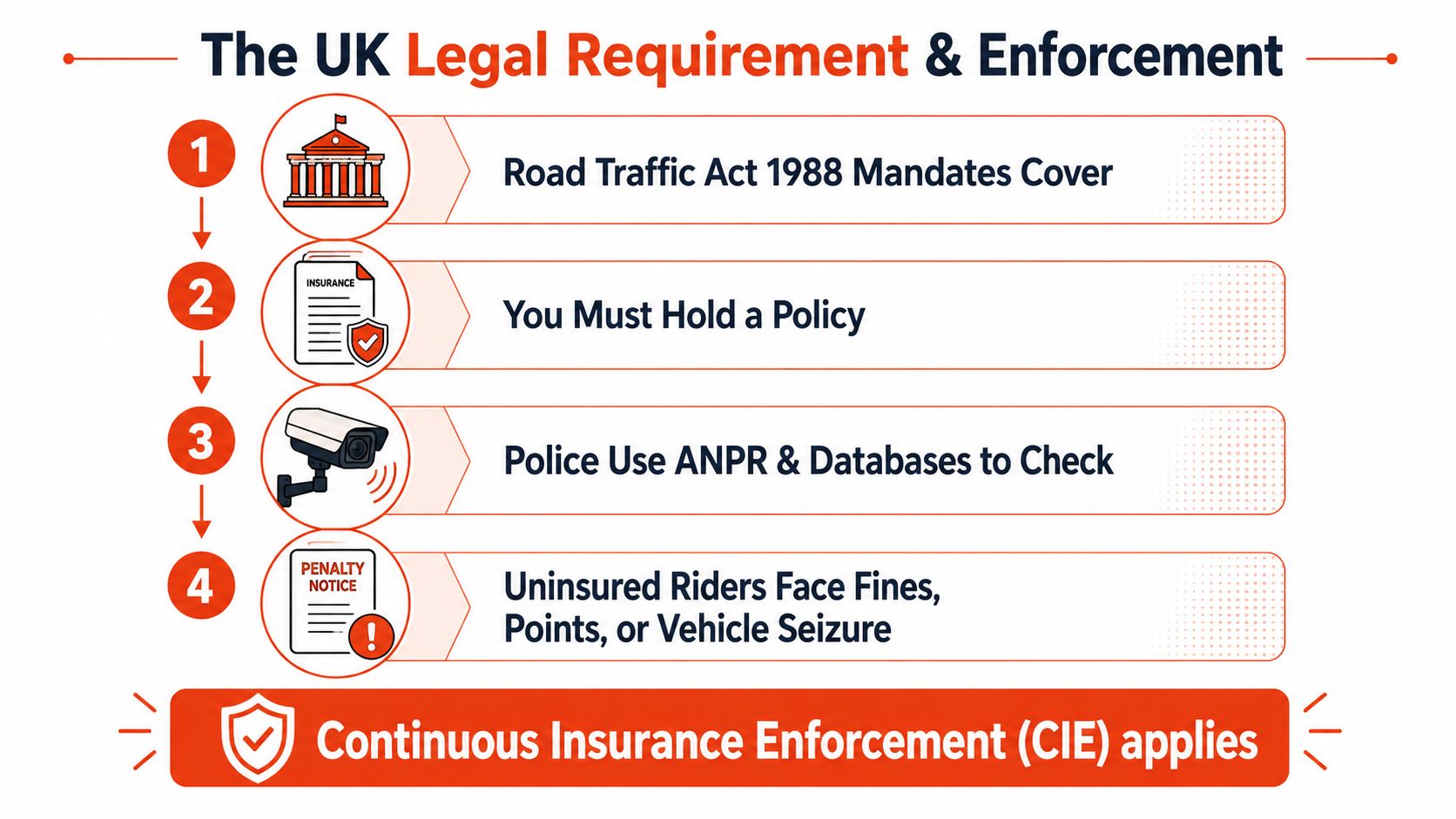
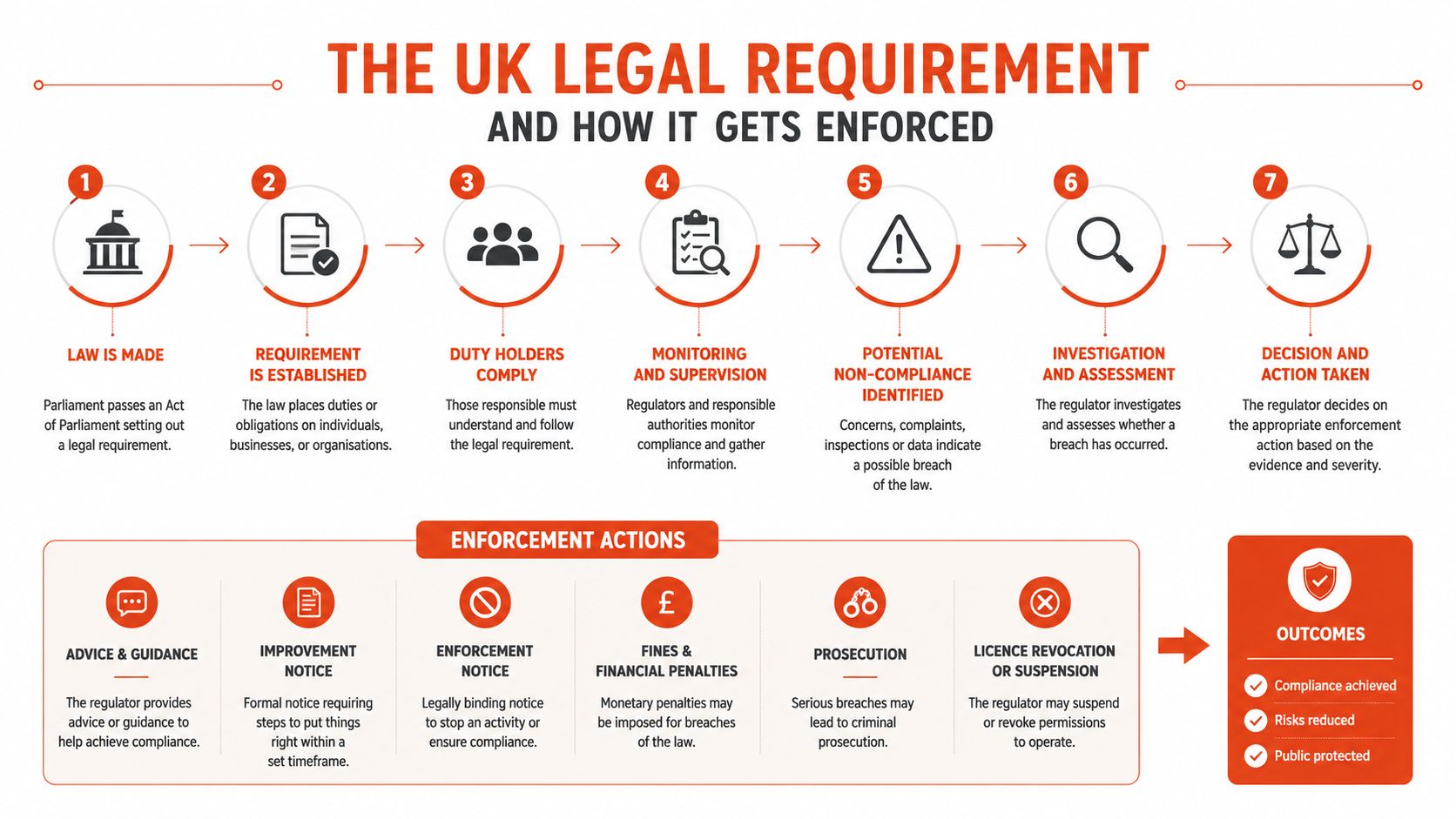
The UK rule is not vague. If you use a motorcycle, scooter, or moped on a public road, you need at least third party cover in force before you ride it. That framework comes from long-standing road-traffic law, and it applies to the vehicle being used on the road, not just the type of engine or motor it has.
What the law actually bites on
The legal minimum is enforced through the Motor Insurance Database, not by hoping riders do the right thing. UK guidance says uninsured use can lead to a fixed penalty notice, prosecution, and vehicle seizure in some cases (III on motorcycle insurance). That is why a missing policy is not a paperwork problem, it's an enforcement problem.
The practical rule is simple, if the bike touches a public road, it must be insured. If you're riding to an MOT, the vehicle is still on the road. If you're pushing a broken bike home, you need to be careful about where it's being used. If you're on private land that the public can access, don't assume the law steps back automatically. Riders get caught out when they treat “not actively riding” as the same thing as “not using.”
If it's going on the road, insure it first. Don't leave compliance as a later job.
This matters more for electric mopeds and scooters than some riders think, because the insurance rule is about road use, not propulsion type. The database check is the primary gatekeeper. Police and enforcement systems can verify cover quickly, and the consequences are built to make uninsured road use expensive and inconvenient.
A lot of riders only think about the premium. They should think about the consequences of getting it wrong. A saved few pounds means nothing if the bike is off the road, seized, or tied up in enforcement.
Comparing Third Party, Third Party Fire and Theft, and Full Cover
These three cover levels are not a neat ladder of cheap, cheaper, and best. They answer different risks. The right choice depends on where the bike lives, how often it is used, and whether losing it would be a nuisance or a serious financial hit.
Match the cover to the bike's job
A learner on a small electric commuter machine parked on a driveway may decide that theft risk is manageable and own-damage risk is acceptable. A courier locking a 125cc-equivalent e-moped on a busy high street is in a different position. A long-commute rider using an electric motorbike every day is different again, because the bike is covering more miles and spending more time exposed.
Here is the core comparison.
Cover levelLiability to othersTheftFireOwn-bike damageTypical use caseThird party onlyYesNoNoNoLegal minimum, low-value or limited-use bikesThird party fire and theftYesYesYesNoRiders worried about theft or fire exposureFull coverYesYesYesYes, usually broader own-damage coverDaily riders, commuters, and income-dependent use
A good external comparison resource can help you sanity-check what different policies usually include. For a business-minded view of cover decisions, My Safety Manager insurance insights is useful because it pushes the reader to think about operational risk, not just the headline premium.
Where third party only stops making sense
The biggest mistake is treating third party only as the default for any bike that matters. If the bike is stolen, third party only does nothing for replacement. If it is burnt out, it does nothing. If you drop it and crack the bodywork, it does nothing. That is why the cheapest legal option is often a false economy for riders who depend on the bike.
A 125cc-equivalent like the Yadea Keeness can make sense as a commuter or delivery tool, but the cover choice still needs to reflect how exposed the machine is overnight, not just what the licence category is. If a bike is parked outside in a city and used daily, the gap between third party only and broader cover becomes practical, not theoretical.
The rule is blunt. If you can afford to lose the bike, third party only may be enough. If you cannot, it usually is not.
What Drives the Price of a UK Bike Premium
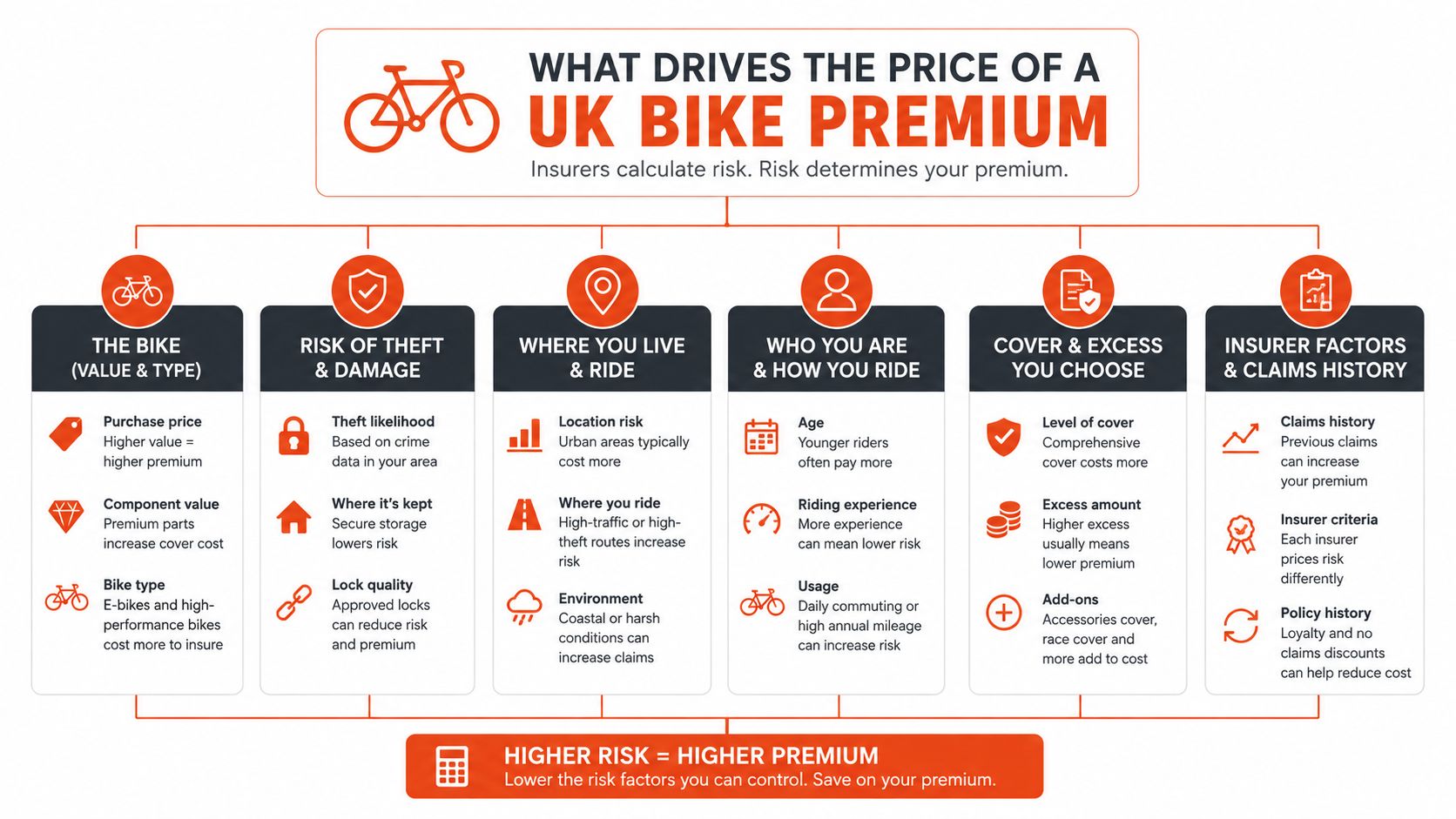
Insurers don't price bike cover out of thin air. They look at who's riding, where the bike lives, how it's used, and how expensive a claim might be. That's why two riders can ask for third party bike insurance and get very different quotes.
The main rating factors
The usual cost drivers are easy to understand once you stop thinking like a shopper and start thinking like an insurer:
- Rider age and licence history. Newer riders tend to look riskier, because the insurer has less evidence that they're low claim risk.
- Engine size or electric equivalent. Faster, more powerful machines usually signal more exposure.
- Postcode and overnight parking. City parking, street storage, and dense traffic all increase theft and claim risk.
- Annual mileage. More miles mean more time in traffic and more chances for something to go wrong.
- Claims history. Past losses matter because they help insurers estimate future losses.
- Bike value. Even though third party only doesn't cover your own bike, the machine still affects how attractive the risk is overall.
The counterintuitive bit is that third party only is not always the cheapest option for the rider it's trying to attract. For younger or higher-risk riders, insurers can price liability exposure more heavily because they're underwriting the chance of a bigger claim against other people, not just your own bike.
Cheapest cover and lowest premium are not the same thing once the insurer starts measuring risk properly.
That's why quote shopping without context is a trap. A rider with secure parking, short mileage, and a clean history can often get sensible pricing on broader cover. A rider with a poor parking setup and a lot of city miles may find the so-called basic option isn't basic on price at all.
For an urban rider, the right question is not “what's the cheapest policy?” It's “what details about my bike, postcode, and daily use are pushing the price up, and which risks am I willing to carry myself?”
Commuters, Couriers and Small Fleets Compared
A commuter, a courier, and a small fleet operator are all buying motor insurance, but they're buying different outcomes. The commuter wants predictable cover for a daily ride. The courier wants to keep earning. The fleet operator wants to avoid a vehicle being off the road and breaking the job chain.
Commuters and everyday riders
A commuter with a bike parked at home overnight may be able to live with a narrower policy, especially if the machine isn't expensive to replace. But if the daily ride is long, parking is on-street, or the bike sits in a shared block, full coverage often stops being a luxury and starts being the sensible option.
The issue is simple. A small own-damage claim can be expensive enough to wipe out the saving from a stripped-back policy. That's before you factor in the time spent chasing repairs and transport alternatives. If the bike is mainly a convenience, you have more room to take risk. If it's your only reliable way to get to work, that room shrinks fast.
Couriers and delivery riders
Courier use changes the whole equation. A delivery rider on platforms like Deliveroo, Uber Eats or Stuart is not just losing a bike if something goes wrong, they're losing income. UK delivery and commuter riders face a specific risk because third-party-only policies do not pay for damage to the insured bike itself, theft or rider injury, so an accident can stop earnings immediately even when liability is covered (IndusInd two-wheeler third party pros and cons).
That's where third party fire and theft, or full cover with a courtesy bike or hire vehicle, starts to look like business protection rather than an upgrade. A rider who's off the road for days can lose far more than the difference between policies. For fleets and multi-bike operators, GPS tracking for NZ transport fleets is a reminder that asset visibility and downtime control matter just as much as cover level, even when the market is on the other side of the world.
Small businesses and last-mile transport
Takeaways, florists, and venues switching to electric two-wheelers need more than a cheap certificate. They need policies that line up with named riders, business use, and replacement planning. A small fleet can't afford one stolen bike turning into a week of missed jobs and broken customer promises.
The lesson is direct. If the bike earns money, third party only is usually too thin.
How a Third Party Claim Works in the UK
A third party claim starts at the roadside, not in the claims department. Get the scene right first, because a poor reaction in the first few minutes can make a straightforward claim harder than it should be.
What to do first
Stop safely and check whether anyone is hurt. Swap details, take clear photos of both bikes or vehicles, the road position, and the damage. Do not admit fault there and then, even if you think you may have caused the crash. Let the insurer work through liability once the facts are clear.
Tell your insurer as soon as you can. If the other driver has no insurance or leaves the scene, the Motor Insurers' Bureau may be part of the recovery route, depending on what happened. Keep your policy documents, registration details, and notes from the incident together. That makes the claim easier to handle later, and the same habit helps if you ever need handling travel disruptions abroad.
A blunt truth applies here.
The cheapest cover still needs the same scene discipline as any other policy.
What gets paid and what doesn't
With third party only, your insurer is there for the other party's losses. It is not there to pay for your bike repairs, theft, or rider injury. If the other party is identified and insured, there may be a route to recover losses from them or their insurer. If they are not, recovery of your own loss can be slow, partial, or dead in the water.
That is the key trade-off with this level of cover. The policy meets the legal requirement and handles liability, but it does nothing for the machine you rely on every day. For a commuter, courier, or gig rider, that gap can cost more than the premium saved.
The point is simple. Third party claims deal with liability, not rescue. If you want cover for your own bike, you need a policy that pays for it.
Add-Ons, Exclusions and Next Steps to Get Covered
The add-ons are where a basic policy becomes more useful. The exclusions are where riders get caught out. If you're buying third party bike insurance, don't just ask what's included, ask what happens when life gets messy.
Useful extras worth considering
Some optional extras are worth paying for if they match how you ride:
- Legal expenses cover. Useful if you'd want help recovering uninsured losses after a dispute.
- Personal accident cover. More relevant if you ride daily and can't afford time off after an injury.
- Helmet and leathers cover. Worth a look if your kit is expensive to replace.
- Courtesy bike or hire vehicle cover. Strongly worth considering for commuters and delivery riders who can't afford downtime.
- Theft recovery support. Helpful if your bike lives in a high-risk parking spot.
Those extras don't fix a bad policy choice, but they can soften the blow when the main bike is out of action.
The exclusions that bite hardest
The harshest problems are usually self-inflicted. Riding without a valid licence, carrying a passenger who isn't declared, using the bike for hire-and-reward without the right class of cover, and failing to disclose modifications can all leave you with a claim problem. Insurers are not looking for excuses to pay more than they should.
The compliance side is essential too. The UK's minimum insurance framework is enforced through the Motor Insurance Database and linked offences, including fixed penalties, prosecution and vehicle seizure for uninsured road use (Universal Sompo on third party bike insurance). That means the cheapest policy in the world is useless if it's not valid for the way you use the bike.
Before you bind cover, gather your licence, proof of address, bike registration, and any immobiliser or security details. Ask the insurer one direct question, does this policy match how I really use the bike, including commuting, delivery work, passengers, and where it sleeps at night?
If you're comparing electric mopeds, scooters, or motorbikes for daily use, look at the bike and the cover together, not separately. Flex Electric supplies machines for commuting and delivery use, and it makes sense to choose a bike that fits both your riding life and the level of protection you're willing to buy.
Insurance for your electric motorcycle or moped
Finding insurance for an electric motorcycle or moped can sometimes be more challenging than insuring a conventional petrol-powered bike, as not every insurer offers cover for electric two-wheelers.
If you're looking for insurance, it's worth shopping around and comparing quotes from a number of providers. The following companies may be able to help:
Specialist Motorcycle Insurance
- Lexham Insurance – Specialist insurance for electric motorcycles and mopeds.
- Bikesure – Specialist motorcycle broker offering cover for electric motorcycles and scooters.
- Bennetts – Motorcycle insurance for a wide range of riders and bikes.
- Carole Nash – Motorcycle and scooter insurance.
Compare Insurance Quotes
- The Bike Insurer – Compare motorcycle insurance quotes from multiple providers.
- Biker Insure – Comparison service specifically covering electric motorcycles, scooters and mopeds.
Tip: Insurance premiums can vary considerably depending on your age, postcode, licence, riding experience, annual mileage, the value of your bike and how it is used. It's therefore worth getting quotes from more than one provider.
Flex Electric is not an insurance broker and does not recommend or endorse any particular insurance provider. Availability of cover and premiums will depend on your individual circumstances and the vehicle being insured.
Find us
You will find us at 74 Dalry Road, Edinburgh, EH11 2AY
Showroom Opening Times:
Monday: By Appointment
Tuesday to Friday: 11am - 5:00pm
Saturday: 10am - 5pm
Sunday: By Appointment
